
Staphylococcaceae: family of Gram‑positive cocci
Overview of the bacterial family Staphylococcaceae, its traits, common genera, clinical importance, laboratory identification, ecology, and historical classification.
Overview
Staphylococcaceae is a family of bacteria composed mainly of spherical, Gram‑positive organisms commonly found on the skin and mucous membranes of humans and animals. For a concise taxonomic summary see family-level resources. Members are important in clinical medicine, veterinary practice and environmental microbiology.
Image gallery
3 Images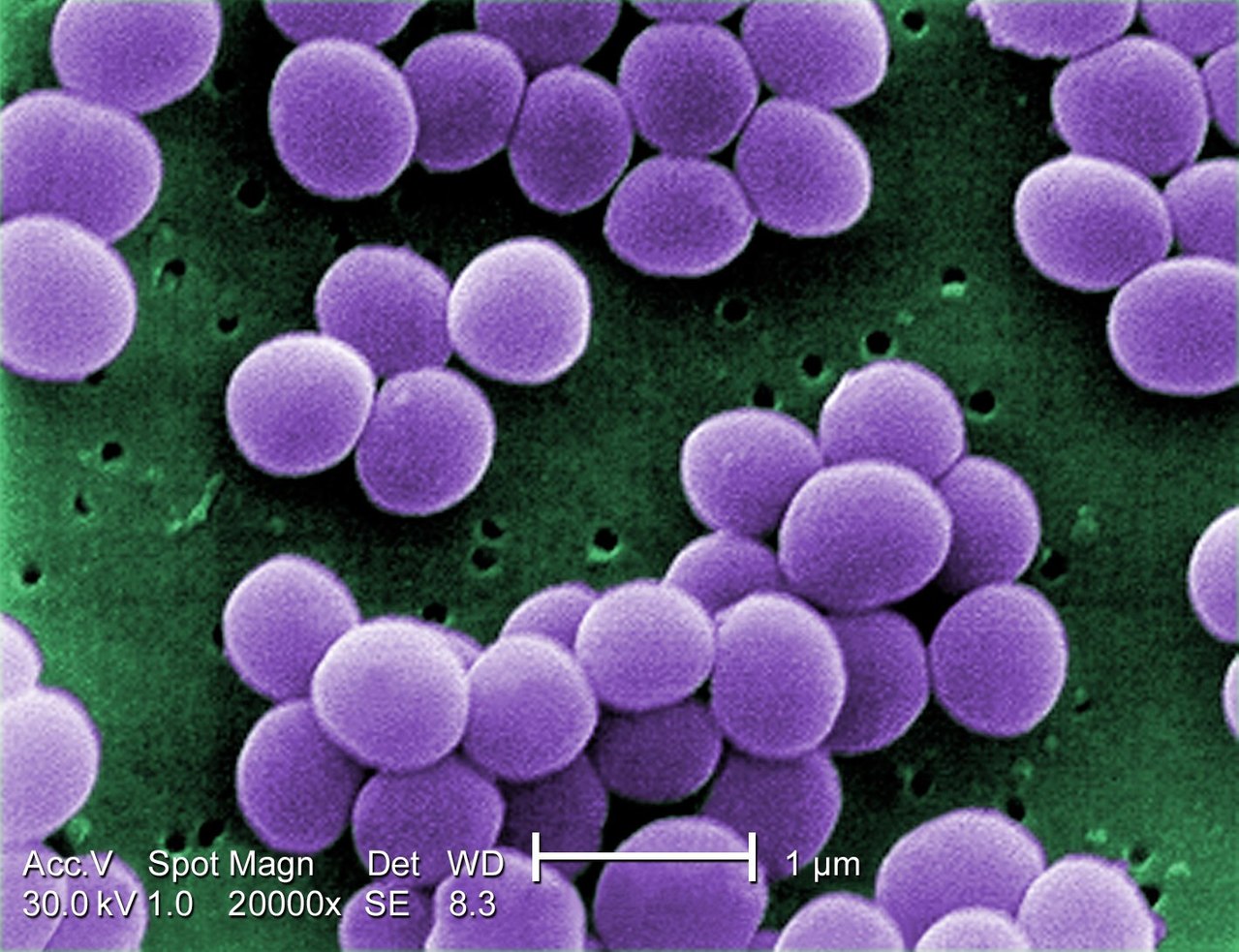


Key characteristics
Species in this family share a number of morphological and physiological traits that help distinguish them from other bacteria. Typical features include:
- Gram‑positive cell wall structure and round (coccoid) cell shape; see general notes on Gram‑positive bacteria.
- Tendency to form clusters of cells resembling grape bunches, though arrangements can vary by genus and conditions.
- Non‑motile, non‑spore forming, and often facultative anaerobes capable of surviving without oxygen.
- Many tolerate high salt concentrations and grow on selective media such as mannitol salt agar.
Genera and notable species
The best known genus is Staphylococcus, which contains both harmless commensals and clinically significant species. Staphylococcus aureus is a major human pathogen; other staphylococci are typically less virulent but can cause opportunistic infections. Related genera include Macrococcus and several newer taxa defined by genetic analyses.
Clinical importance and examples
Some members of this family are responsible for skin infections, wound infections, bone and joint infections, bacteremia, endocarditis and toxin‑mediated diseases such as food poisoning. Antimicrobial resistance—most famously methicillin‑resistant Staphylococcus aureus (MRSA)—is a major public health concern. For the broad concept of pathogenic potential see pathogen overview.
Laboratory identification and distinctions
In the lab, basic methods include Gram staining, catalase testing (staphylococci are catalase positive), coagulase testing to separate coagulase‑positive S. aureus from coagulase‑negative staphylococci, and selective culture media. Molecular methods and whole‑genome sequencing are increasingly used for precise identification and tracking of outbreaks.
History and taxonomy
Historically grouped by morphology and biochemical traits, the family's composition has been refined by genetic and phylogenetic studies. This has led to reclassification of some species and recognition of new genera. Understanding both traditional traits and modern genetic data helps clarify relationships within Staphylococcaceae and their role in health, disease and ecology.
Related articles
Author
AlegsaOnline.com Staphylococcaceae: family of Gram‑positive cocci Leandro Alegsa
URL: https://en.alegsaonline.com/art/93409
Sources
- bacterio.net : "List of prokaryotic names with standing in nomenclature"