
Srinagar
Srinagar is the largest city and summer capital of the union territory of Jammu and Kashmir in northern India, known for its lakes, Mughal gardens, Kashmiri culture, handicrafts and houseboats.
Overview
Srinagar is the principal city and summer capital of the union territory of Jammu and Kashmir in northern India. Situated in the Kashmir Valley, the city has been an administrative, cultural and commercial centre for the region for centuries. Srinagar is widely known for its lakes, gardens, traditional houseboats and craftsmanship, and it functions as a focal point for government administration during the warmer months.
Image gallery
10 Images


Location and geography
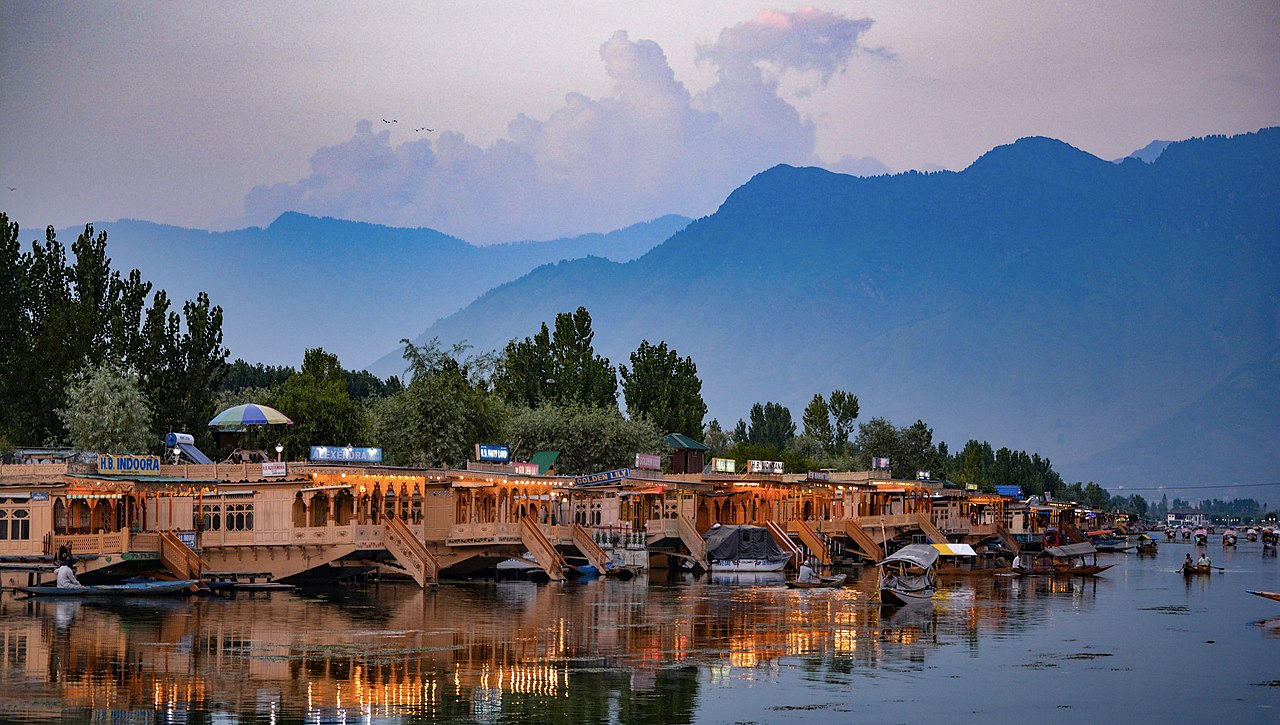
Srinagar stands on the banks of the Jhelum River and is set within a landscape of lakes, wetlands and surrounding mountains. Dal Lake and Nigeen Lake are the most prominent water bodies within the city, supporting houseboats and shikara boats that are both homes and tourist attractions. The city is framed by the Zabarwan Range to the south and by agricultural land and orchards that form part of the valley’s characteristic scenery. Nearby protected areas include Dachigam National Park in the surrounding hills.
History and development
Human settlement in the Kashmir Valley dates back many centuries and Srinagar has long served as a regional centre. The city grew in importance during medieval and Mughal periods, when gardens, shrines and palaces were established, several of which remain notable landmarks. Later administrations, including local rulers and colonial-era authorities, left architectural and administrative traces. In the modern era Srinagar’s role has been shaped by wider political and administrative changes since 1947, and the city continues to reflect a layered history in its urban fabric and public spaces.
People, language and religion
The inhabitants are predominantly ethnic Kashmiri (Kashmiri people) and the Kashmiri language (Koshur) is commonly spoken alongside Urdu, Hindi and English. The majority of residents follow Islam, and religious and cultural festivals play an important role in communal life. Srinagar’s neighbourhoods include historic quarters with mosques and bazaars as well as more recent administrative districts.
Economy and culture
The local economy draws on public administration, tourism, horticulture and traditional crafts. Srinagar is a centre for horticultural products grown in the surrounding areas, including apples, walnuts and saffron. Handicrafts such as pashmina shawls, hand-knotted carpets, papier-mâché and carved woodwork are produced by local artisans and sold in city markets. The houseboat culture on Dal Lake and the network of bazaars attract visitors and support many livelihoods.
Transport and administration
Srinagar is connected by road and by Srinagar International Airport, which links the city to other parts of India. The city’s role as the summer seat of regional government means that many offices and institutions operate on a seasonal schedule, with administrative activity concentrated in the warmer months. Local transport includes waterways where shikaras operate alongside road traffic in different districts.
Attractions and notable facts
- Historic Mughal-era gardens and public parks laid out in the 16th–17th centuries.
- Houseboats and shikara boats on Dal Lake and Nigeen Lake form an iconic image of the city.
- Vibrant markets offering shawls, carpets, woodwork and other traditional crafts.
- Proximity to natural areas such as the Zabarwan Range and nearby national parks.
Srinagar remains both a living urban centre for residents and a destination for visitors drawn by its natural setting, cultural traditions and historic landmarks. The city’s economy, arts and seasonal administrative role continue to shape daily life and its identity within the broader Kashmir Valley.
Related articles
Author
AlegsaOnline.com Srinagar Leandro Alegsa
URL: https://en.alegsaonline.com/art/92988