
Spirillum — spiral-shaped bacteria: morphology, taxonomy and significance
Spirillum denotes spiral-shaped bacteria and a historical genus name. Overview of morphology, taxonomy, ecology, medical relevance and how spirilla differ from other bacterial shapes.
Spirillum (plural: spirilla) refers broadly to bacteria with a rigid, helical or spiral shape. When used in a general sense it describes a bacterial form rather than a single species: a bacterium whose cell body winds in a helix and often moves by flagella. The spiral form is one of the common bacterial morphologies alongside coccus (spherical) and bacillus (rod-shaped) forms; the winding shape influences locomotion, surface interaction and how the cell is classified under a microscope. The term may also refer to the classical bacterial genus named Spirillum.
Image gallery
1 Image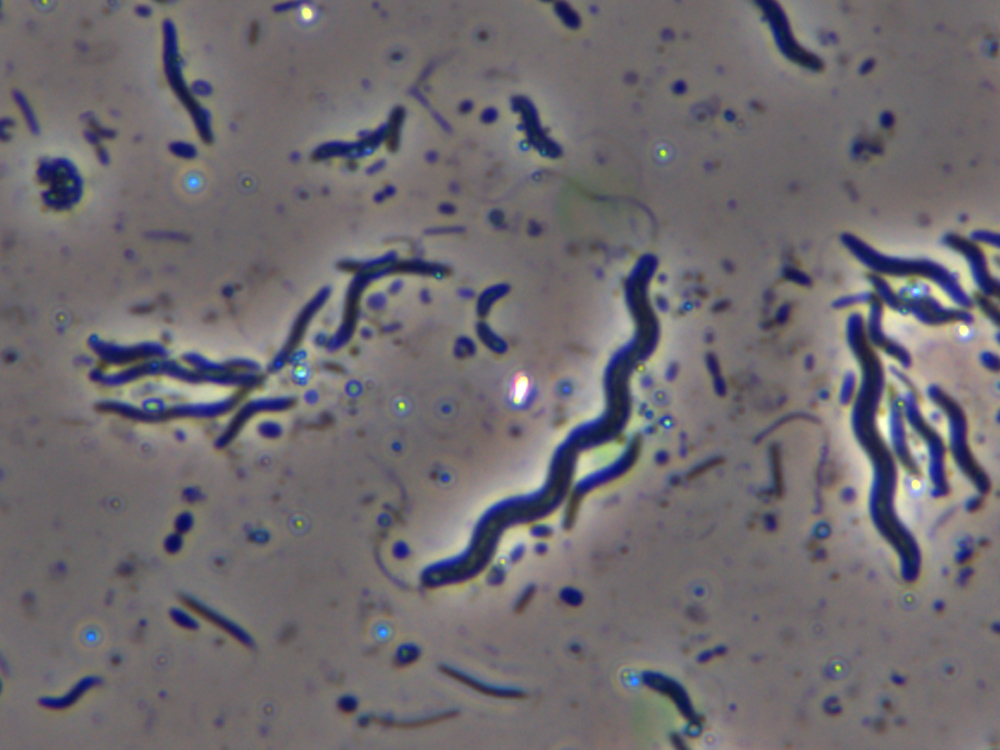
Characteristics
Spirilla are typically Gram-negative, with a rigid helical cell wall and polar flagella (often in tufts) that enable active swimming. Key visible and physiological traits include:
- Distinct helical silhouette under light microscopy, larger than many cocci and bacilli.
- Motility usually by external flagella attached near cell poles rather than internal axial filaments.
- Cell envelope typical of Gram-negative bacteria: outer membrane, thin peptidoglycan layer and periplasmic space.
- Habitats commonly include freshwater, soil and associations with animals; many are free-living heterotrophs.
Taxonomy and history
The name Spirillum has been applied both as a morphological descriptor and historically as a genus in the family Spirillaceae. Early microbiologists grouped spiral bacteria together, but modern taxonomy uses genetic data to separate diverse lineages. Some classic examples long associated with the label include organisms referred to as Spirillum volutans and Spirillum minus, though species names and placements have been revised as molecular methods clarified relationships.
Ecology, uses and medical importance
Many spirilla are nonpathogenic, playing roles in nutrient cycling in aquatic and soil environments. A few have medical relevance: for example, organisms historically called Spirillum minus have been linked to rat-bite fever-like infections in humans. In environmental microbiology, spiral bacteria are studied for motility, biofilm interactions and responses to flow. They are not a primary focus of commercial biotechnology compared with other bacterial groups, but their distinctive shape makes them useful models for cell mechanics and locomotion research.
Distinctions and notable facts
It is important to distinguish true spirilla from related spiral forms:
- Spirilla: rigid, helical Gram-negative cells with external polar flagella.
- Spirochetes: very thin, flexible spirals with internal axial filaments (endoflagella) that produce corkscrew motion (e.g., Lyme disease agent).
- Spiroplasma: wall-less, helical mollicutes that differ in cell envelope and genetics.
Related articles
Author
AlegsaOnline.com Spirillum — spiral-shaped bacteria: morphology, taxonomy and significance Leandro Alegsa
URL: https://en.alegsaonline.com/art/92707