
Spirochaetaceae
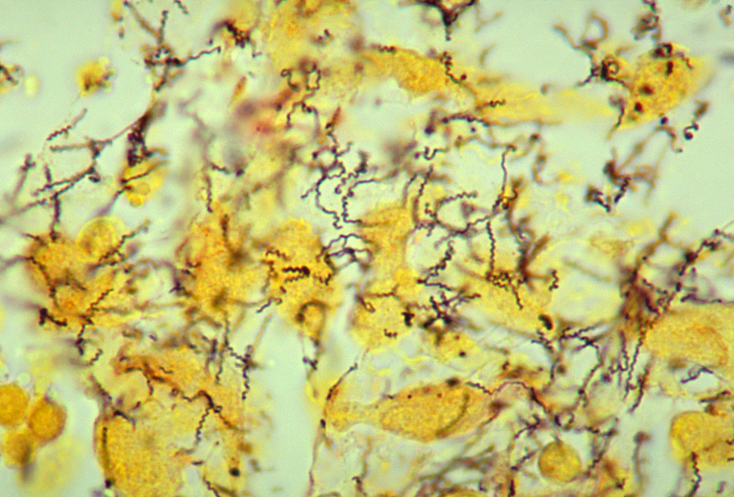
Spirochaetaceae is a family of helical, motile bacteria (spirochetes) that includes free-living species and medically important pathogens such as Treponema pallidum, the agent of syphilis.
Spirochaetaceae is a bacterial family of slender, spiral-shaped organisms commonly called spirochetes. Members are characterized by a long, helical cell body and a distinctive internal flagellar arrangement that produces a corkscrew motion. The family is placed within the larger group of spirochetes and includes genera such as Spirochaeta and Treponema. For an overview of classification and related taxa see family overview.
Image gallery
3 Images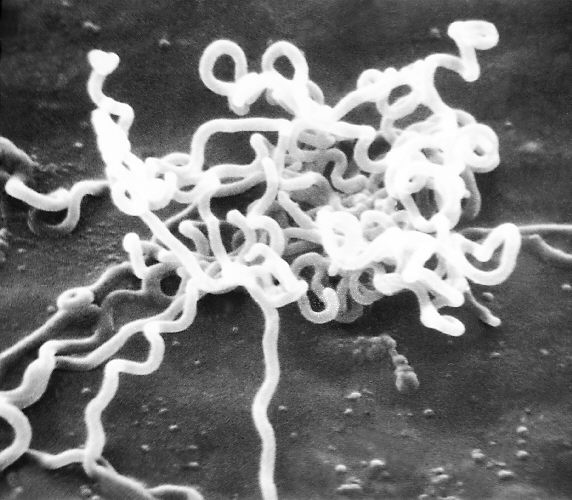

Characteristics
Spirochaetaceae species share several morphological and physiological traits. They are typically very thin and flexible, with motility driven by axial filaments (periplasmic flagella) located between the cell cylinder and outer membrane. Many display Gram-negative cell envelope features. Their spiral shape and internal flagella allow efficient movement through viscous media, a property relevant both ecologically and in host tissues.
Ecologically, members occupy diverse habitats. Some are free-living in anaerobic or low-oxygen aquatic sediments and soils, while others live in symbiosis with animals; for example, spirochetes occur in the digestive tracts of termites and other invertebrates where they assist in digestion.
Medical relevance
Several species in or historically associated with Spirochaetaceae are medically important. Most notably, Treponema pallidum is the causative agent of syphilis, a systemic sexually transmitted infection. Related treponemes can cause other diseases in humans and animals. Diagnosis of spirochetal infections commonly uses microscopy (dark‑field), serologic tests, and molecular methods, and treatment typically involves appropriate antibiotics.
Taxonomy and history: spirochetes were noted by early microbiologists for their distinctive form. Advances in microscopy, cultivation, and molecular genetics have refined classification, and some genera have been reassigned as genetic data clarified relationships. Many spirochetes are difficult to culture, which historically complicated study and classification.
Notable distinctions: spirochetes are distinct from other helical bacteria such as Spirillum (which are not periplasmic‑flagellated spirochetes) and from relatives in other families like Borreliaceae. Their unique motility, ecological roles, and medical importance make Spirochaetaceae a group of continuing interest in microbiology and infectious disease research.
Related articles
Author
AlegsaOnline.com Spirochaetaceae Leandro Alegsa
URL: https://en.alegsaonline.com/art/92726