
Spinner dolphin (Stenella longirostris)
A small, acrobatic oceanic dolphin of tropical offshore waters worldwide, known for its spinning leaps, social groups, nocturnal feeding and varied conservation concerns across populations.
Overview
The spinner dolphin (Stenella longirostris) is a small, highly social oceanic dolphin found throughout tropical and subtropical seas. It is best known for spectacular aerial displays in which individuals rotate rapidly about their longitudinal axis while clearing the water. These acrobatics make the species familiar to sailors and popular with wildlife viewers.
Image gallery
10 Images


Appearance and distinguishing features
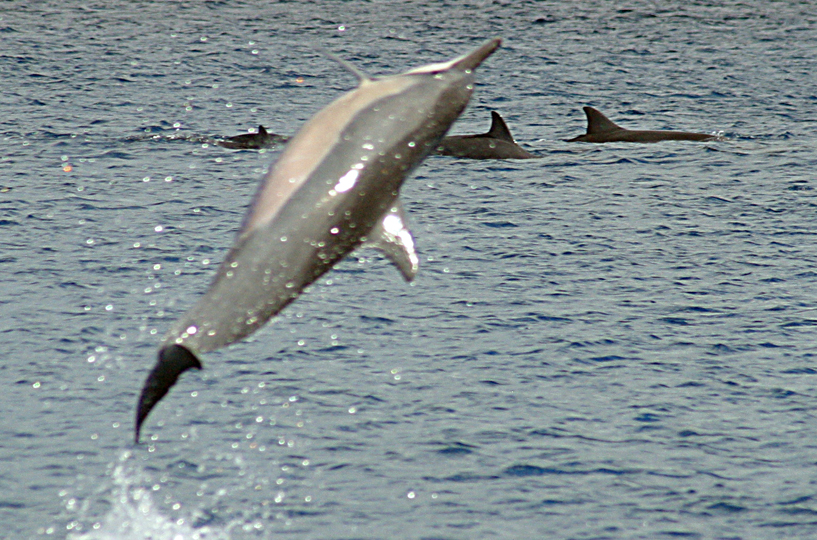
Spinner dolphins are slender, with a relatively long beak and a streamlined body adapted for fast swimming. Their coloration typically shows contrasting tones: a darker cape along the back, lighter sides and a pale belly, giving a banded appearance when seen at the surface. They are smaller than many common coastal dolphin species and often travel in large, tightly coordinated groups.
Behavior and social structure
These dolphins form large, sometimes very large, aggregations that can include hundreds or more individuals. Groups show complex social organization and frequent interaction. A hallmark behavior is the spinning leap: dolphins launch from the water and turn rapidly on their axis, sometimes completing multiple rotations in a single jump. Such displays are thought to serve several functions, including communication, removing parasites, play, and possibly coordinating group movements. For a description of the spin itself see spinning behavior.
Habitat and distribution
Spinner dolphins inhabit offshore tropical and subtropical waters around the globe, favoring warm, open-ocean environments rather than coastal shallows. Some populations show regular daily movements, feeding offshore at night and returning toward sheltered bays or reef slopes during daytime to rest. Regional populations can differ in their ranging patterns and use of local coastal features.
Diet and reproduction
They feed mainly on small fish, squid and other midwater prey, typically foraging at night when prey rise closer to the surface. Spinner dolphins use echolocation to locate and capture fast-moving prey. Reproduction follows the general mammalian pattern: females give birth to a single calf after a prolonged gestation and provide extended maternal care, with young learning hunting and social skills within the group.
Conservation and human interactions
Conservation status varies by region. Historically, some populations suffered large mortalities as bycatch in tuna fisheries; regulatory changes have reduced but not eliminated such impacts. Human activities that affect spinner dolphins include entanglement, habitat disturbance and intensive tourism in resting bays, where persistent boat traffic and swim-with-dolphin operations can disrupt daytime rest. Management efforts focus on reducing bycatch, protecting critical resting habitats, and regulating wildlife viewing to limit disturbance.
- Notable facts: Distinct regional forms exist, and some island-associated populations have particular conservation concern.
- Research: Ongoing studies examine population structure, communication, and the ecological role of their large nocturnal foraging aggregations.
Related articles
Author
AlegsaOnline.com Spinner dolphin (Stenella longirostris) Leandro Alegsa
URL: https://en.alegsaonline.com/art/92691