
Sphingidae — hawk moths, sphinx moths and hornworms
Sphingidae is a family of moths known for rapid flight, hovering, and long proboscises. About 1,450 species worldwide, important as pollinators, pests, and subjects of ecological study.
Overview
Sphingidae is a family within the order Lepidoptera that includes the moths commonly called hawk moths, sphinx moths and hornworms. The family contains roughly 1,450 described species and is found on every continent except Antarctica. Species range from small to fairly large, but many are immediately recognizable by a streamlined body, narrow wings and powerful flight.
Image gallery
8 Images




Physical characteristics and life stages
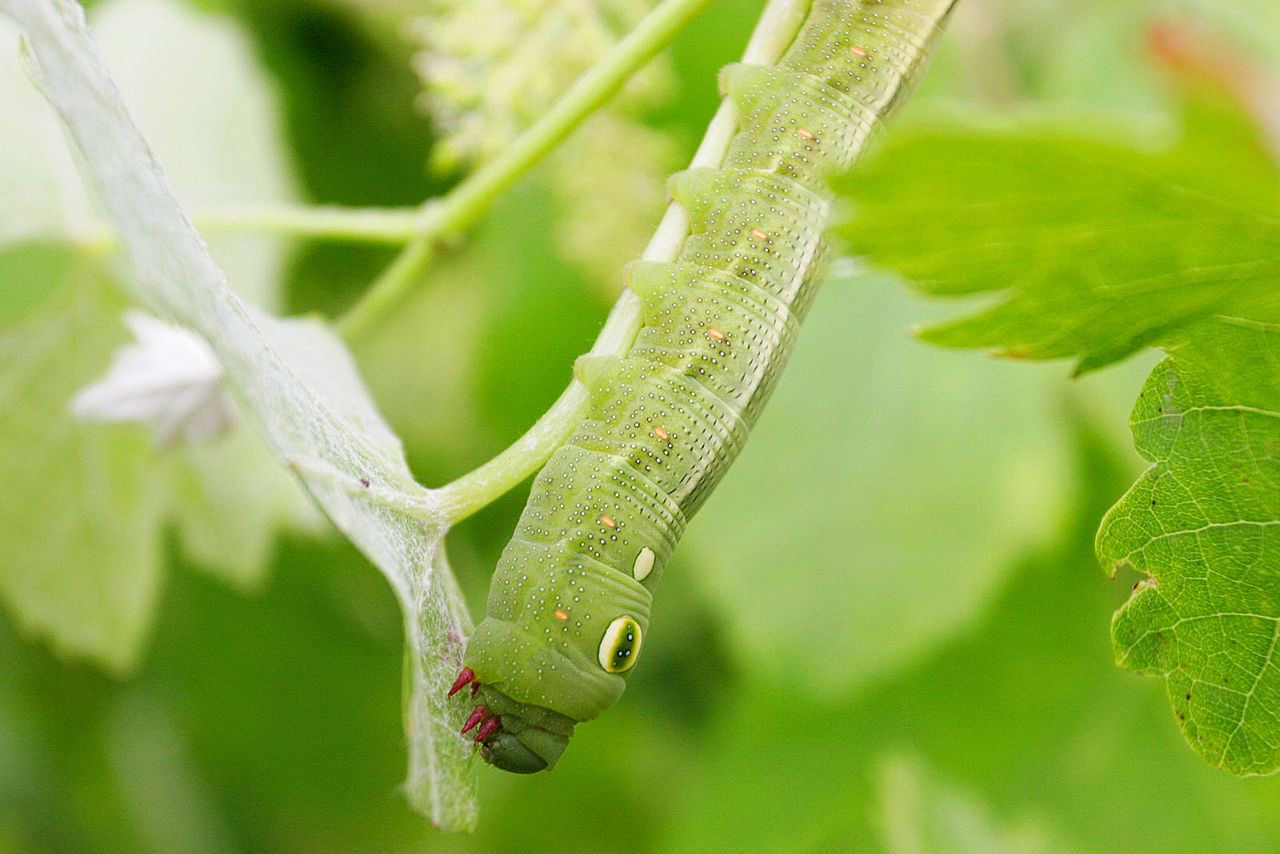
Adult sphingids typically have a robust thorax and long, narrow forewings that give them an aerodynamic profile. Many species possess a long coiled proboscis used to feed on nectar, enabling them to visit deep or tubular flowers. The caterpillars are often called hornworms because most have a conspicuous horn or spike at the posterior end. Caterpillars adopt a distinctive “sphinx” posture—raising the front of the body—when disturbed, which is the origin of the common name.
Behavior, flight and adaptations
Hawk moths are noted for exceptional flight skills: they can fly rapidly, hover in front of flowers while feeding and perform lateral movements during hovering. These abilities are supported by wing morphology and coupling mechanisms that link fore- and hindwings—see more on wing coupling here. Some species are strong migrants, moving seasonally between habitats.
Distribution, ecology and roles
Sphingidae are most diverse in the tropics, though temperate regions host well-known species as well. Many are important pollinators: their hovering and long proboscises make them effective at transferring pollen between deep-nectared flowers. Larval stages can be ecologically significant too—several hornworm species feed on cultivated plants and are notable agricultural pests, while others are integral parts of native food webs.
History, research and notable facts
The family has long attracted attention in ecological and evolutionary studies because of its interactions with flowering plants and its remarkable flight mechanics. Gardeners often value adult hawk moths for their role as pollinators and for the dramatic sight of a large moth hovering like a tiny hummingbird. Conservation of some species depends on preserving native host plants and nectar sources.
- Common names: hawk moth, sphinx moth, hornworm
- Key traits: rapid flight, hovering, long proboscis, caterpillar horn
- Human relevance: pollination, agriculture, scientific study
For further general information on Lepidoptera classification and wing mechanics, consult resources linked above and specialist literature.
Related articles
Author
AlegsaOnline.com Sphingidae — hawk moths, sphinx moths and hornworms Leandro Alegsa
URL: https://en.alegsaonline.com/art/92645
Sources
- mapress.com : "Order Lepidoptera Linnaeus, 1758. In: Zhang, Z.-Q. (Ed.) Animal biodiversity: An outline of higher-level classification and survey of taxonomic richness"
- doi.org : 10.11646/zootaxa.3148.1.41
- doi.org : 10.1046/j.1096-3642.2002.00021.x
- commons.wikimedia.org : Sphingidae
- species.wikimedia.org : Sphingidae