
Spartacus (1960 film) — Stanley Kubrick, Dalton Trumbo, and the epic of revolt
1960 American epic historical drama starring Kirk Douglas, directed by Stanley Kubrick (after an early replacement), adapted by Dalton Trumbo; notable for its scale, cast and cultural impact.
Overview
Spartacus is a 1960 American epic historical drama film produced by Bryna Productions and released by a major Hollywood studio. The screenplay was adapted by Dalton Trumbo from Howard Fast's novel and developed into a large-scale cinematic narrative. The picture combines spectacle, personal drama and political overtones to tell a dramatized version of the life of the Thracian slave who became the leader of a major slave revolt against the Roman Republic.
Image gallery
3 Images
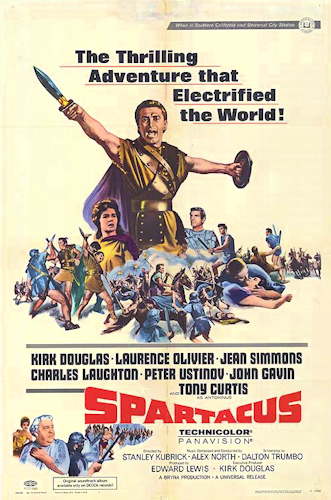

Production and direction
Producer and star Kirk Douglas initiated the project and hired an initial director; after the first week of shooting that director was replaced and the film was completed and refined by Stanley Kubrick. The production was notable for its expansive sets, large cast of extras, and carefully designed visuals. Title design was created by Saul Bass, whose work helped establish the film's graphic identity. The score, crafted to match the film's emotional sweep, supports the epic tone of the narrative.
Cast and characters
The central role of Spartacus is played by Kirk Douglas; opposing him is Laurence Olivier as Marcus Licinius Crassus. The ensemble supporting cast includes Peter Ustinov (who won an Academy Award for Best Supporting Actor), Jean Simmons, Charles Laughton, John Ireland, Herbert Lom, John Gavin in the role of a young Julius Caesar, Tony Curtis, John Dall and others. The size and prominence of the cast helped the film present a variety of Roman and slave perspectives.
Plot summary (concise)
The film traces Spartacus from his capture and enslavement to his rise as a leader of a multi-regional slave army, the series of battles against Roman forces, and the moral and political dilemmas that follow. For dramatic clarity the screenplay condenses events and invents relationships and scenes that serve the film's themes of freedom, solidarity and resistance.
Historical basis and adaptation
The film is based on a novelized account and on the historical record of the Third Servile War, led by the historical figure Spartacus in the 1st century BCE. Like many cinematic adaptations of ancient history, the movie takes liberties with chronology, character motivations and outcomes in order to create coherent dramatic arcs. Viewers and scholars distinguish between the film's fictionalized elements and the academic historical record.
Themes and interpretation
Major themes include collective resistance against oppression, the costs of rebellion, and the tension between individual heroism and mass movement. The film's political subtext gained particular resonance because of its production context: Trumbo, the credited writer, had been a central figure in debates about the Hollywood blacklist, and the film's decision to credit him publicly was widely discussed at the time.
Reception, awards and legacy
On release the film was a commercial success and received substantial critical attention for its cast, set pieces and memorable sequences — including an emotionally charged climactic moment that entered popular culture. It won multiple Academy Awards in the year of its release, and the performance of Peter Ustinov was singled out with an Oscar. The picture is often cited in discussions of the studio epic, star-driven historical films, and the end of the blacklist era.
Notable production facts
- Credit and the blacklist: The public crediting of Dalton Trumbo helped challenge the blacklist and altered industry practice regarding authorship and credit.
- Directorial change: After initial filming began under another director, Kubrick was brought in to complete and shape the final film.
- Design and music: Title graphics were by Saul Bass, and the film's score and visual approach were intended to evoke sweeping historical drama.
Later availability and study
Spartacus has been the subject of film-restoration efforts and scholarly attention; it continues to be screened, studied in film courses, and discussed in histories of Hollywood and representations of antiquity. For deeper study consult biographies of principal figures, production histories, and reference works that examine classical reception in modern cinema.
Further reading and resources
Filmographies and biographies of Kirk Douglas, Stanley Kubrick and others give production context. For more background on the novel and historical events see works addressing the life of Spartacus and the Third Servile War. Contemporary reviews and later critical reassessment offer perspectives on the film's reception; archival materials and restoration notes document its technical history. Selected people and topics referenced here include the credited screenwriter Dalton Trumbo, the cast members Laurence Olivier and Peter Ustinov, and the on-screen portrayal of historical figures such as Julius Caesar. Additional production and design credits include names like Charles Laughton and Jean Simmons, while other contributors to the film's craft are represented among the credited personnel and technical teams.
For accessible starting points consult reputable film histories, academic articles on historical adaptation, and curated archives of film criticism. The film remains a frequently cited example of Hollywood epic filmmaking during a transitional period in American cinema.
Related topic: epic historical drama | Spartacus (film overview) | Stanley Kubrick | Spartacus (historical figure) | Third Servile War | Dalton Trumbo | screenplay | Kirk Douglas | Laurence Olivier | Peter Ustinov | Academy Awards | John Gavin | Julius Caesar | Jean Simmons | Charles Laughton | John Ireland | Herbert Lom | Tony Curtis | John Dall | Saul Bass
Related articles
Author
AlegsaOnline.com Spartacus (1960 film) — Stanley Kubrick, Dalton Trumbo, and the epic of revolt Leandro Alegsa
URL: https://en.alegsaonline.com/art/92512