
Spanish Inquisition
A royal tribunal established in late 15th‑century Spain to enforce Catholic orthodoxy; notable for its procedures, targets (conversos, moriscos, Protestants), public punishments and long cultural legacy.
Overview
The Spanish Inquisition was a tribunal founded in the Crown of Castile in the late 15th century with the stated aim of preserving Catholic orthodoxy. Created at the request of the Spanish monarchs, it operated for several centuries and became one of the most notorious institutions associated with religious coercion in early modern Europe. Its reputation rests on a mixture of legally codified procedures, public ritual punishments and, in many cases, harsh treatment of accused individuals.
Image gallery
10 Images





Origins and purpose
The Inquisition was formally authorized by the papacy after petitions from the rulers of Spain, and the Crown exercised strong control over its appointments and operations. The monarchs intended it as an instrument to detect and punish heresy and apostasy, particularly among people who had converted from Judaism or Islam to Christianity but were suspected of secretly maintaining their former beliefs. Political and social consolidation of the newly unified kingdoms was intertwined with religious uniformity, and the Inquisition became an instrument in that process.
Organization and procedures
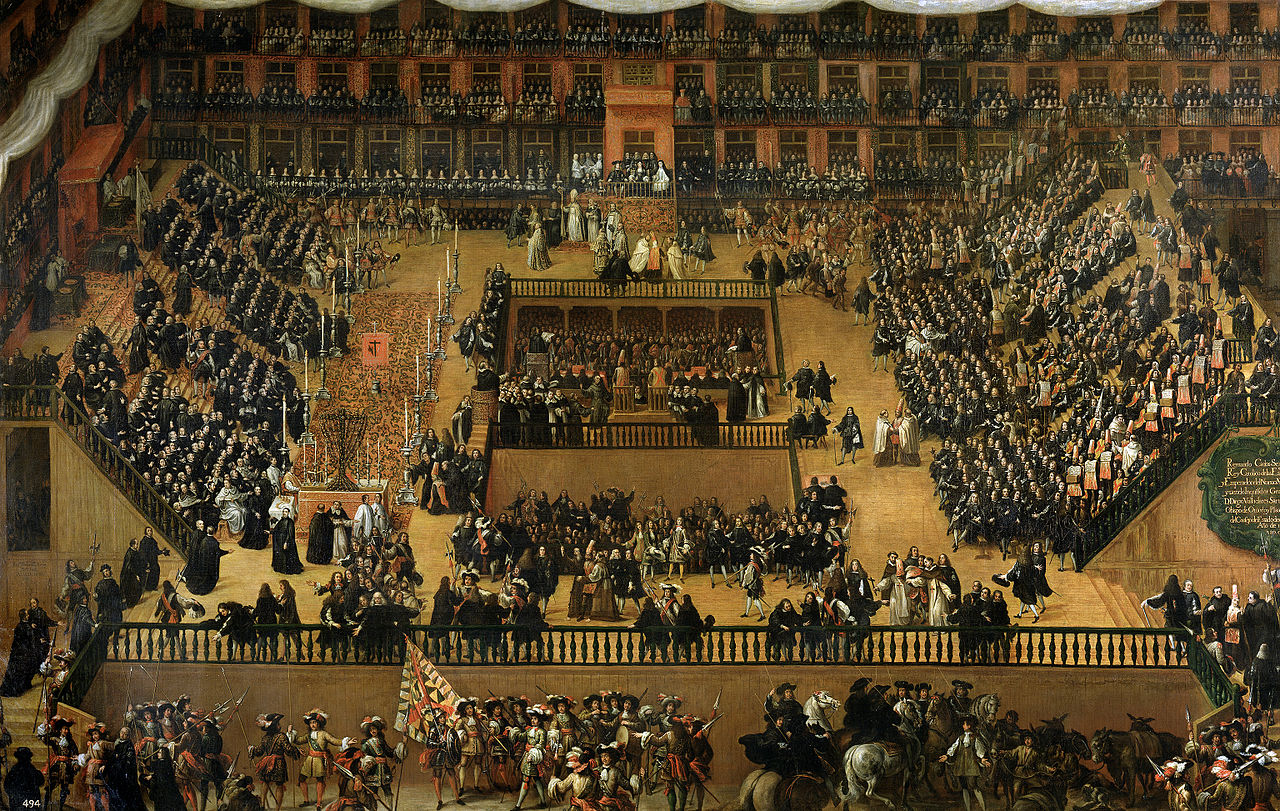
The institution was structured as a network of regional tribunals overseen by a central council. Inquisitors were clerics and officials charged with investigating complaints and conducting trials. Proceedings were generally secret: interrogations, evidence gathering and judgments were not public in the same way as ordinary criminal courts. Methods available to the tribunals included interrogation, use of informants and, in certain periods, judicial torture permitted by contemporary legal norms. Convictions could lead to a range of penalties from penances and imprisonment to property confiscation and, in the most extreme cases, execution by the state; public ceremonies called auto‑da‑fé announced sentences and reinforced community discipline.
Targets and measures
- Conversos: Jews who had converted to Christianity (voluntarily or under pressure) were often suspected of secretly practicing Judaism and were frequent subjects of inquiry.
- Moriscos and Muslims: after the late 15th and early 16th century expulsions and forced conversions, some formerly Muslim populations were monitored for signs of continuing Islamic practice.
- Protestants and other dissenters: as the Reformation spread, the tribunals also prosecuted those accused of Lutheran or other heterodox beliefs.
- Other offences: the Inquisition sometimes addressed blasphemy, witchcraft accusations, and publication of prohibited books.
Major events and development
The Inquisition was established under the authority of the Spanish monarchs and guided in its early years by prominent figures who shaped its methods and priorities. In 1492 the Crown issued a decree ordering the expulsion of Jews who refused conversion; subsequently, rules affecting Muslims in Iberia and the status of converted communities influenced the tribunal’s caseload. Over the 16th and 17th centuries the Inquisition adapted to new political and religious contexts, expanding and contracting its activity in response to internal and international pressures.
Decline, abolition and legacy
By the 18th century the power of the Inquisition waned as Enlightenment ideas, legal reforms and changing state structures reduced its role. It survived in various forms until it was finally suppressed in the early 19th century. The institution has left a lasting impression on cultural memory: it is widely invoked as a symbol of religious intolerance and authoritarian control, and it remains a subject of scholarly debate about its scale, motives and consequences. Modern historians continue to reassess sources and context to understand the Inquisition’s legal framework, social effects and place in Spanish and European history.
Notable facts and distinctions
- Although called an "Inquisition," the Spanish system differed from earlier papal inquisitions because it operated under strong royal influence and served state as well as ecclesiastical objectives.
- Trials often ended in reconciliation or penance; not every accusation led to severe punishment.
- The public spectacles and the association with torture and executions have shaped much of the popular memory of the institution.
For further reading about institutional details and historical controversies, see sources on the tribunal model and biographies of key figures such as the first grand inquisitor and the monarchs who established the system. Additional context is available through studies of social, religious and legal change in early modern Spain. Tribunal structure and the role of leading personalities including Ferdinand II of Aragon are useful entry points into more specialized literature.
Related articles
Author
AlegsaOnline.com Spanish Inquisition Leandro Alegsa
URL: https://en.alegsaonline.com/art/92487