
Storm history and legacy of Hurricane Katrina
Chronological account of Hurricane Katrina's development, track, impacts, and legacy, including formation near the Bahamas, Gulf intensification, landfalls on Florida and the Gulf Coast, inland decay and notable consequences.
Overview: Hurricane Katrina was an Atlantic tropical cyclone in late August 2005 that produced catastrophic impacts along the U.S. Gulf Coast. The system began as a tropical depression near the Bahamas and progressed through familiar tropical stages — strengthening to a tropical storm, producing multiple landfalls, and undergoing rapid intensification over the Gulf waters. Katrina combined powerful winds, an extensive storm surge, and heavy rainfall to cause widespread flooding and structural damage across several states.
Image gallery
10 Images
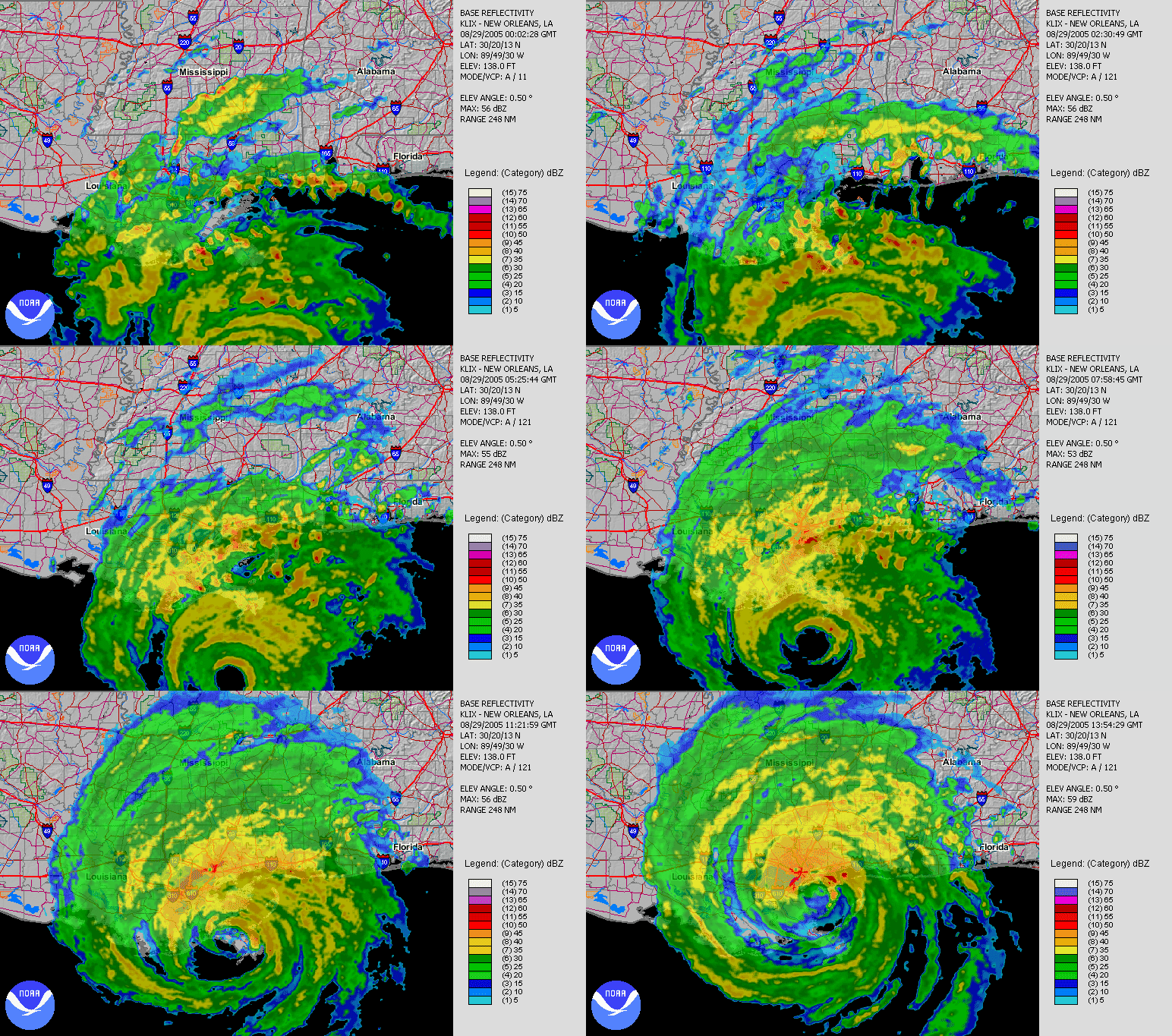


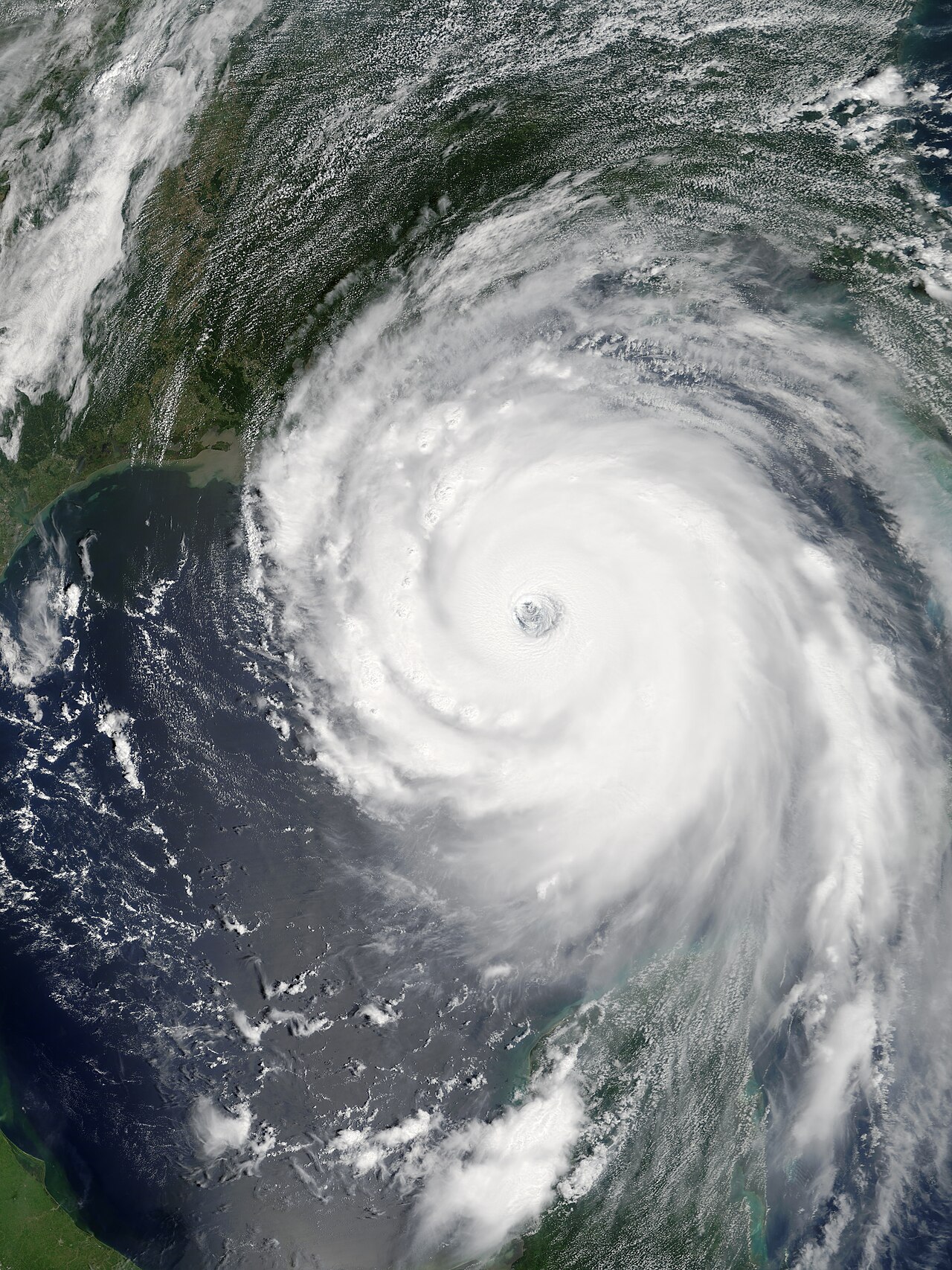


Meteorological history
The disturbance that became Katrina was first classified as Tropical Depression Twelve on August 23, 2005. Within about a day it strengthened to tropical storm strength and received the name Katrina. Steering currents carried the storm west-northwest toward the southeastern United States. By the time it approached the mainland it had reached hurricane strength and made an initial landfall on the southern coast of the U.S. state of Florida as a Category 1 hurricane, producing coastal damage and inland rainfall.
Crossing the Florida peninsula reduced the storm to tropical storm status, but intact structure and a favorable environment allowed it to reorganize over the warm Gulf of Mexico. There the cyclone underwent rapid intensification, reaching major hurricane intensity and briefly achieving Category 5 strength in the open Gulf. At its peak it ranked among the most intense Atlantic hurricanes on record (notable intensity ranking), with an organized core and a well-defined eye.
Katrina made final Gulf Coast landfalls near Buras–Triumph in Louisiana and again near the border of Mississippi and Louisiana, driving a destructive storm surge inland. After crossing the coast the cyclone weakened to a hurricane and then to a tropical storm as it moved northward through the central United States (central U.S.). It eventually lost tropical characteristics and was absorbed by a frontal system over the Great Lakes region, merging with a mid-latitude cold front.
Characteristics and impacts
Katrina combined a large wind field, an intense storm surge, and torrential rains. The surge overwhelmed coastal defenses and caused levee breaches that led to prolonged flooding, particularly in New Orleans and other low-lying communities. Structural failures, transportation disruptions, and utility outages amplified the human and economic consequences. The storm affected multiple states along the Gulf Coast and produced inland flooding and wind damage across a broad swath of the central United States as it moved inland.
Timeline highlights
- Formation as Tropical Depression Twelve near the Bahamas (Aug 23)
- Strengthened to Tropical Storm Katrina (Aug 24) — initial U.S. landfall on Florida as a hurricane
- Rapid intensification over the Gulf of Mexico to Category 5-equivalent strength
- Major landfalls on the central Gulf Coast near Buras–Triumph and the Mississippi/Louisiana border
- Decay over the central United States and absorption by a frontal system near the Great Lakes
Legacy and notable facts
Beyond its immediate destruction, Katrina prompted examinations of coastal flood protection, emergency planning, and evacuation procedures. It remains one of the most studied Atlantic hurricanes for lessons in forecasting, rapid intensity change, and the societal vulnerabilities exposed by extreme coastal storms. For more detailed archival data and post-storm analyses, see resources linked here: storm summary, intensification studies, and regional reports on levee performance and recovery efforts (storm ranking, dissipation analysis).
The sequence from formation near the Bahamas to final absorption by a cold front illustrates a complete tropical cyclone life cycle: genesis, organized intensification, land interaction, re-strengthening over warm ocean waters, destructive landfall, and eventual extratropical transition. Katrina's scale, surge, and societal impact continue to inform coastal risk management and hurricane science.
Further reading and archival materials: intensity context, landfall records, state-by-state impacts, local landfall details, Mississippi effects, border area notes, and recovery timelines (Louisiana reports, Great Lakes aftermath).
Questions and answers
Q: When did Hurricane Katrina's storm history begin?
A: Hurricane Katrina's storm history began on August 23, 2005.
Q: What type of hurricane was Hurricane Katrina?
A: Hurricane Katrina was a highly destructive Category 5 hurricane.
Q: Where did Hurricane Katrina originally form?
A: Hurricane Katrina originally formed near the Bahamas as Tropical Depression Twelve.
Q: When did Hurricane Katrina become a named storm?
A: Hurricane Katrina became a named storm on August 24, 2005.
Q: What was the highest category of Hurricane Katrina when it made landfall in Louisiana?
A: The highest category of Hurricane Katrina when it made landfall in Louisiana was Category 3.
Q: Did Hurricane Katrina stop after making landfall in Louisiana?
A: No, Hurricane Katrina did not stop after making landfall in Louisiana. It continued northward through the central United States.
Q: Where did Hurricane Katrina finally dissipate?
A: Hurricane Katrina finally dissipated near the Great Lakes, where it was absorbed by a cold front.
Related articles
Author
AlegsaOnline.com Storm history and legacy of Hurricane Katrina Leandro Alegsa
URL: https://en.alegsaonline.com/art/94101
Sources
- nhc.noaa.gov : "Tropical Depression Twelve, Discussion No. 1, 5:00 p.m. EDT"
- nhc.noaa.gov : Tropical Cyclone Report: Hurricane Katrina
- nhc.noaa.gov : "Tropical Storm Katrina Discussion No. 5, 5:00 p.m. EDT"
- nhc.noaa.gov : "Hurricane Katrina Discussion No. 14, 5:00 p.m. EDT"
- nhc.noaa.gov : "Hurricane Katrina Advisory No. 16, 5:00 a.m. EDT"
- nhc.noaa.gov : "Hurricane Katrina Advisory No. 20, 1:00 a.m. CDT"
- nhc.noaa.gov : "Hurricane Katrina Special Advisory No. 20, 7:00 a.m. CDT"
- nhc.noaa.gov : "Hurricane Katrina Intermediate Advisory No. 23a, 1:00 p.m. CDT"
- nhc.noaa.gov : "Hurricane Katrina Advisory No. 24, 4:00 p.m. CDT"
- nhc.noaa.gov : "Hurricane Katrina Intermediate Advisory No. 26b, 8:00 a.m. CDT"
- nhc.noaa.gov : "Tropical Depression Katrina Advisory No. 31, 10 a.m. CDT"
- hpc.ncep.noaa.gov : "Public Advisory 37 for the Remnants of Katrina, 11 p.m. EDT"
- atl.ec.gc.ca : "Post-Tropical Storm Katrina Information Statement, 08:00 a.m. EDT"