
South Tibet (Zàngnán): the disputed territory along the India–China frontier
South Tibet (Zàngnán) is the Chinese name for an area largely administered by India as Arunachal Pradesh but claimed by both India and China; it has Tibetan cultural ties and strategic significance.
Overview
South Tibet, known in Chinese as Zàngnán, is the term used by the Government of the China to refer to a geographic tract along the contested India–China border. The territory in question largely overlaps the northeastern Indian state of Arunachal Pradesh, and is subject to competing sovereignty claims by India and China. Residents of the region have cultural, linguistic and ethnic links to Tibetan society, ties often noted in descriptions of the area (see ethnic and linguistic connections).
Image gallery
4 Images


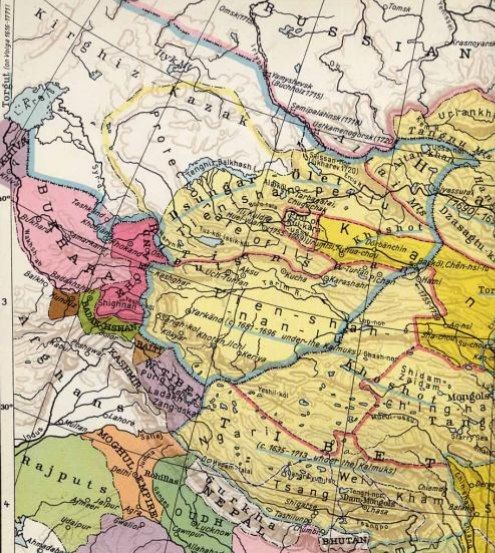
Geography and population
The region comprises mountainous terrain, river valleys and highland communities on the southern slopes of the eastern Himalaya. Populations include a number of indigenous groups who speak Tibeto-Burman languages and follow a mix of Tibetan Buddhism, local traditions and other faiths. Accessibility is limited by terrain and climate, which has shaped settlement patterns and economic life.
History and competing claims
Modern disagreement over South Tibet stems from differing interpretations of colonial-era boundaries and subsequent negotiations after 1947–49, including the role of the McMahon Line as a demarcation drawn in 1914 that India regards as the basis of its claim. China does not accept that line for the entire eastern sector and regards the area as part of its traditional Tibetan borderlands. The dispute has been a persistent feature of bilateral relations and has periodically produced diplomatic talks and military stand-offs.
Contemporary significance
South Tibet is important for strategic reasons—control of high ground and river headwaters affects defense and infrastructure planning—and for political symbolism tied to national sovereignty. The Indian government administers most of the territory as Arunachal Pradesh, while China continues to assert its claim under the name Zàngnán. Cross-border infrastructure, patrols and occasional incidents have kept the area prominent in India–China relations.
Key points and distinctions
- Terminology: "South Tibet" is primarily a Chinese political toponym; Indian sources use "Arunachal Pradesh" for the administered state.
- Cultural links: Many local communities share linguistic and religious affinities with Tibetan society rather than with the mainstream cultures of the adjacent Indian plains.
- Dispute character: The disagreement is about sovereignty and boundary alignment rather than unambiguous demographic ownership.
Further context
Negotiations between the two governments have continued intermittently, often alongside broader talks on trade and security. Scholarly and policy discussions emphasize careful, peaceful management of the dispute and sensitivity to local communities' identities and livelihoods. For more detailed background on names, maps and the parties' official positions, consult government releases and authoritative regional studies via the links provided above: Zàngnán, China, Arunachal Pradesh and ethnic context links.
Related articles
Author
AlegsaOnline.com South Tibet (Zàngnán): the disputed territory along the India–China frontier Leandro Alegsa
URL: https://en.alegsaonline.com/art/92229