
Somali language: overview, features, history, and regional use
Somali is an Afroasiatic Cushitic language spoken across the Horn of Africa and worldwide. This article summarizes its classification, sound and grammar traits, history of writing systems, varieties, and cultural importance.
Overview
Somali is a Cushitic language of the Afroasiatic family spoken by ethnic Somalis in the Horn of Africa and in diaspora communities worldwide. It serves as the primary vernacular for millions of people and functions as a national and everyday language in Somali-speaking areas. The language is closely associated with Somali identity and oral traditions.
Image gallery
6 Images


Classification and distribution
Somali belongs to the Cushitic branch. It is widely used in Somalia, Djibouti, parts of Ethiopia, communities in Kenya, and among migrants in Yemen and beyond. Estimates of total speakers vary, reflecting migration and census differences, but the language is spoken by several million people across these regions.
Sound system and grammar
Phonologically, Somali distinguishes short and long vowels and exhibits consonant contrasts typical of Cushitic languages. It also uses pitch and stress patterns that affect meaning. Grammatically, Somali marks gender (masculine and feminine), number, and a set of case roles on nouns; verbs encode tense, aspect, and mood through affixation and changes in form. Basic sentence order tends toward subject–object–verb (SOV), and possessive relationships and agreement are important parts of sentence structure.
Writing systems and standardization
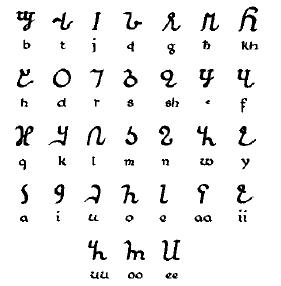
Historically Somali was transmitted mainly through oral poetry and storytelling and used various scripts in different contexts. Arabic script was used for religious and informal writing (Arabic), and several indigenous scripts—most notably Osmanya and other local alphabets—were developed in the 20th century. In the late 20th century a Latin-based orthography was chosen as the standard for literacy and administration; since then the Latin alphabet has been the principal script for education, publishing, and media.
Varieties and notable features
Somali comprises a number of dialect groups. Northern Somali varieties became the basis for the standard language, while Benadir and the Digil–Mirifle (including Maay) varieties show significant differences in pronunciation and some grammar. These varieties can affect mutual intelligibility, especially for less closely related southern dialects.
Cultural role and contemporary use
Somali has a rich oral literature, with poetry and storytelling central to social life; poets and oral historians play important cultural roles. Today Somali is used in government, broadcasting, print media, education in Somali-speaking regions, and in the international diaspora for community organization and cultural continuity. Its development from oral tradition to a standardized written language is a key chapter in Horn of Africa linguistic and cultural history.
Related articles
Author
AlegsaOnline.com Somali language: overview, features, history, and regional use Leandro Alegsa
URL: https://en.alegsaonline.com/art/91727