
Toki Pona: a Minimal Constructed Language
Toki Pona is a minimalist constructed language by Sonja Lang that reduces meaning to a small core vocabulary and combinatory grammar, used for linguistic experimentation, personal practice, and artistic expression.
Overview
Toki Pona is a deliberately simple, modern constructed language created to explore how much can be expressed with a very small set of lexical elements. Its name combines words meaning "language" and "good/simple" in the language itself. Rather than aiming to become a universal lingua franca, Toki Pona functions as an experiment in minimalism and semantic compression: speakers combine a compact vocabulary to convey a wide range of meanings.
Image gallery
7 Images


Characteristics
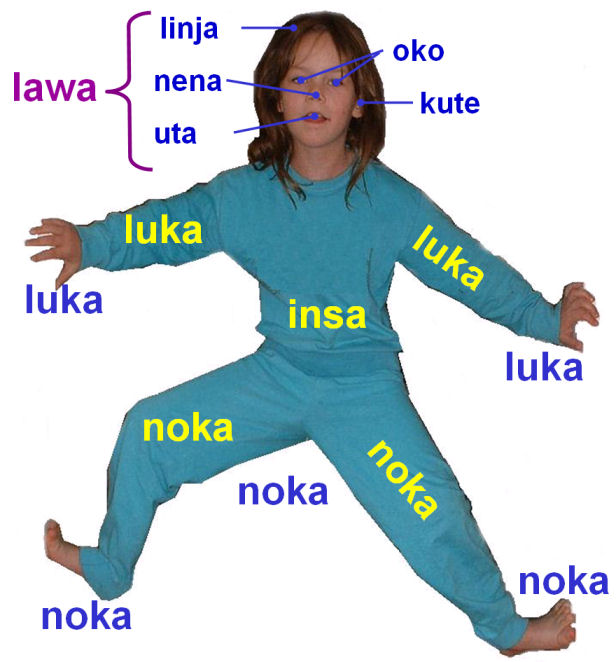
The language relies on a limited core lexicon—commonly described as about 120 root words—together with straightforward grammar. Each root carries a broad, often context-dependent meaning, and new ideas are formed by composing roots. For example, jan pona literally "good person" is used to mean "friend." Word order and particles are simple; morphology is minimal and there are no complex conjugations.
History and Influence
Toki Pona was developed by Sonja Lang, a Canadian translator and linguist, as a personal and pedagogical project in the early 21st century. Its design drew on general human cognitive patterns and everyday concepts familiar across many cultures, and it was influenced by philosophical ideas that value simplicity and balance—often compared to Taoist thought. The language spread through online communities, publications, and informal study groups rather than formal institutions.
Uses and Examples
- Language experiment: learners and researchers use Toki Pona to study how reduced vocabularies affect thought and communication.
- Personal practice: some people use it as a mental exercise, for meditation-like clarity, or for concise creative writing.
- Community: small but active online and real-world groups exchange translations, lessons, and original poetry.
Simple example words include suli (big), lili (small), pona (good/simple), and particles that mark possession or modifiers. Longer meanings rely on context: a phrase that in English would take many words can be compactly rendered by combining roots.
Writing and Notable Facts
Although Toki Pona is usually written with the Latin alphabet, enthusiasts have proposed alternative scripts and stylized alphabets. There have been experimental attempts to represent the language with pictographic systems, sometimes called pictograms, but no single graphical system has become standard. The language is not intended as an international auxiliary language; rather it is valued for how restrictions shape expression and cognition.
Further reading
For people interested in learning Toki Pona, community resources include online courses, dictionaries, and discussion forums where learners compare translations and usage. The language's compactness makes it approachable for beginners while offering subtle challenges to those who wish to convey nuance through limited means.
Questions and answers
Q: Who created the language Toki Pona?
A: Sonja Lang (also known as Sonja Elen Kisa) created the language Toki Pona.
Q: What is the purpose of creating Toki Pona?
A: The purpose of creating Toki Pona is to test ideas about minimalism and pidgins, while being influenced by Taoist ideas.
Q: How many root words are used in Toki Pona?
A: In Toki Pona there are only 120 root words, but there are over 50,000 different possible combinations.
Q: What writing system does it typically use?
A: Typically Toki pona uses the Latin alphabet, however some people have tried to create a writing system based on pictograms with little success.
Related articles
Author
AlegsaOnline.com Toki Pona: a Minimal Constructed Language Leandro Alegsa
URL: https://en.alegsaonline.com/art/91876
Sources
- theguardian.com : "What happened when I tried to learn Toki Pona in 48 hours using memes"
- worldcat.org : 0261-3077
- actualfluency.com : "AFP 20 - Sonja Lang: Toki Pona, Conlanging, meaning of life"