
Soldering iron — tools, types, uses and safety
A soldering iron is a handheld tool that melts solder to join metal parts. This article explains components, common types (electric, transformer, gas), applications, accessories, safety and maintenance.
A soldering iron is a handheld heating tool used to melt solder so two or more metal parts can be joined. In electronics it is indispensable for attaching wires and components to printed circuit boards; similar techniques are used in jewelry, stained glass, and small metal repairs. Solder itself comes in different alloys and compositions, including traditional tin–lead mixes and modern lead-free formulations; for more on solder materials see solder alloys.
Image gallery
10 Images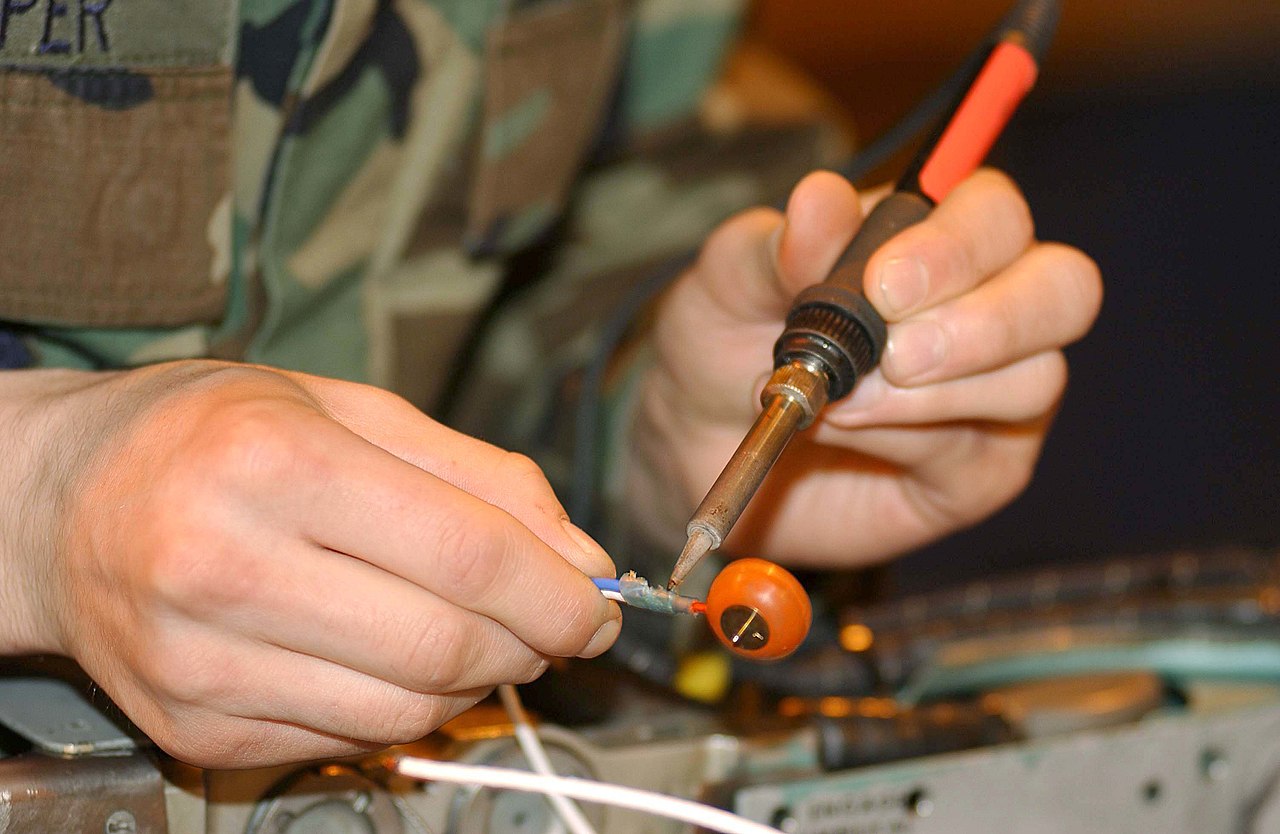




Components and how it works
Typical soldering irons have a handle, a heating element, and a removable metal tip. The tip conducts heat to the workpiece and is available in many shapes and sizes — conical, chisel, bevel, and speciality profiles — chosen to match the task. Many users maintain their tips by tinning them (coating with a thin layer of solder) to improve heat transfer and slow corrosion. Higher-end setups separate the heating element into a station that provides temperature control and stability.
Common types
- Basic electric irons: simple, corded tools that heat a fixed element and tip; suitable for general hobby and repair work.
- Temperature-controlled stations: bench units with adjustable settings and replaceable tips for precision work and sensitive components.
- Transformer-based irons: designs that use an internal transformer to alter voltage or current characteristics for robust heating; see transformer-style irons.
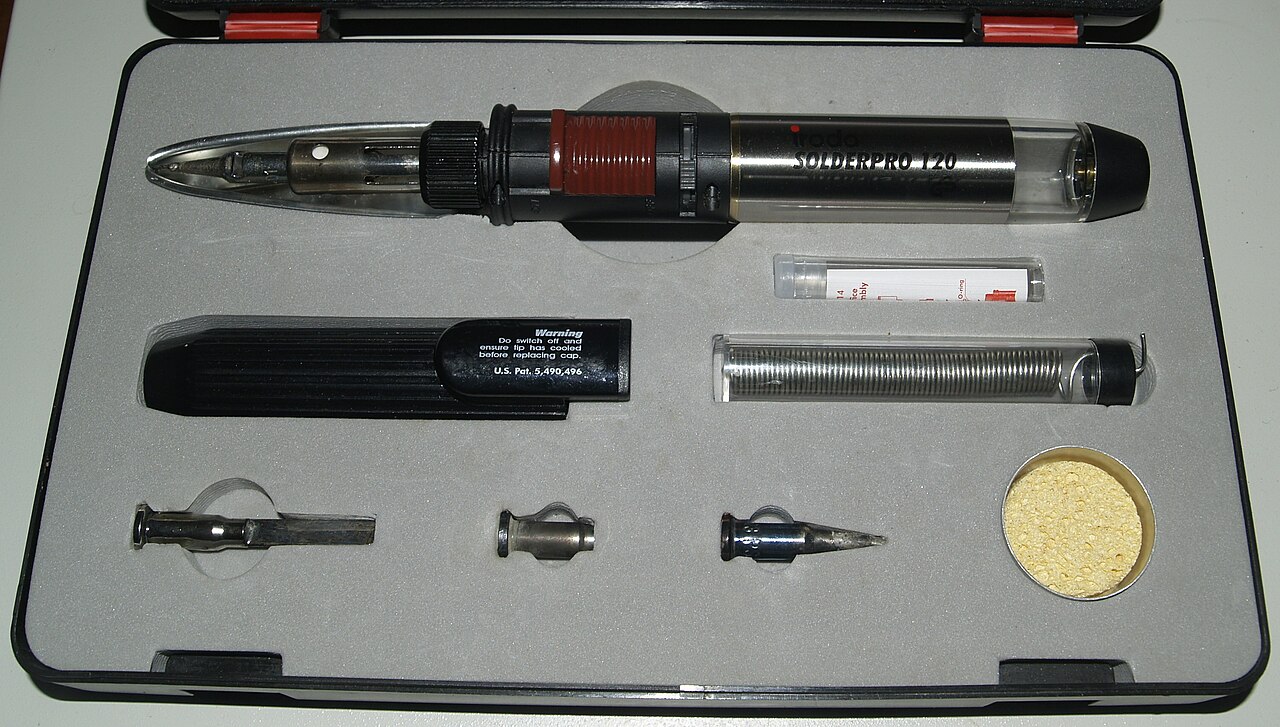
- Gas-powered irons: portable models fueled by butane or similar gas, useful where mains power is unavailable; sometimes called portable or butane irons.
Uses and practical distinctions
Soldering irons are best known for electronics assembly and repair, where controlled, localized heat is essential. They are also used in craftwork such as jewelry repair, small metal joining, and stained-glass assembly. For larger plumbing or HVAC joints that require melting substantial amounts of solder or fluxing metals, tradespeople typically use torches rather than a hand iron; the tools and techniques differ accordingly.
Accessories, maintenance and safety
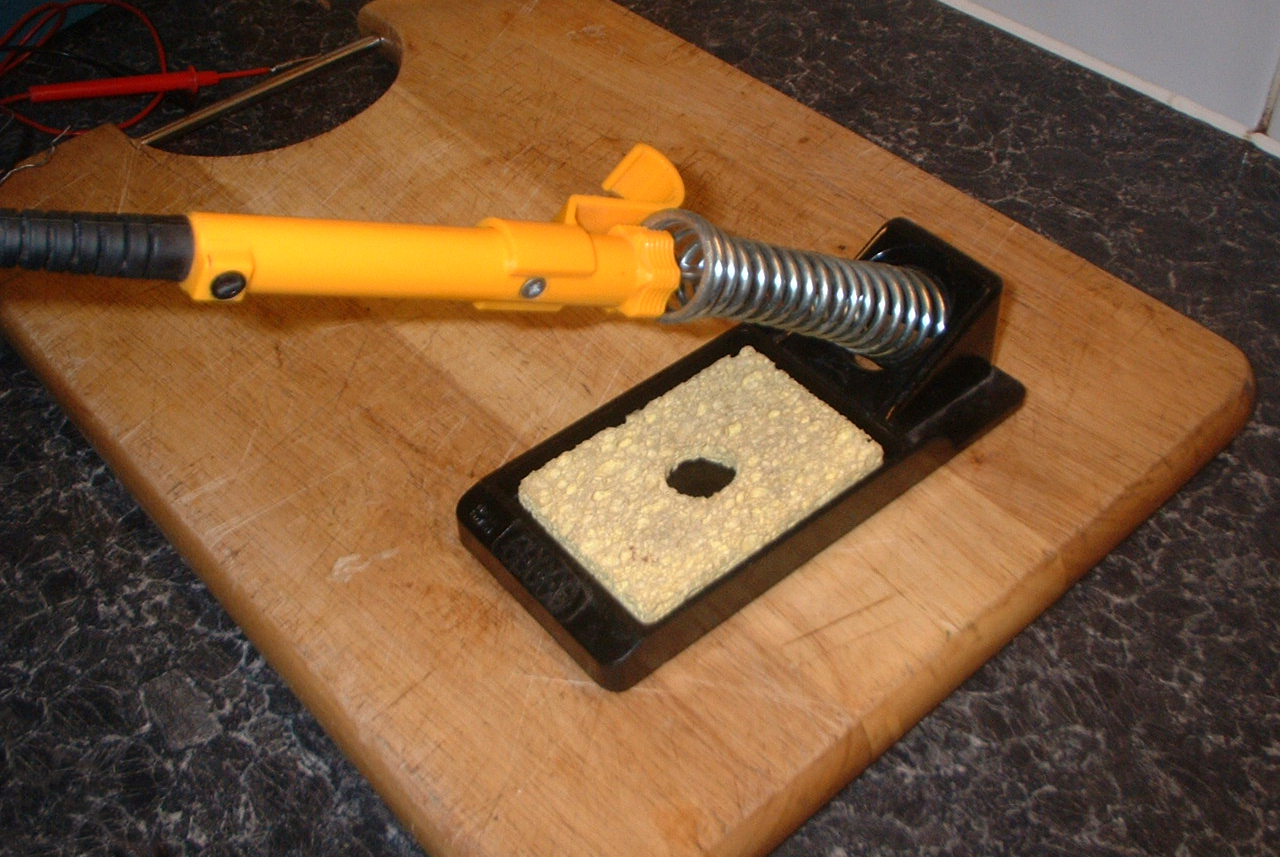
Common accessories include a stable iron stand with a coil holder, a damp sponge or brass-wool cleaner for tip maintenance, helping-hands clamps, and fume extraction devices. Proper tip care extends tool life: keep tips clean, re-tin regularly, and replace worn tips. Safety practices include working in a well ventilated area to avoid fumes, using eye protection, keeping the hot tip away from flammable materials, and placing the iron securely in its stand when not in use.
Although soldering is a simple principle—apply heat, melt solder, form a joint—it spans a wide range of tools and techniques. From simple hobby irons to precision stations and portable gas units, choosing the right type and maintaining safe working habits makes soldering effective and reliable for many small-scale metal-joining tasks.
Related articles
Author
AlegsaOnline.com Soldering iron — tools, types, uses and safety Leandro Alegsa
URL: https://en.alegsaonline.com/art/91655