
Sodium sulfite (Na2SO3)
Inorganic sodium salt used as a mild reducing agent, preservative and dechlorinator. Forms anhydrous and hydrated crystals, reacts with acids to release sulfur dioxide and oxidizes to sulfate.
Overview
Sodium sulfite is an inorganic salt with the formula Na2SO3. It appears as a white crystalline solid that can occur in anhydrous and hydrated forms. Chemically it is a chemical compound composed of sodium and sulfite units; the sulfite component is made up of sulfur and oxygen atoms arranged around a central sulfur ion often described as one of several ions in oxyanion chemistry.
Image gallery
4 Images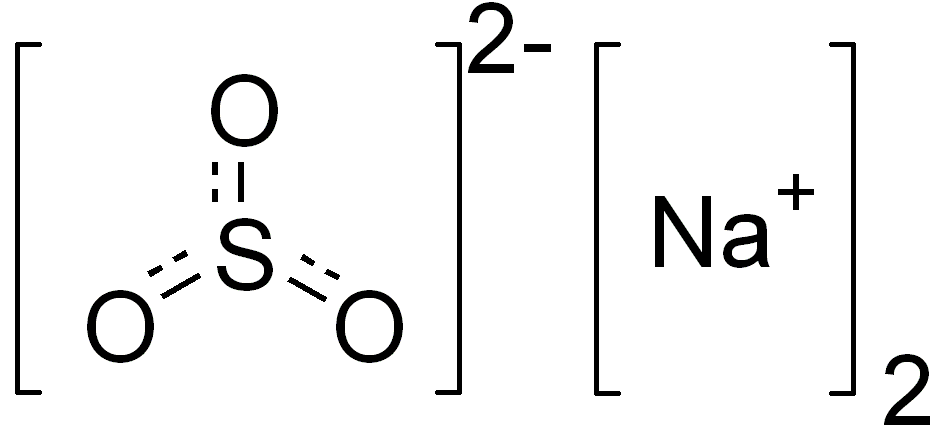


Properties and reactions
As a substance it acts as a mild reducing agent. When exposed to acids it liberates gaseous sulfur dioxide, a reaction used historically and industrially where SO2 is required. On exposure to oxygen or other oxidants, sodium sulfite is oxidized to sodium sulfate, a more stable and fully oxidized sulfur species. These transformation pathways determine much of its practical handling and storage.
Production and common uses
Sodium sulfite is manufactured by neutralizing sulfur dioxide with sodium carbonate or sodium hydroxide under controlled conditions. Its principal applications exploit its chemical reactivity and preservative ability. Typical uses include:
- Food preservation: used to help preserve certain dried fruits and other products (regulatory limits and labeling apply).
- Water treatment: removes residual chlorine and dechlorinates wastewater or pool water.
- Industrial chemistry: employed to consume dissolved oxygen in boiler feedwater and in some organic syntheses.
- Photography and preservation: used as a preservative in some developer solutions and as a sulfite source in laboratory reagents.
History and context
Sulfite salts have been used for centuries for bleaching, preservation and as reducing agents. Modern sodium sulfite emerged with industrial sulfur dioxide capture and the growth of chemical manufacturing; because it is cheaper and easier to handle than many gaseous reagents, it became common in water treatment and preservation roles.
Safety and regulation
Although useful, sodium sulfite can irritate the skin and respiratory tract and reacts with acids to produce sulfur dioxide, a respiratory irritant. Some individuals are sensitive or allergic to sulfites in foods, so many jurisdictions require labeling when sulfites are used as additives. Safe handling involves avoiding inhalation of dust, storing in a dry, cool place, and following local regulatory guidance for food and environmental uses.
Notable distinctions
Related compounds such as sodium bisulfite and sodium metabisulfite are chemically distinct and differ in acidity, available SO2 content and typical applications; the choice among them depends on the required pH, SO2 release and regulatory considerations. For further technical data and standards see product literature or standards documents linked by manufacturers and regulators (technical references).
Related articles
Author
AlegsaOnline.com Sodium sulfite (Na2SO3) Leandro Alegsa
URL: https://en.alegsaonline.com/art/91545