
Sodium tellurite (Na2TeO3)
Sodium tellurite, Na2TeO3, is an inorganic salt of tellurous acid containing the tellurite anion. It is used in chemistry and microbiology and must be handled as a toxic tellurium compound.
Sodium tellurite is an inorganic compound with the formula Na2TeO3. It is a salt composed of sodium cations and the tellurite anion (TeO32−), derived from tellurous acid. In pure form it appears as a pale, crystalline solid and dissolves in water to give alkaline solutions.
Image gallery
2 Images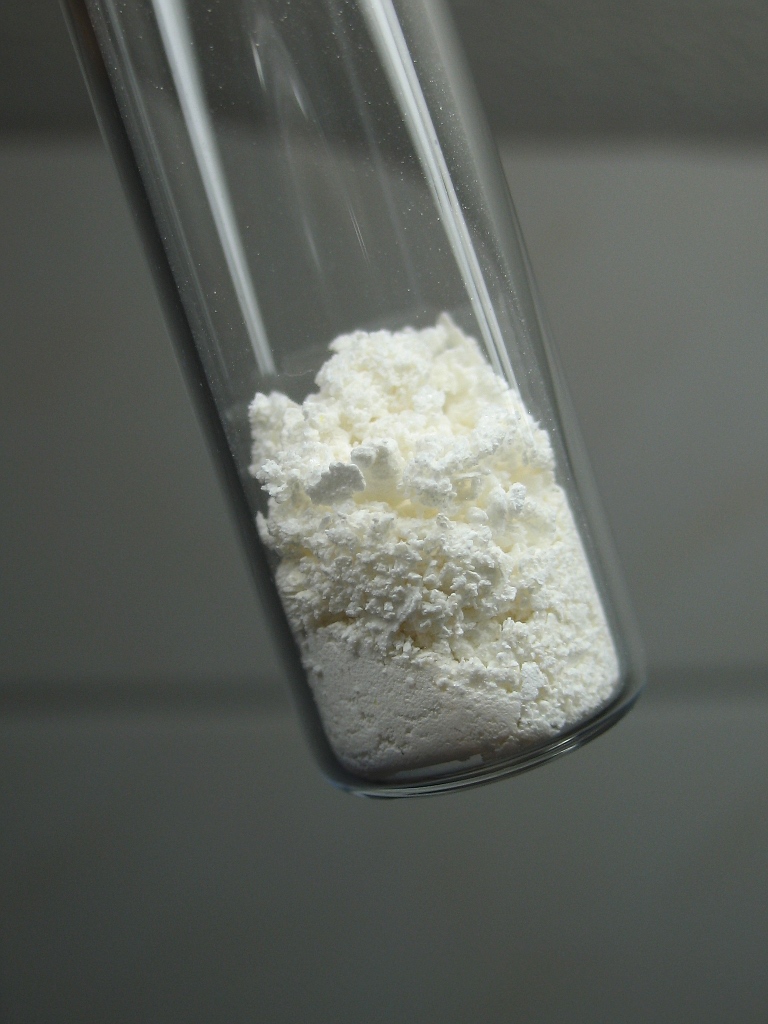

Chemical characteristics
The tellurium in sodium tellurite is in the +4 oxidation state. The tellurite ion has a lone pair on the central atom and typically adopts a trigonal‑pyramidal electron geometry in discrete anions. Sodium tellurite behaves as a moderately stable oxyanion salt: it can be oxidized to tellurates or reduced to tellurides under suitable conditions.
Preparation and occurrence
Sodium tellurite is commonly prepared by neutralizing tellurium dioxide (TeO2) with sodium hydroxide or by controlled oxidation of elemental tellurium in alkaline solution. Natural tellurite minerals are rare; most industrial and laboratory material is synthesized. The sodium component is present as simple Na+ ions and can be referenced separately as sodium.
Uses and applications
Sodium tellurite has several practical uses. In microbiology, low concentrations are used in selective media to inhibit unwanted bacteria while allowing growth of certain pathogens, making it valuable for diagnostic culture work. It also serves as a precursor in the synthesis of other tellurium compounds, and finds occasional use in metallurgy, electroplating, and glass or ceramic formulations where tellurium oxides modify optical or electrical properties.
Handling, toxicity and environmental notes
Tellurium compounds are toxic and should be treated with care. Exposure can cause irritation and systemic effects, and some tellurium salts produce a characteristic garlic‑like odor on breath after exposure. Laboratory handling requires appropriate personal protective equipment and waste disposal consistent with chemical safety regulations; consult material safety resources such as safety datasheets for guidance.
Related compounds and distinctions
Sodium tellurite should be distinguished from tellurate (containing Te in the +6 state) and telluride (Te2−). The tellurite ion itself is sometimes discussed under the generic name tellurite. Understanding these differences is important for predicting redox behavior, solubility, and reactivity in chemical and environmental contexts.
Related articles
Author
AlegsaOnline.com Sodium tellurite (Na2TeO3) Leandro Alegsa
URL: https://en.alegsaonline.com/art/91547