
Solder — low‑melting metal alloy used to join materials
Overview of solder: types (soft and hard), common alloy compositions, flux and wetting, applications in electronics and plumbing, working methods, health and environmental considerations.
Overview
Solder is a fusible metal or alloy used to join parts by melting a filler that wets and bonds to the surfaces without melting the base materials. The action of joining with solder is called soldering. Unlike welding, which fuses base metals together, soldering relies on a filler metal that solidifies to form both a mechanical and an electrical connection. Solder is selected so its melting point is well below the temperature that would damage components, making it suitable for sensitive applications such as electronics and other electrical assemblies.
Image gallery
10 Images




Types and common compositions
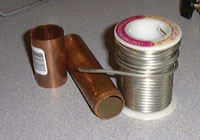
Solders are commonly grouped into two broad categories: soft solders and hard solders (brazing alloys). Soft solders melt at relatively low temperatures and are typically used with a soldering iron. Hard solders and brazing alloys require higher heat, often supplied by a torch, and produce stronger mechanical joints. Historically, the most common soft solder was a tin–lead mixture. Traditional tin–lead solders contained significant proportions of tin (Sn) and lead (Pb); many classic formulations are around 60–63% tin with the remainder lead, giving a relatively low melting point and reliable flow. In response to health and regulatory concerns, modern lead‑free solders commonly use alloys of tin with additions such as silver and copper, and sometimes trace elements like indium to improve wetting and mechanical behavior.
Melting behaviour and temperature ranges
Soft solders typically melt at temperatures low enough for hand tools; classic tin–lead alloys solidify near the 180–190 °C range, while many lead‑free alloys melt at somewhat higher temperatures (around 215–220 °C for common tin–silver–copper mixes). Hard solders and brazing alloys have melting ranges that can exceed several hundred degrees Celsius and are selected where greater joint strength or higher working temperature is required. Some specialized solders used for glass or stained‑glass work have melting characteristics closer to 450–550 °C.
Flux, oxidation and wetting
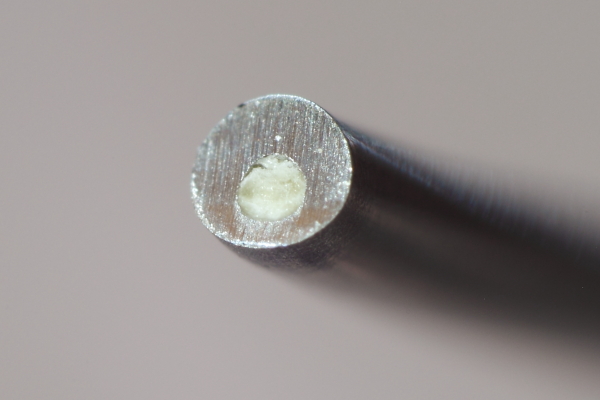
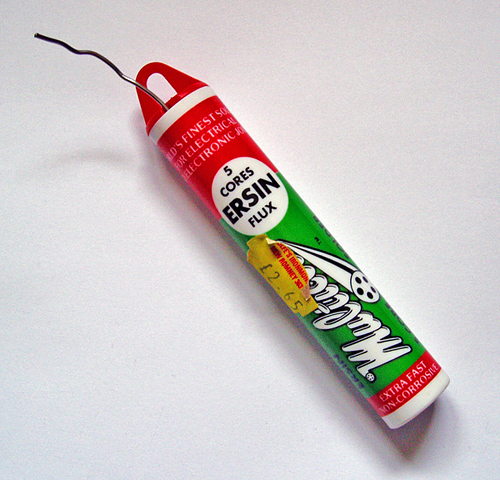
When metal surfaces are heated they rapidly form thin films of metal oxide that inhibit wetting. A chemical agent called flux is used to remove or reduce oxides, chemically clean the surface, and promote the flow of molten solder. Flux is available in rosin‑based, water‑soluble, and "no‑clean" formulations. Many solder wires are manufactured with a flux core so that flux is dispensed as the solder melts, which simplifies hand soldering. After soldering, some flux residues must be removed for reliability and corrosion prevention; water‑soluble fluxes are designed to be washed away, while rosin residues may be left if they are non‑corrosive and meet the product's reliability criteria.
Applications and techniques
Solder is ubiquitous across industries. Soft solder is the standard method for assembling printed circuit boards (PCBs), attaching components, and making electrical connections. Techniques range from manual point‑to‑point soldering and through‑hole work to wave soldering and selective soldering in mass production. Surface‑mount device (SMD) assembly commonly uses solder paste and reflow ovens. Hard soldering and brazing are employed where joints must bear mechanical loads or operate at higher temperatures, such as in plumbing, HVAC, jewelry and some metalwork. Solder choice depends on electrical conductivity, mechanical strength, thermal cycling resistance and compatibility with the materials being joined.
Health, regulation and environmental concerns
Lead‑containing solders were widely used because of their low melting points, reliable wetting and low cost. Over the late 20th and early 21st centuries, concerns about lead exposure led to restrictions on its use in consumer goods and electronics in many jurisdictions. Regions and regulators such as the European Union, China and some states in the United States including California have imposed limits on lead in consumer products and electronics, accelerating adoption of lead‑free alloys. Lead solder remains in service in some specialized, repair or legacy contexts, but its handling requires precautions to avoid ingestion or inhalation. Good work practices include adequate ventilation, personal hygiene (washing hands before eating), proper storage, and recycling of solder and waste materials in accordance with local regulations.
Reliability issues and best practices
Reliable soldered joints require proper temperature control, clean surfaces, suitable flux, correct joint design and appropriate alloy selection. Problems such as cold joints, insufficient wetting, voids in reflowed solder, and formation of brittle intermetallic layers can be mitigated by following recommended process windows and using qualified materials. Lead‑free solders can be more demanding in terms of processing temperature and susceptibility to thermal fatigue; manufacturers and standards bodies provide guidance for designing and qualifying assemblies. In some cases, additives and tailored alloys are used to reduce risks such as tin whisker growth or to improve mechanical robustness in thermal cycling.
Practical guidance and resources
For those selecting solder or establishing processes, consult manufacturers' technical datasheets, industry standards and safety data sheets for details on composition, melting range and recommended flux. Training in soldering technique improves workmanship and reliability: learning to apply heat efficiently, to use the correct amount of solder and flux, and to inspect joints visually and with basic testing will reduce failures. Trade organizations, standards bodies and equipment suppliers provide extensive resources on hand soldering, reflow, wave soldering and brazing; seek information from reliable sources such as material suppliers, technical handbooks and recognized training providers. For more general metallurgical background or material supply information, see resources offered by metal and alloy vendors via metal and alloy suppliers and by electronics and plumbing industry groups (tools and equipment, electronics guides, electrical standards).
- Common soft‑solder alloys: tin–lead (traditional), tin–silver–copper (lead‑free), specialty blends with indium or other additions.
- Common flux types: rosin, no‑clean, water‑soluble; selection depends on cleaning needs and reliability.
- Key concerns: melting point, joint strength, corrosion resistance, electrical conductivity and toxicity.
For specific product recommendations, safety instructions and regulatory compliance details consult manufacturers' datasheets and local regulations. Practical tutorials and safety advice are widely available from equipment makers and instructional sources; when in doubt, follow published standards and seek professional guidance for regulated applications such as potable plumbing and aerospace electronics. Further technical background and supplier information can be found through trade literature and standards organizations that publish guidance on solder alloys, fluxes and processing methods (silver, copper, indium alloying notes, and flux chemistry oxidation control). For practical safety guidance, review material safety data sheets and training materials supplied with flux and solder products (flux handling and cleaning).
Questions and answers
Q: What is solder?
A: Solder is a metal or alloy that melts at a low temperature and is used in electronics, electrical work, plumbing, and connecting glass to other materials.
Q: What are the two types of solder?
A: The two types of solder are soft solder and hard solder. Soft solder melts easily with soldering irons and is used for electronics and electrical work while hard solder melts at a higher temperature with a torch.
Q: What are the two main types of soft solder?
A: The two main types of soft solder are lead-based solders, which contain about 60% tin and 40% lead, and lead-free solders which typically consist of tin, silver, copper, and sometimes indium.
Q: At what temperatures do these different types of solders melt?
A: Lead-based solders melt at around 185°C while lead-free solders melt at around 217°C. Glass-to-metal solders melt between 450-550°C.
Q: Why was lead once used in food cans?
A: Lead was once used in food cans because people thought it was safe; however after many years it was discovered that the lead could come into contact with the food inside the can which caused poisoning when consumed by people who ate the food.
Q: Is lead still used in electronics today?
A: In 2006 the European Union, China, California banned lead from consumer products so it became illegal to use in electronic devices in some places; however it is still used in some cases as an alternative to more expensive options such as indium.
Q: What is flux added to metals before they are soldered?
A: Flux is added to metals before they are soldered because it reacts with any metal oxide present on the surface of the metal which turns it back into metal again so that it will hold onto the molten solder better during connection.
Related articles
Author
AlegsaOnline.com Solder — low‑melting metal alloy used to join materials Leandro Alegsa
URL: https://en.alegsaonline.com/art/91654