
Snowman
A snowman is a human-like figure built from snow, commonly made as a winter pastime, seasonal decoration, or folk art; it has cultural variants, construction methods, and occasional festival spectacles.
Overview
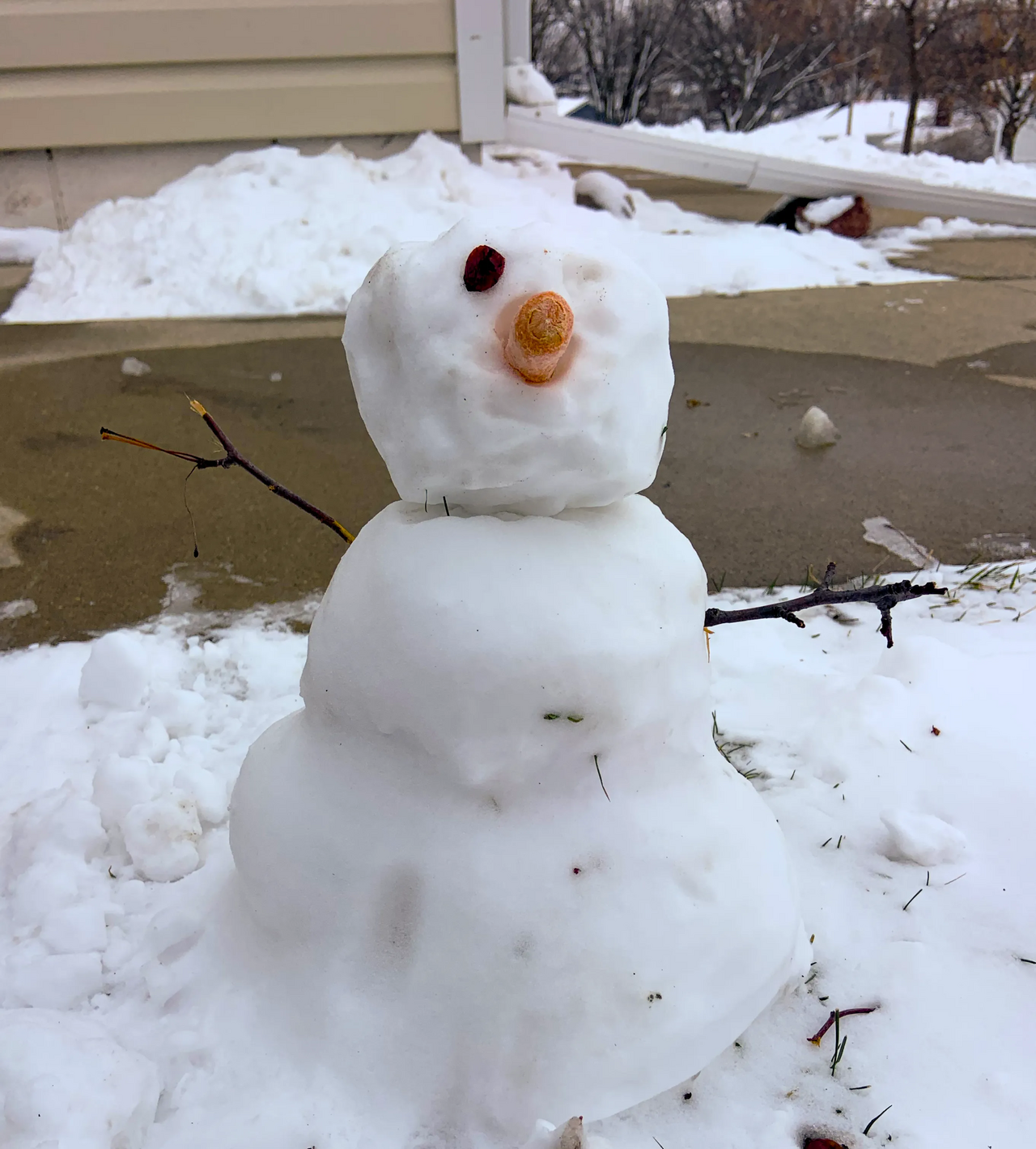
A snowman is a simple outdoor sculpture that represents a human figure made from compacted snow. Traditionally it is assembled from stacked spheres formed by rolling or packing snow, then dressed with items such as a scarf, hat and a carrot for a nose. Some descriptions call it a small temporary statue, while its raw material is of course snow. Most Western-style snowmen use three stacked balls of different sizes, but variations exist—Japanese yukidaruma commonly use two.
Image gallery
10 Images




Construction and materials
Successful snowmen depend on snow quality and temperature. Wet, slightly melted snow compacts and sticks better than dry powder. Builders typically start by packing a core, then rolling to gather more snow into a ball, repeating for additional layers before stacking. Common additions include pebbles or coal for eyes and buttons, twigs for arms, a carrot nose, and clothing items to suggest personality. For larger sculptures, internal supports such as wooden stakes, frames or packed snow cores can improve stability.
History and cultural significance
Snow figures appear in the folklore and art of cold-climate societies and have been made for centuries as both play and symbolic decoration. In modern popular culture the snowman appears in songs, stories and seasonal imagery—examples include children’s winter traditions and animated characters that celebrate the transience of winter. Communities also create elaborate snow sculptures and hold contests that turn a simple pastime into organized public spectacles.
Uses, records and notable variations
Beyond informal play, snowmen serve as holiday decorations, educational projects, and entries in winter festivals and competitions. Records and large-scale builds attract media attention; for example, a notably large snowman reported in the United States in 2008 measured about 122 feet 1 inch and drew widespread notice for its scale. Builders experiment with style—snowwomen, themed characters, and abstract forms are all common variations. The shape and durability of a snowman depend on local climate, so regionally adapted techniques and artistic choices are common.
Practical tips and safety
- Use snow that slightly compacts when squeezed; avoid extremely dry powder.
- Pack a firm base and work from largest to smallest sphere to maintain balance.
- Consider a core or temporary supports for very large constructions.
- Be mindful of cold exposure and choose safe accessory materials (no sharp or heavy objects that could fall).
Snowmen remain a widespread, low-cost expression of seasonal creativity: ephemeral, social, and adaptable to simple play or elaborate public art. For more on construction methods and cultural variations see resources linked here and local winter festival guides about typical three-ball construction.
Further reading and references can be sought through general winter-sports and folk-art sources on snow and community festival pages about outdoor sculpture.
Related articles
Author
AlegsaOnline.com Snowman Leandro Alegsa
URL: https://en.alegsaonline.com/art/91352
Sources
- guinnessworldrecords.com : "Record Page"