
Southwark Cathedral
Medieval Anglican cathedral on the south bank of the Thames in London; seat of the Diocese of Southwark with over 1,000 years of worship and a mainly Gothic fabric dating from the 13th–15th centuries.
Overview
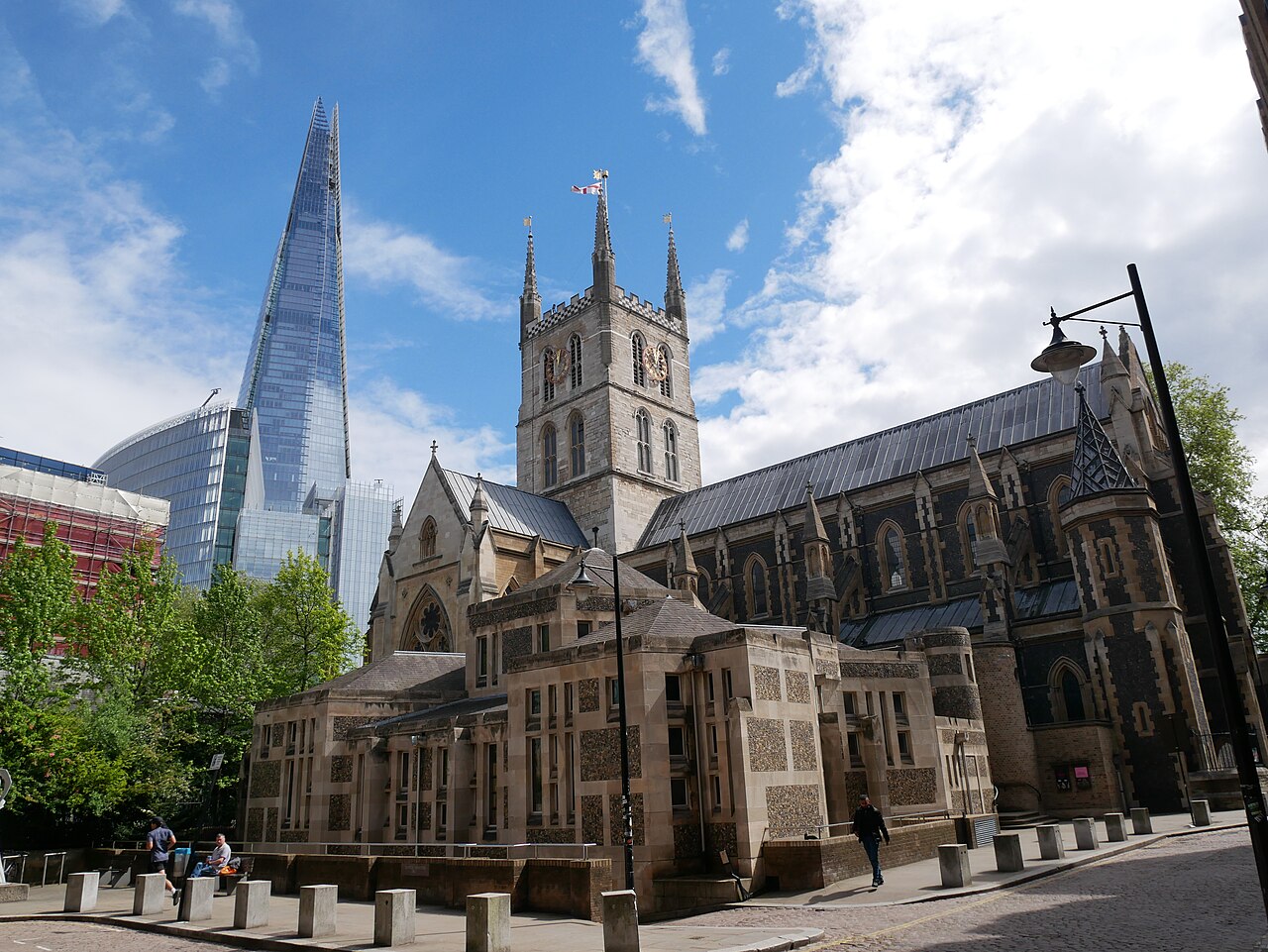
Southwark Cathedral stands on the south bank of the River Thames, close to London Bridge, at the heart of the historic Southwark district. The church lies beside busy streets and markets, forming a visible landmark for people crossing the river from the City of London. The cathedral remains an active place of worship and civic ceremony while also attracting visitors interested in architecture and local history. Southwark, London, the River Thames and nearby London Bridge together give the building its distinctive urban setting.
Image gallery
10 Images





Status and dedication
Formally known as the Cathedral and Collegiate Church of St Saviour and St Mary Overie, it is the mother church of the Anglican Diocese of Southwark. The site has hosted continuous Christian worship for more than a thousand years, although it was elevated to cathedral status only in 1905 (cathedral designation). Its role combines parish ministry, diocesan functions and a programme of cultural events.
Architecture and interior
The present building is predominantly Gothic, with principal construction phases from the early 13th century to the 15th century. Visitors encounter a slender nave and choir, medieval stonework, stained glass windows and timber roofs that reflect successive building campaigns. Later restorations in the 19th and 20th centuries repaired wear and adapted the interior for modern liturgy, while preserving medieval features such as choir stalls and carved misericords.
History and notable associations
The church originated as a medieval priory and parish serving residents and travellers by the river. Over time it developed from a local minster into the cathedral seat for the south bank. Several historically significant figures are linked with the building: the poet John Gower is buried here and John Harvard, later associated with Harvard University, was baptised at this church. The site illustrates the continuity of religious life in Southwark from the Middle Ages to the present.
Uses, community and surroundings
Southwark Cathedral combines regular worship with concerts, lectures and civic ceremonies. It hosts choral music, educational programmes and community outreach while remaining a popular stop for visitors to the area. Immediately adjacent are Borough Market and riverside buildings such as the Hall of the Worshipful Company of Glaziers and Painters of Glass. Transport connections are strong: London Bridge station lies nearby and the main railway route running towards Cannon Street station passes close to the church, its viaduct affecting views from the south.
Notable facts
- The cathedral combines medieval fabric with later restoration rather than being a single-period monument.
- It continues to serve as both a local parish church and the diocesan cathedral.
- Its riverside location links it historically to trade, hospitality and travel across the Thames.
For visitors and researchers the cathedral offers a compact but rich example of English ecclesiastical architecture and urban religious life, set within one of London’s oldest commercial neighbourhoods.
Questions and answers
Q: What is Southwark Cathedral?
A: Southwark Cathedral is a Christian church located in Southwark, London, and is the mother church of the Anglican Diocese of Southwark.
Q: How long has Southwark Cathedral been a place of worship?
A: Southwark Cathedral has been a place of Christian worship for over 1,000 years.
Q: When did Southwark Cathedral become a cathedral?
A: Southwark Cathedral became a cathedral in 1905.
Q: What is the architectural style of the present building of Southwark Cathedral?
A: The present building of Southwark Cathedral is mainly Gothic, from 1220 to 1420.
Q: Where is Southwark Cathedral located in relation to the River Thames and London Bridge?
A: Southwark Cathedral is located on the south bank of the River Thames close to London Bridge.
Q: What landmark buildings are close by Southwark Cathedral?
A: Borough Market and the Hall of the Worshipful Company of Glaziers and Painters of Glass by the river are close by Southwark Cathedral.
Q: What is the main railway line that passes close to Southwark Cathedral?
A: The main railway line that passes close to Southwark Cathedral is from London Bridge station to Cannon Street station.
Related articles
Author
AlegsaOnline.com Southwark Cathedral Leandro Alegsa
URL: https://en.alegsaonline.com/art/92335