
Barred Owl (Strix varia)
A large, stocky North American owl noted for barred plumage, rounded face, deep hoots, broad diet and adaptability to mature forests and some suburban areas.
Overview
The barred owl (Strix varia) is a large, stocky owl native to much of eastern North America. It is well known for its rounded head, dark eyes, and the distinct barred and streaked patterning on its chest and back. Barred owls are primarily nocturnal but are sometimes active at dusk or by day, especially when feeding young or in winter.
Image gallery
10 Images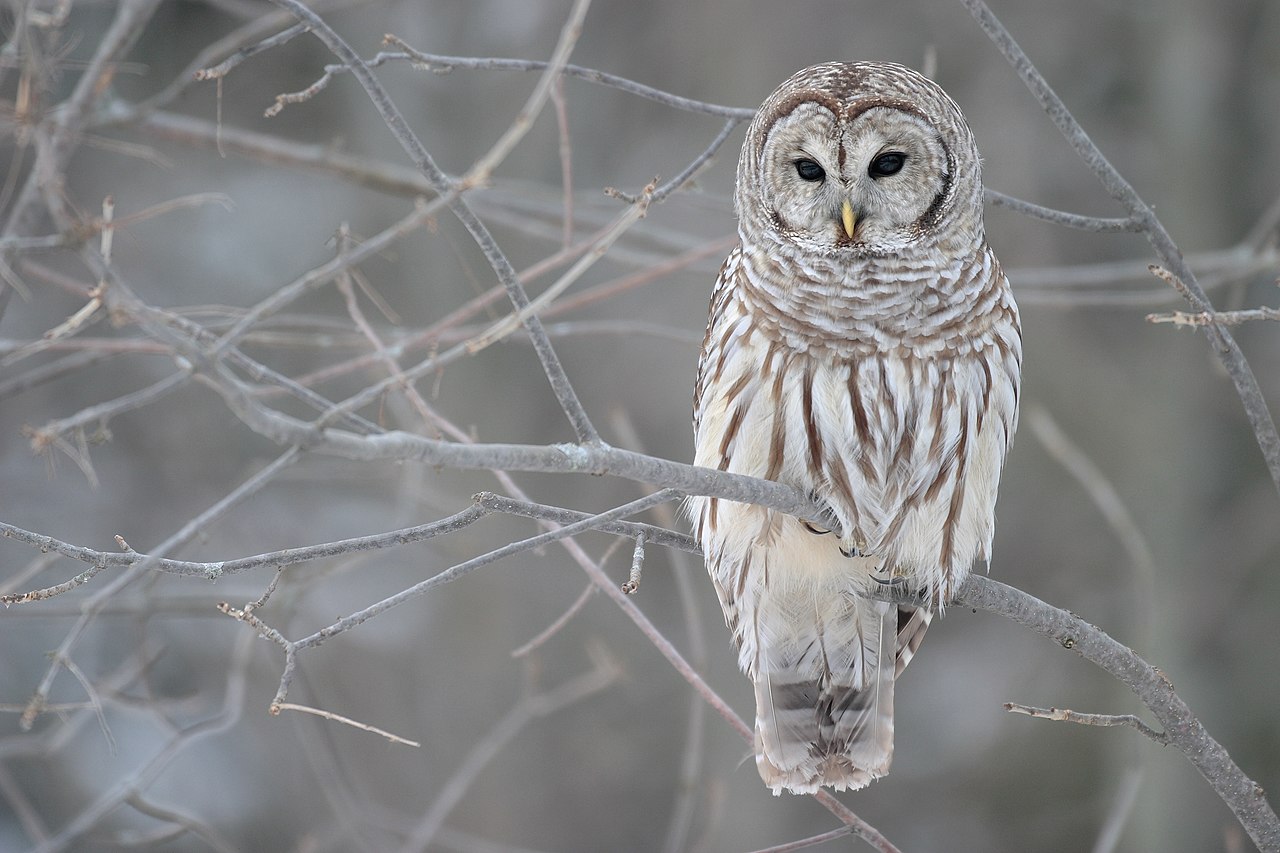



Identification and physical traits
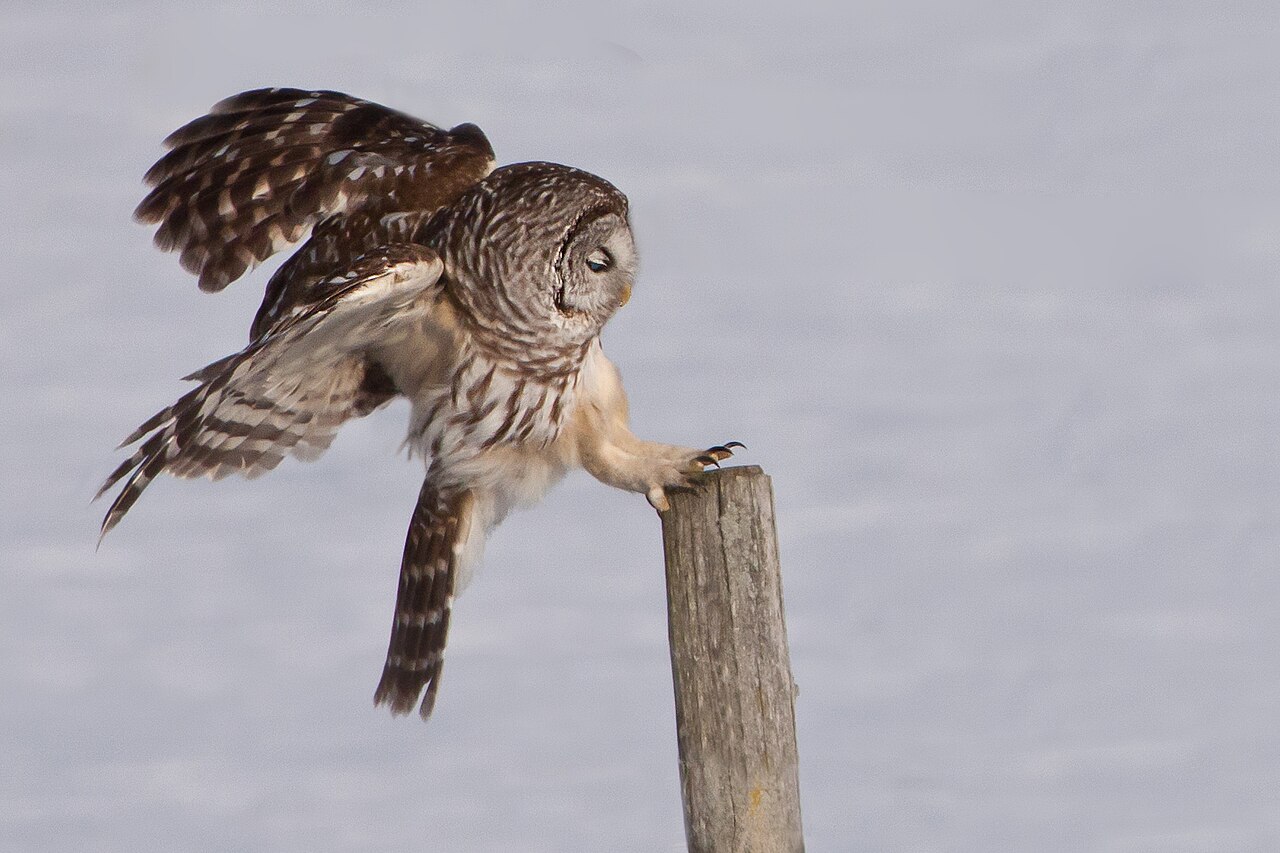
Adults have a rounded facial disk without ear tufts, mottled brown and white plumage, and horizontal barring across the chest. Typical body length is roughly 40–63 cm with a wingspan that can exceed a meter. Juveniles resemble adults but show softer, more downy feathering. Their silhouette is bulky, with broad wings and a short tail adapted to maneuvering in dense woods.
Vocalizations
Barred owls are vocally distinctive. Their best-known call is a series of deep, evenly spaced hoots often rendered in popular descriptions as a clear, four-note phrase. They also make a wide range of whistles, cackles, and harsh screams used in courtship, territorial defense, and communication between mates and parents and offspring.
Habitat and range
These owls favor mature mixed and deciduous forests, particularly near water, but they also use wooded suburbs, parks, and large gardens. Historically concentrated in the eastern woodlands, barred owls expanded westward during the 20th century and now overlap with other forest owl species in parts of the Pacific Northwest.
Diet and hunting
Barred owls are opportunistic predators with a broad diet. They hunt from perches and take small to medium-sized mammals (mice, voles, squirrels, rabbits), birds, amphibians, reptiles, and large invertebrates. Their hunting combines patient waiting with short, silent flights to the ground or into foliage to seize prey.
Reproduction and lifecycle
Nesting commonly occurs in tree cavities, natural hollows, or in abandoned nests of larger birds. Pairs are generally monogamous during the breeding season; clutches typically number two to four eggs. Both parents provision and care for nestlings until fledging, after which young may remain dependent for several weeks. In the wild, barred owls may live more than a decade under favorable conditions.
Conservation and interactions
Overall the species is widespread and adaptable and is not considered globally threatened. However, where barred owls overlap with more habitat-restricted species, such as the spotted owl, they can outcompete or displace those species. This has created conservation challenges in some regions and has led to management actions aimed at reducing competition where needed.
Relationship with people
Barred owls are often tolerated and admired in parks and large gardens and figure in local folklore and natural history. Because they occupy wooded tracts near human settlements, they serve as familiar symbols of mature forest ecosystems and the value of preserving contiguous habitat.
Related articles
Author
AlegsaOnline.com Barred Owl (Strix varia) Leandro Alegsa
URL: https://en.alegsaonline.com/art/9090
Sources
- commons.wikimedia.org : Barred owl
- animals.nationalgeographic.com : "Barred Owl"