
Siri: Apple’s Voice-Based Virtual Assistant
Overview of Siri, Apple’s voice-activated assistant: core capabilities, history, platform support, uses, privacy considerations, and comparisons with other digital assistants.
Overview
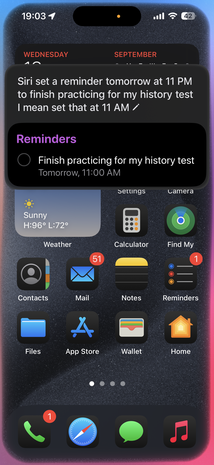
Siri is Apple’s voice-activated virtual assistant built into many Apple devices. It allows users to speak commands and questions in natural language and receive spoken or on-screen responses. Siri handles tasks such as making phone calls, sending messages, setting reminders, answering factual queries, and controlling device settings. For more technical background and developer resources see Siri and the Apple platform documentation for iOS. Siri interprets spoken input and routes requests to on-device services or to cloud-based web services for processing and data retrieval (speech-to-intent and backend services).
Image gallery
3 Images

Capabilities and typical uses
Modern implementations of Siri combine speech recognition, natural language understanding, and integrations with system apps and third-party services. Common capabilities include:
- Hands-free commands: calling, texting, playing audio, and navigation.
- Information retrieval: weather, sports scores, conversions, and basic facts.
- Device control: toggling settings, launching apps, and creating calendar events.
- Smart home control when paired with compatible accessories.
Siri also supports contextual follow-up questions and short dialogues to refine requests. Developers can add Siri-compatible features through app extensions that expose tasks or shortcuts to the assistant.
History and development
Siri began as an independent app available in an app marketplace before Apple acquired the original company in April 2010. After the acquisition, Apple integrated the technology into its mobile operating system and released Siri as a built-in assistant beginning with the iPhone 4S and subsequent iOS releases. Early rollout expanded support across a range of devices: the assistant became available on later iPhone models such as the iPhone 4S and iPhone 5, and on newer iPad models including the 4th generation iPad and iPad Mini. Initial availability and device support evolved with iOS updates and hardware advances.
Platforms, integrations and ecosystem
Siri is tightly integrated into Apple’s ecosystem: iPhone, iPad, Mac, Apple Watch, Apple TV, and HomePod devices provide access to Siri with platform-specific capabilities. Integration points include the system-wide voice trigger, keyboard dictation, and app-level shortcuts. Siri can interact with cloud services for web searches, mapping data, and third-party APIs when permissions allow. Developers can expose voice actions through dedicated APIs and user-configurable shortcuts.
Privacy, limitations and criticisms
Because Siri processes spoken input, Apple has emphasized privacy protections such as anonymization and on-device processing for certain tasks. Nonetheless, critics have raised concerns about data retention, third-party access, and occasional misinterpretation of speech. Siri’s accuracy and feature set have improved over time, but limitations remain for specialized, multilingual, or privacy-sensitive tasks. Apple documents privacy practices and opt-out controls in its support materials (App Store history, company announcements).
Comparisons and alternatives
Siri is one of several mainstream digital assistants. Other notable systems include voice assistants on competing platforms such as Android devices and Google’s assistant ecosystem (Google Assistant), as well as vendor-specific services like Samsung’s S Voice and voice agents on Microsoft platforms (Cortana). Each assistant emphasizes different trade-offs: ecosystem integration, on-device processing, language support, and third-party extensibility.
Overall, Siri remains a core part of Apple’s user interface strategy, focused on making common tasks faster through spoken interaction while evolving to meet expectations for accuracy, privacy, and cross-device continuity.
Related articles
Author
AlegsaOnline.com Siri: Apple’s Voice-Based Virtual Assistant Leandro Alegsa
URL: https://en.alegsaonline.com/art/90763
Sources
- norskenavn.no : norskenavn.no/navn.php?id=157