
Slackware — a conservative, minimalist GNU/Linux distribution
Slackware is a long‑maintained, Unix‑like Linux distribution focused on simplicity, stability, and a hands‑on, text‑based approach to system administration.
Slackware is one of the earliest Linux distributions still actively maintained. It is known for following a conservative, Unix‑like design philosophy: provide a small set of well‑integrated, unmodified upstream packages and leave system configuration to the administrator. That approach emphasizes stability, predictability and low overhead, making Slackware a common choice for servers, embedded systems and older hardware.
Image gallery
2 Images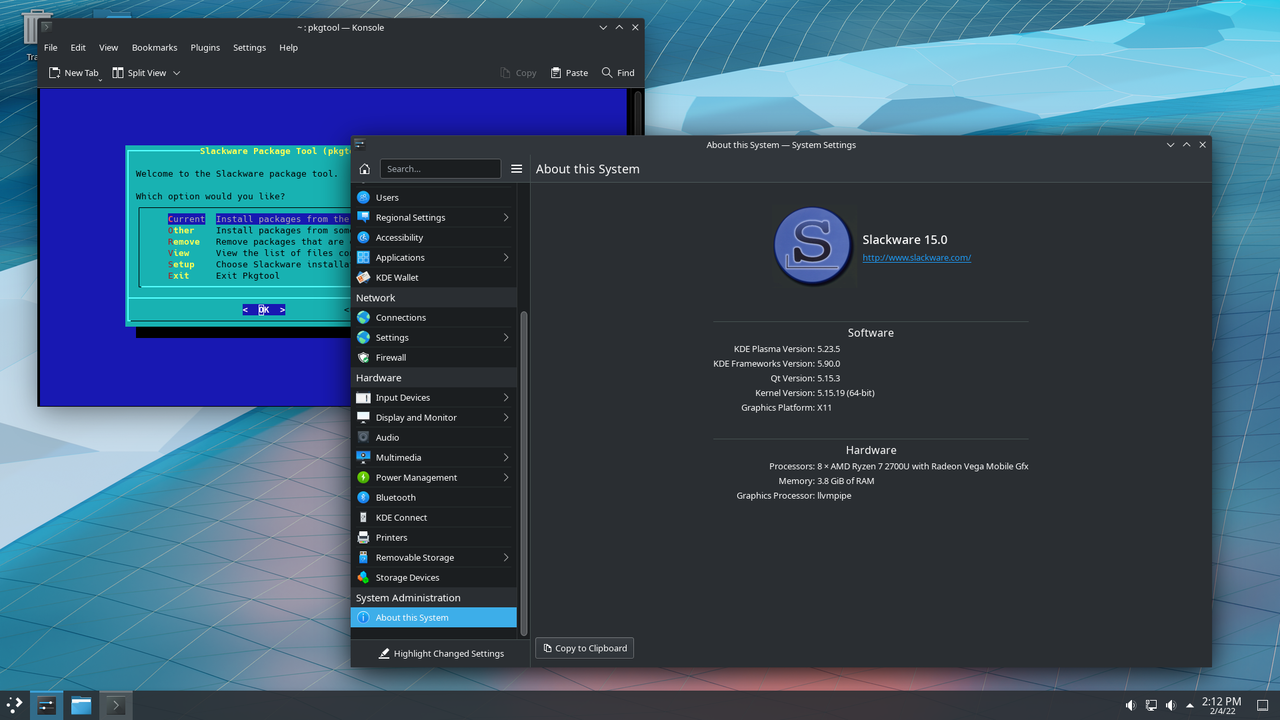
Characteristics and design
Rather than offering graphical control panels, Slackware relies on plain text configuration files and traditional command‑line tools. Installation and system management are deliberately simple and transparent: packages are distributed as compressed tar archives and managed with the distribution's package tools. The system uses init scripts and standard Unix conventions rather than extensive abstraction layers, which appeals to users who want direct control over their environment.
Package management and community tools
Slackware's native package utilities perform basic installation, removal and verification of package archives without enforcing automatic dependency resolution. Several community projects provide optional helpers, repositories and build scripts to simplify installing additional software; prominent examples include the SlackBuilds collection and third‑party utilities that automate building and updating packages. For official guidance, see the Slackware documentation.
History and development
Originally created in the early 1990s, Slackware was developed to be small, fast and faithful to Unix traditions. Its development has been led by a small core team and a dedicated community. Over decades the distribution has evolved to support modern hardware and desktop environments while retaining its core principles of minimalism and stability.
Uses and notable distinctions
- Preferred by experienced users and administrators who value manual configuration and clear system behavior.
- Used in contexts where reliability and low resource usage matter, including lightweight servers and legacy machines.
- Recognized as one of the longest‑running Linux distributions with a continuous maintenance history.
Because Slackware avoids automated configuration changes and dependency enforcement, newcomers should expect a learning curve. For those who wish to study how a Unix‑like Linux system works under the hood, Slackware remains a practical and educational choice.
Related articles
Author
AlegsaOnline.com Slackware — a conservative, minimalist GNU/Linux distribution Leandro Alegsa
URL: https://en.alegsaonline.com/art/91017