
Simon Stevin: Flemish mathematician, engineer, and promoter of decimals
Simon Stevin (c.1548–1620) was a Flemish mathematician and military engineer who advanced practical mathematics, promoted decimal fractions, wrote in Dutch, and influenced engineering and scientific practice in the Low Countries.
Simon Stevin was a leading technical thinker of the late 16th and early 17th centuries, known for applying mathematical ideas to engineering, surveying and everyday calculation. He is widely credited with promoting the use of decimal fractions in Europe and with translating mathematical vocabulary into Dutch to make technical knowledge accessible beyond scholars. His work helped bridge traditional arithmetic and the computations needed for trade, construction and military planning.
Image gallery
9 Images



Life and background
Stevin was born around 1548 in Bruges in what is now Belgium. Biographical records are sparse: his religious sympathies are often described as Calvinist, and later accounts note that he left a widow and two children. In his home city his memory is commemorated in public spaces, including the statue on Simon Stevin Square, which attests to his local and national reputation.
Major contributions
- Decimal notation: Stevin advocated base-10 fractions for calculations and popularized a systematic way of writing and working with decimal parts, an innovation that simplified commerce and measurement.
- Statics and hydrostatics: He analyzed problems of equilibrium on inclined planes and described how forces resolve into components, and he explored the behavior of fluids and pressure in practical terms useful for engineering.
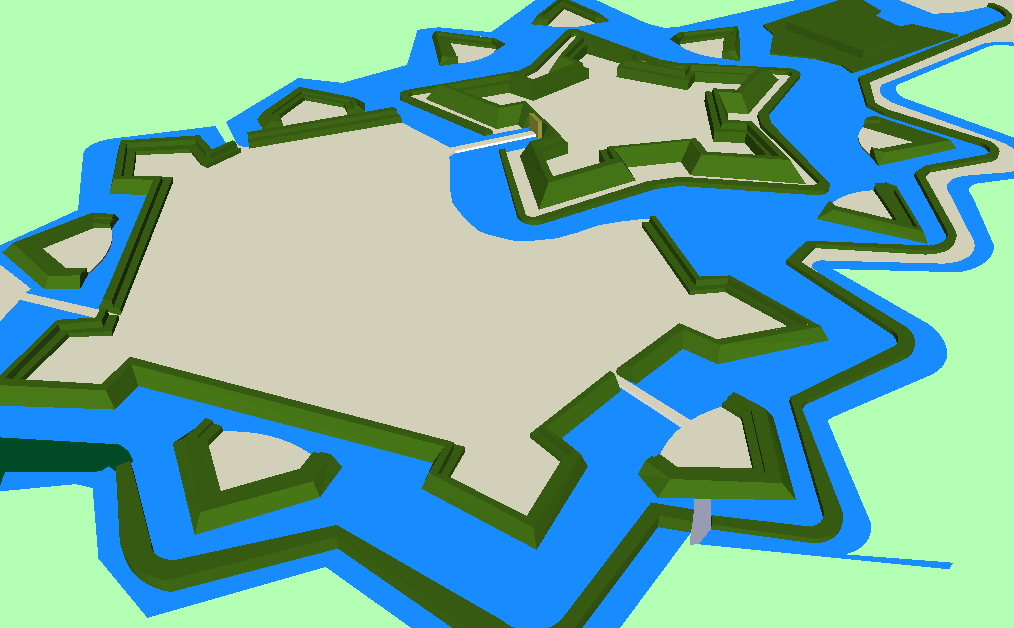
- Applied and military engineering: As a practical military engineer and advisor, Stevin worked on fortifications, sluices, and land-reclamation projects, applying mathematical methods to design and construction.
- Language and education: He translated many technical terms into vernacular Dutch and wrote manuals aimed at practitioners, helping spread mathematical skill among merchants, craftsmen and builders.
Stevin’s publications were written in a mix of Latin and the vernacular; some treatises were deliberately addressed to non-specialists so that methods could be used in commerce and public works. His emphasis on concrete problems and clear notation made measurement and calculation more practical for a wide audience.
Impact and legacy
Although not every detail of his life is well documented, Stevin’s influence is clear in the development of engineering practice and education in the Low Countries during the Dutch Golden Age. His promotion of decimals anticipated later standardizations of numeric notation and simplified many forms of calculation used in trade and science. Modern historians of science recognize him as both a theoretical thinker in mathematics and a hands-on mathematical practitioner whose work supported infrastructural and military advances.
For readers interested in places to learn more, many introductions to the history of mathematics and engineering discuss Stevin’s role; museum exhibits and local histories in Bruges often provide accessible presentations of his life and works. Contemporary accounts emphasize his practical bent: he combined abstract reasoning with solutions to real technical problems, an approach that helped shape modern applied science.
Related articles
Author
AlegsaOnline.com Simon Stevin: Flemish mathematician, engineer, and promoter of decimals Leandro Alegsa
URL: https://en.alegsaonline.com/art/90546