
Biological signal: communication within and between living systems
A biological signal is any coded message used by cells, tissues or organisms to convey information—electrical, chemical, mechanical or behavioral—supporting coordination, response and interaction.
Overview
A biological signal is any coded message used by living systems to transmit information. Signals operate at many scales: between entire organisms, among cells in a tissue, and inside single cells. In general usage the term appears across biology, physiology and related disciplines to describe how one part of a system alters the state or behavior of another part.
Image gallery
10 Images


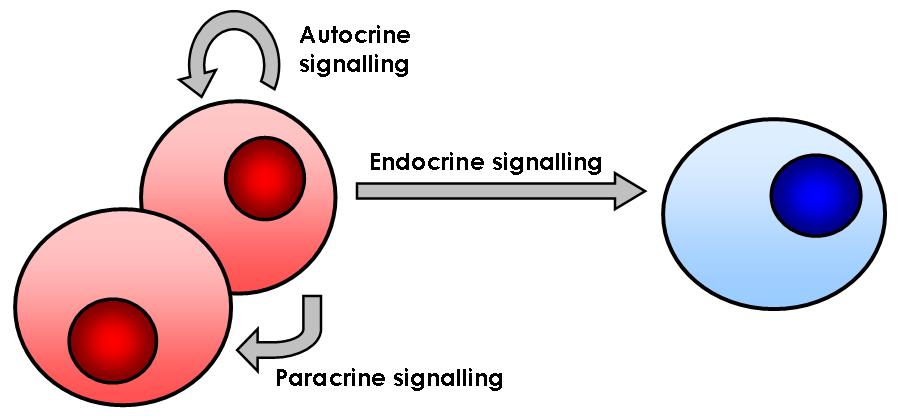

Major types of biological signals
Signals can be classified by their physical medium or by the scale at which they act. Common categories include:
- Acoustic and visual cues—such as vocal calls and displays used in animal communication.
- Chemical signals—molecules released to influence other cells or organisms (e.g., pheromones, scent marks, or secreted peptides).
- Electrical signals—changes in membrane potential and currents used for rapid transmission in nerves and some plants.
- Endocrine signals—hormones circulated in body fluids to coordinate distant tissues.
- Mechanical signals—touch, pressure or flow that convey information to mechanosensitive receptors.
Mechanisms and physiological basis
At the cellular level signaling often involves a sequence of molecular events. For electrical signaling, membranes change their ionic permeability so that a measurable voltage or current arises; field effects can also play a role (field strength). These electrical events are rooted in the movement of charged ions driven by concentration differences and membrane proteins. Chemical signaling depends on synthesis, release and recognition of signaling molecules; these processes usually arise from specific chemical reactions catalyzed by enzymes.
Cellular communication and signal transduction
Within and between cells, signals are interpreted by receptor proteins and transduced into biochemical cascades that alter gene expression, metabolism or electrical state. This organized conversion of an external cue into an intracellular response is commonly called signal transduction. Some signals act locally at synapses or junctions, while others travel long distances through circulatory systems or along neural pathways.
Research, measurement and disciplines
Different scientific fields emphasize particular aspects of signals. In electrophysiology researchers record biopotentials—electrical quantities such as voltage, current or field strength—that originate from ionic movements. These biological signals are often analyzed using concepts borrowed from electrical engineering, including frequency, amplitude and signal-to-noise considerations. At the organismal level, ethologists study behavioral signals and social communication.
Functions, examples and important distinctions
Signals coordinate development, homeostasis and behavior. Examples include nerve transmission that enables reflexes, hormones that regulate growth and metabolism, and chemical cues that mediate mating or alarm responses. Distinguishing a signal from other changes requires evidence that an emitted cue reliably alters recipient behavior or physiology in a way that benefits the sender, the receiver, or both. Not all physiological changes are signals; some are incidental by-products. Context, intent (in behavioral terms), and evolved function are useful criteria when interpreting biological signals.
For further background on terminology and examples across levels of organization see general resources in communication theory, organismal biology (organisms) and behavioral ecology (social behaviours). Additional reading on technical measurements and models is available in sources covering biology, electrophysiology and interdisciplinary treatments bridging biology and engineering.
Related topics include the biochemical origins of signals, the properties of ion movements that generate bioelectric phenomena, and applied measurement methods documented in laboratory protocols and review articles (chemical reactions, ion handling). For introductory overviews consult primers on signal transduction and practical guides addressing how to record and interpret biological signals using tools from electrical engineering.
See also experimental and clinical contexts where signal measurement informs diagnosis and research, and multidisciplinary perspectives that link molecular mechanisms to ecological and behavioral outcomes (currents, voltages, and field-based observations).
Related articles
Author
AlegsaOnline.com Biological signal: communication within and between living systems Leandro Alegsa
URL: https://en.alegsaonline.com/art/90321