
Silesian language: overview, features, history and contemporary use
Silesian (Upper Silesian) is a West Slavic lect spoken mainly in Silesia. Its classification as a separate language or a Polish dialect is debated; it has distinct phonology, vocabulary, and local literature.
Silesian (also called Upper Silesian; names in other languages include Czech, Polish and German forms) is a West Slavic speech variety traditionally used in the historical region of Silesia. It is concentrated primarily in modern-day Poland, with communities and speakers also in the neighbouring Czech Republic and parts of Germany. The question whether Silesian is a distinct language or a dialect of Polish is contested among linguists, politicians and speaker communities; classification often depends on social and political criteria as much as on linguistic ones.
Image gallery
10 Images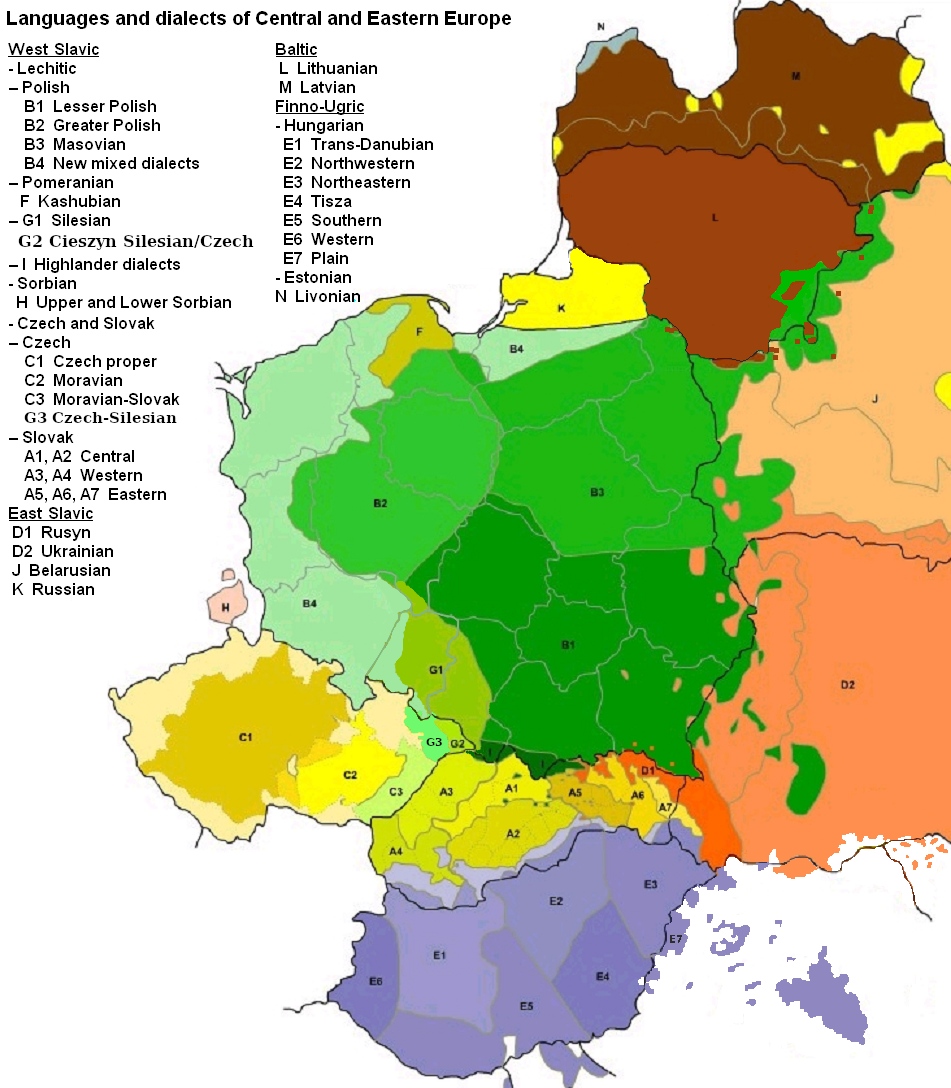


Core characteristics
Silesian shares many grammatical and lexical features with Polish but displays systematic differences in pronunciation, morphology and vocabulary. Notable traits include consonant and vowel shifts, preservation of some older Slavic forms, and a substantial number of loanwords from German and Czech due to long contact. Native speakers commonly use distinctive personal and place-name endings and idioms not found in standard Polish.
Varieties and distribution
- Urban and rural varieties—industrial Upper Silesia has its own urban speech forms.
- Border varieties—dialects near Cieszyn and the Czech border show stronger Czech influence.
- Rural subdialects—smaller communities may retain archaic features and local lexicon.
Because Silesian is spoken across regional and national boundaries, internal diversity is significant and any description must allow for regional differences.
History and development
Silesian evolved from medieval West Slavic dialects in a region shaped by shifting political control and multilingual contact. Over centuries, interactions with Polish, Czech and German-speaking populations introduced loanwords and phonetic influences. Industrialization and population movement in the 19th and 20th centuries increased dialect contact and contributed to the growth of urban speech patterns.
Contemporary status, use and cultural life
Estimates of speaker numbers vary depending on definitions and self-identification; figures range from several hundred thousand to over a million. Silesian appears in folk song, theatre, local press, internet communities and some educational and cultural initiatives. In recent decades activists and scholars have produced grammars, dictionaries and orthography proposals to support teaching, literature and media. Debates over recognition and standardization continue, reflecting broader questions about language, identity and minority rights in the region.
Important distinctions
- Descriptive vs. prescriptive views: linguists may treat Silesian as a dialect continuum while many speakers and cultural groups prefer language status.
- Contact influence: German and Czech contributions to vocabulary and idiom distinguish Silesian from standard Polish.
- Revival and codification: multiple spelling systems and advocacy groups exist; no single standardized form is universally accepted.
Silesian remains a living, varied speech tradition with strong cultural significance for many residents of Silesia. For readers seeking more technical descriptions, grammars and dictionaries compiled by regional scholars provide in-depth analysis and examples of local speech.
Related articles
Author
AlegsaOnline.com Silesian language: overview, features, history and contemporary use Leandro Alegsa
URL: https://en.alegsaonline.com/art/90393
Sources
- stat.gov.pl : "Raport z wyników: Narodowy Spis Powszechny Ludności i Mieszkań 2011"
- ethnologue.com : "Ethnologue report for language code: szl"
- glottolog.org : "Silesian"