
Siege of Vicksburg (May 18–July 4, 1863)
A pivotal campaign of the American Civil War in which Ulysses S. Grant's forces besieged Vicksburg, Mississippi, forcing Confederate surrender and securing Union control of the Mississippi River.
Overview
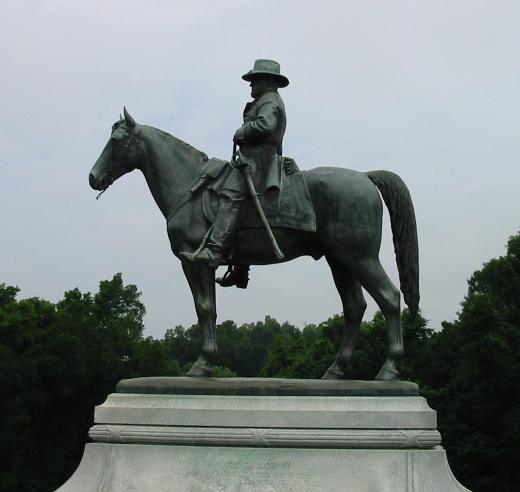
The Siege of Vicksburg was a decisive military operation of the American Civil War fought from May 18 to July 4, 1863. Union forces under Major General Ulysses S. Grant invested the river city of Vicksburg, Mississippi, held by Confederate forces under John C. Pemberton. After a rapid campaign of maneuver that brought Grant into position, two frontal assaults were repulsed and the Union army settled into a formal siege. The Confederate garrison surrendered on July 4. The fall of Vicksburg, together with the capture of Port Hudson later in July, gave the Union effective control of the Mississippi River and severed the Trans-Mississippi states from the rest of the Confederacy.
Image gallery
10 Images


Strategic importance
Vicksburg occupied commanding bluffs above a bend in the Mississippi River and controlled river traffic for many miles. Its location made it a linchpin of Confederate logistics and communications. Federal control of the river was a central objective of Union strategy to split the Confederacy and to restrict the movement of supplies and troops between the western and eastern theaters.
Campaign and field operations
Grant conducted a campaign of flanking movements and overland marches to approach Vicksburg from the east, bypassing some heavily defended river approaches. In the weeks before the siege his forces fought a series of engagements to secure lines of supply and isolate the city, culminating in two direct assaults on the Confederate works in May that were driven back. These operations demonstrated a mix of maneuver, combined land-and-naval pressure, and attempts to find decisive points short of an indefinite siege.
Conduct of the siege
Once the Union army began siege operations, troops dug parallels and saps, emplaced artillery batteries, and tightened the encirclement. The defenders endured sustained bombardment, dwindling food and medical supplies, and the strain of constant alert. Civilians in Vicksburg sought shelter in cellars and caves to escape the shelling; accounts from the time describe significant hardship for the noncombatant population. The siege featured techniques of trench warfare and siege engineering that presaged later developments in the conduct of protracted operations.
Surrender and immediate consequences
Pemberton's decision to surrender on July 4 ended active resistance at Vicksburg. The capitulation deprived the Confederacy of a vital defensive position and, along with the fall of Port Hudson, opened the Mississippi River to Union control. The victory enhanced Grant's reputation and helped shift strategic momentum to the Union side. Many Confederate soldiers were paroled, and the loss forced Confederate commanders to reassess their dispositions in the western theater.
Legacy and commemoration
The siege is commonly cited as one of the turning points of the war because of its strategic consequences. It illustrated the importance of joint operations between army and navy and highlighted the war's impact on civilian populations. The battlefield and related sites are preserved and interpreted for the public, and the campaign is widely studied for its operational lessons.
Further reading and resources
Related articles
Author
AlegsaOnline.com Siege of Vicksburg (May 18–July 4, 1863) Leandro Alegsa
URL: https://en.alegsaonline.com/art/90256