
Barium nitrate
Barium nitrate (Ba(NO3)2) is a white, water‑soluble inorganic salt used as an oxidizer and green colorant in pyrotechnics. It is chemically reactive and toxic, requiring careful handling and disposal.
Overview
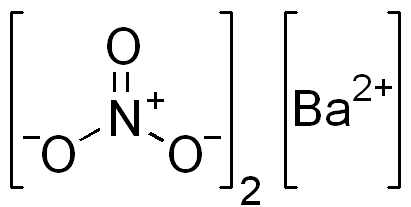
Barium nitrate is an inorganic compound with the formula Ba(NO3)2. It consists of the barium cation paired with two nitrate anions and typically forms colorless or white crystalline solids. The substance is readily soluble in water and behaves as a strong oxidizer in many chemical mixtures.
Image gallery
2 Images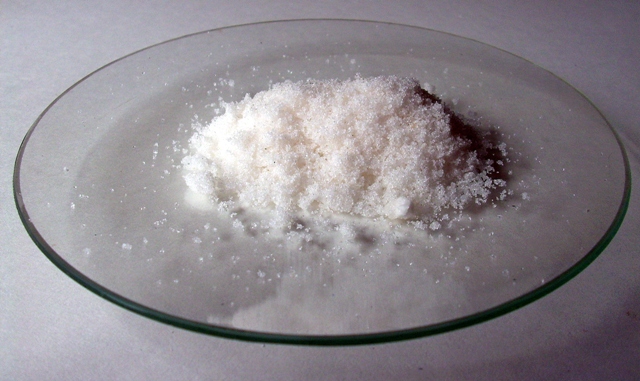
Chemical characteristics
The crystal contains the barium ion (a heavy alkaline earth metal) and the nitrate ion, a common oxidizing anion. In chemical reactions, barium nitrate supplies oxygen and barium, and it decomposes on strong heating to produce barium oxide and nitrogen oxides. Physically it is stable under normal conditions but supports combustion when combined with fuels.
Production and history
Barium nitrate is prepared industrially by reacting barium carbonate or barium sulfide with nitric acid followed by purification and crystallization. Historically, barium compounds have been used for coloring and as pigments and the nitrate salt became important where a solid oxidizer was needed, especially in pyrotechnics.
Uses and applications
- Pyrotechnics: as an oxidizer and to produce green colors in fireworks;
- Manufacture of other barium salts and in some specialty chemical processes;
- Occasionally used in laboratory reagents and demonstrations of flame tests.
Safety, handling, and disposal
Barium nitrate is toxic if ingested or inhaled and can affect muscles and the heart; it should be handled with protective equipment and stored away from combustible materials. As an oxidizer, it must be kept separate from organic fuels and reducing agents. For guidance on safe use, storage and disposal consult appropriate regulatory or technical resources: handling and safety information.
Notable distinctions
Barium nitrate differs from less reactive barium salts like barium sulfate (insoluble) and from more aggressive oxidizers such as barium chlorate; its combination of solubility and oxidizing power makes it useful but also increases environmental and health concerns. Alternatives are sometimes chosen where toxicity or regulatory restrictions are primary concerns.
Tags
Related articles
Author
AlegsaOnline.com Barium nitrate Leandro Alegsa
URL: https://en.alegsaonline.com/art/8999