
Murder of Laquan McDonald
The 2014 police shooting of 17-year-old Laquan McDonald in Chicago, its delayed video release, subsequent legal cases, protests, and effects on city policing and politics.
On October 20, 2014, 17-year-old Laquan McDonald was fatally shot by Chicago Police Department Officer Jason Van Dyke. McDonald, who was armed with a knife, was struck 16 times during the encounter. The shooting produced national attention not only because of the number of shots fired and the age and race of the victim, but also because a dashboard-camera video, recorded by a police vehicle at the scene, was not released to the public until more than a year later.
Image gallery
6 Images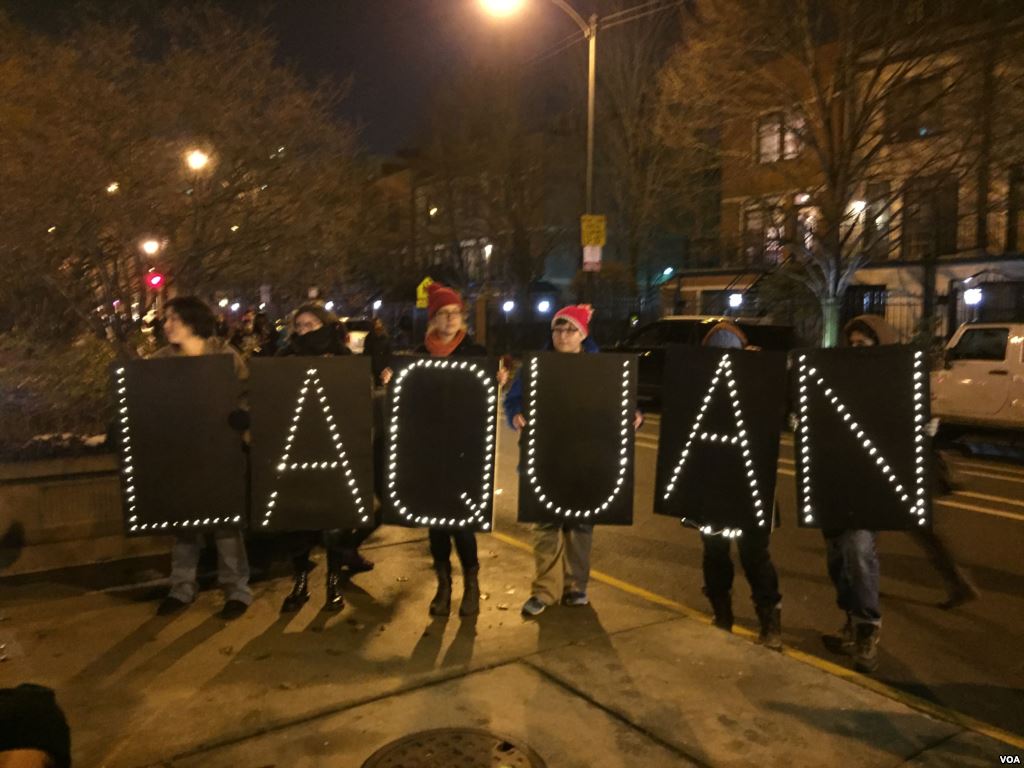


Incident and immediate accounts
Initial statements from some Chicago police officials described the event as the result of McDonald lunging at officers, justifying the use of lethal force. When the dashboard camera footage was released on November 24, 2015, the video contradicted those early accounts and showed McDonald moving away from officers when he was shot repeatedly. The discrepancy between early official statements and the video prompted widespread questions about transparency and accuracy in the investigation conducted immediately after the shooting.
Legal proceedings and outcomes
Within hours of the video becoming public, authorities charged Officer Jason Van Dyke with first-degree murder. He later stood trial and, on October 5, 2018, was convicted of second-degree murder and 16 counts of aggravated battery with a firearm. In 2019 he was sentenced to a term of imprisonment of nearly seven years. Van Dyke turned himself in after the indictment and was held briefly before posting bail. The case also prompted scrutiny of prosecutorial decisions in Chicago and led to personnel changes within the city's leadership.
Political and civic reactions
The handling of the shooting and the delay in publicly releasing the video generated intense public outcry, large protests, and political fallout. On December 1, 2015, Mayor Rahm Emanuel dismissed Chicago Police Superintendent Garry McCarthy, citing the need for new leadership amid the controversy. Elected officials, community leaders and national figures criticized the pace and transparency of the response; for example, Senator Bernie Sanders issued a public statement expressing condolences and criticism of local authorities. Demonstrations included marches on high-profile locations such as Michigan Avenue, where protesters invoked "sixteen shots" and called for accountability.
Investigations, settlement, and reforms
Multiple investigations followed the shooting. The Federal Bureau of Investigation opened an inquiry into potential civil rights violations, and other federal and independent reviews examined Chicago Police policies and practices. Prior to the public release of the video, the city approved a $5 million settlement with McDonald’s family in April 2015, a decision that raised further questions about why records and footage remained sealed. The episode triggered renewed calls for changes to oversight, use-of-force policies, officer training and transparency mechanisms for police misconduct complaints.
Significance and ongoing impact
The Laquan McDonald case is widely cited as a focal point in discussions about police accountability, transparency, and relations between law enforcement and communities of color in the United States. It influenced public debates about body and dashboard camera policies, the timing and openness of evidence release, and how civilian oversight is conducted. The sequence of events — the shooting, the delayed video release, criminal charges, protests, settlements, and institutional responses — illustrates how a single incident can affect municipal governance, public trust, and efforts to reform policing practices.
- Date of shooting: October 20, 2014.
- Video released: November 24, 2015.
- Officer charged and convicted: Jason Van Dyke; convicted October 5, 2018.
- Political action: Superintendent Garry McCarthy was fired by Mayor Rahm Emanuel on December 1, 2015; links to city leadership and prosecutorial decisions drew scrutiny.
- Investigations and settlement: FBI inquiry and a $5 million city settlement approved in April 2015.
The case remains a reference point in ongoing conversations about criminal justice reform and public accountability for law enforcement. For additional background on procedural and civic responses, readers may consult contemporary reporting and official review documents that examine how the incident influenced policy debates and municipal reforms. For more on the institutions and individuals involved, see profiles of Garry McCarthy, judicial and prosecutorial responses at Cook County institutions, and public commentary from national figures such as Bernie Sanders.
Related articles
Author
AlegsaOnline.com Murder of Laquan McDonald Leandro Alegsa
URL: https://en.alegsaonline.com/art/89971
Sources
- cnn.com : "Laquan McDonald video: Shot teen spins, falls to ground - CNN.com"
- nytimes.com : "Chicago Braces After Video of Police Shooting Is Released"
- worldcat.org : 0362-4331
- newsweek.com : "Chicago Officials Release Video of White Police Officer Shooting Black Teenager"
- chicagotribune.com : "Chicago releases dash-cam video of fatal shooting after cop charged with murder"
- chicagotribune.com : "Chicago cop free after posting $1.5 million bail in Laquan McDonald's shooting"
- berniesanders.com : "Sanders Statement on Laquan McDonald"
- nytimes.com : "Anger Over Killing by Police Halts Shopping in Chicago"
- washingtonpost.com : "Protesters shut down Chicago's 'Magnificent Mile' in demonstrations over police slaying of Laquan McDonald"
- worldcat.org : 0190-8286
- chicagotribune.com : "Some Black Friday shoppers balk at Laquan McDonald protests on Mag Mile"
- chicago.cbslocal.com : "Police Shoot, Kill Knife-Wielding Teen On South Side"
- thinkprogress.org : "What Police Said About The Killing Of Laquan McDonald Before The Video Showed What Really Happened"