
The Shire (Middle-earth): the hobbits' homeland in J. R. R. Tolkien's legendarium
The Shire is the rural homeland of the hobbits in J. R. R. Tolkien's Middle-earth. A peaceful, agricultural region in Eriador, it plays a central role in The Hobbit and The Lord of the Rings.
The Shire is a fictional, predominantly agricultural region in the northwest of Middle-earth, imagined by J. R. R. Tolkien. It is best known as the ancestral home of the hobbits, the quiet, small-statured people whose simple rural life provides the peaceful backdrop to the dramatic events of The Hobbit and, most famously, The Lord of the Rings. Tolkien developed the Shire as an intentionally bucolic, close-knit society whose ordinary rhythms and customs stand in contrast to the wider conflicts of Middle-earth.
Image gallery
10 Images




Geography and layout
Located within the larger region of Eriador, the Shire is bounded by hedgerows, rivers and low hills rather than great fortifications. Its landscape includes rolling fields, orchards, lanes, wooded banks and small rivers. The main divisions of the Shire—often called farthings—reflect local administrative and familial identities. Principal settlements are small: village clusters and market-towns rather than cities. Notable places associated with the Shire include:
- Hobbiton and its neighborhood (including Bag End and the Hill)
- Michel Delving, the chief town where local government and the post are based
- Bywater and Tuckborough, villages clustered around lanes and inns
- Buckland and the Brandywine Bridge along the eastern border
Society, customs and economy
Hobbit society in the Shire emphasizes family, local custom and comfortable living. Farming, gardening and small-scale crafts provide the economic base; inns, markets and craftsmen support daily life. Hobbits are fond of simple pleasures—good food, ale, pipe-smoking and seasonal festivals—and place a high value on hospitality, privacy and continuity. Social roles include the Thain (a hereditary leader in wartime), the Mayor of Michel Delving (an annually elected civic official), and local heads of families or clans.
Architecture and material culture
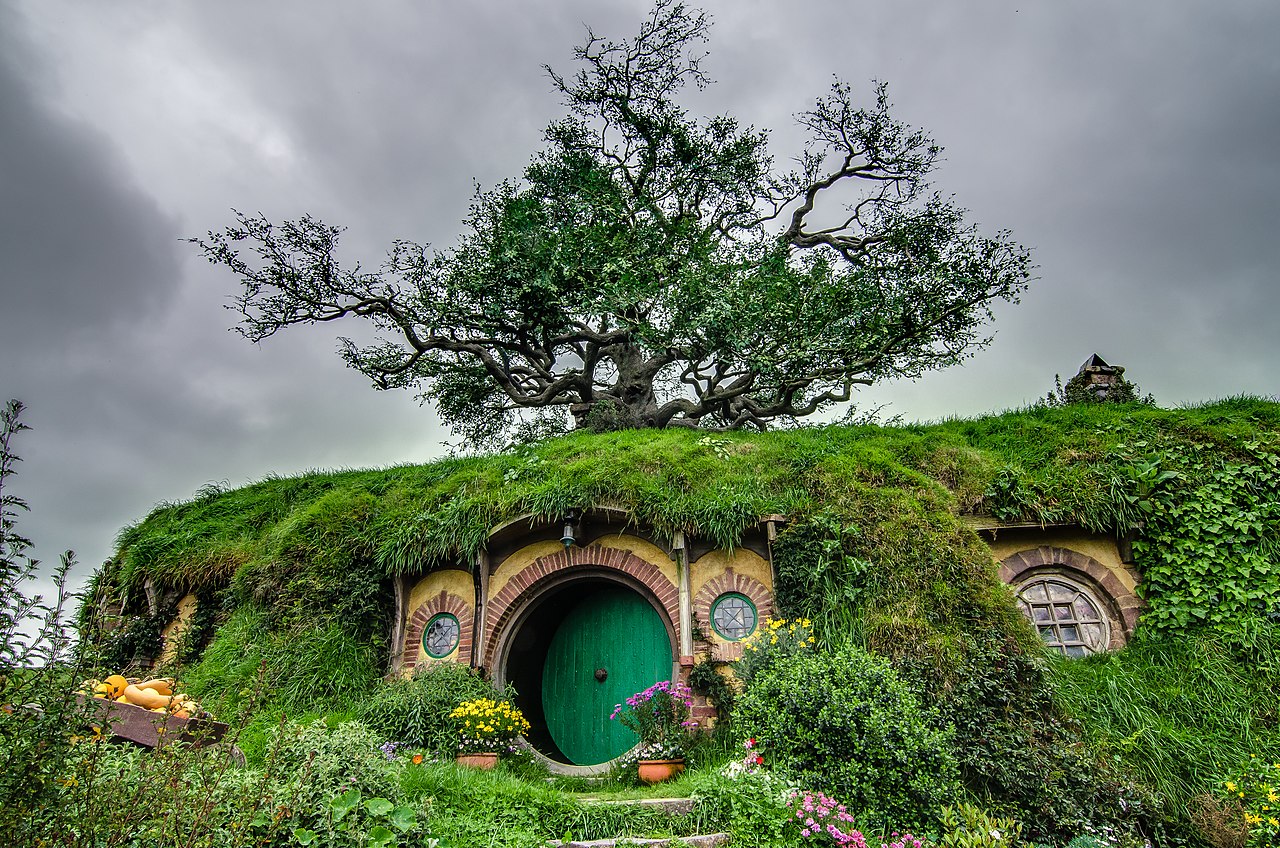
Hobbit dwellings, often called hobbit-holes, are dug into hillsides or built close to the earth, with round doors and windows and interiors geared toward comfort and practicality. Gardens, orchards and neatly kept lanes are prominent. The Shire’s material culture favors durable, handcrafted goods and agricultural implements rather than ornate or exotic items, reflecting a preference for self-sufficiency and continuity with the land.
History and role in the narrative
Founded by hobbit settlers in the Third Age, the Shire developed largely in isolation from the major realms and wars of Middle-earth. For most of its history it experienced few dramatic events, which reinforces its image as a haven of ordinary life. That tranquillity is broken during the War of the Ring, when the Shire becomes both an objective and a battleground for forces seeking control. The adventures of Bilbo and, later, Frodo and his companions bring the Shire’s fate into the larger story, transforming a local home into a symbol of what is worth defending in the wider world.
Origins, inspiration and cultural legacy
Tolkien began shaping the idea of the Shire early in his writing career; its mature depiction appears in the opening chapters of The Lord of the Rings. He drew partial inspiration from the English countryside of his youth—most famously areas around Sarehole near Birmingham—while also situating the Shire within his deep philological and mythic conception of Arda. In later decades the Shire has become one of the most recognizable fictional homelands: a shorthand for pastoral innocence tested by historical change. It has been depicted in numerous adaptations, scholarly studies and popular illustrations, and continues to influence how readers imagine small-scale, rural worlds within epic narratives.
For further reading about Tolkien and his works, see links to author and principal books: J. R. R. Tolkien, The Hobbit and The Lord of the Rings. For context on the setting and people, consult pages on Middle-earth and hobbits. Biographical studies often note Tolkien’s childhood surroundings such as Sarehole, Birmingham as an influence on his rural imagination.
Questions and answers
Q: What is the Shire?
A: The Shire is a fictional location created by British author J. R. R. Tolkien and appears in their novels The Hobbit and The Lord of the Rings. It is a region in the northwest of Middle-earth, one of the continents of the fictional world of Arda where elapses most part of J. R. R. Tolkien's legendarium.
Q: Who inhabits the Shire?
A: The Shire is inhabited only by hobbits, a race similar to men and characterized by their short stature.
Q: When was the Shire founded?
A: The Shire was founded in the middle of the Third Age during J.R.R Tolkien's composition of the first chapter for The Lord Of The Rings novel series .
Q: What inspired JRR Tolkien when creating his vision for what would become known as "The Shire"?
A: JRR Tolkien was inspired principally by his childhood neighborhood Sarehole in Birmingham when creating his vision for what would become known as "The Shire".
Q: Are there any significant events that took place within or around "The Shire" during its history?
A: There are few significant events that took place within or around "The Shire" due to its peaceful nature with exception to those that occurred during War Of The Ring which were mentioned in both novels, "The Hobbit" and "The Lord Of The Rings".
Q: How does JRR Tolkein describe Hobbits who inhabit “the shires”?
A:JRR Tolkein describes Hobbits who inhabit “the shires” as being similar to men but characterized by their short stature
Related articles
Author
AlegsaOnline.com The Shire (Middle-earth): the hobbits' homeland in J. R. R. Tolkien's legendarium Leandro Alegsa
URL: https://en.alegsaonline.com/art/89866