
Sextant (navigational instrument)
A sextant is a precision optical instrument used to measure angles between a celestial object and the horizon to determine a vessel's position at sea; it remains a reliable backup to electronic navigation.
Overview
A sextant is a handheld optical instrument used in marine and aerial navigation to measure the angle between the visible horizon and a celestial body such as the Sun, Moon, planets, or stars. Its readings, combined with accurate time, permit determination of latitude and longitude and other positional fixes. The name derives from the instrument’s arc — originally one sixth of a full circle — from the Latin word sextus.
Image gallery
4 Images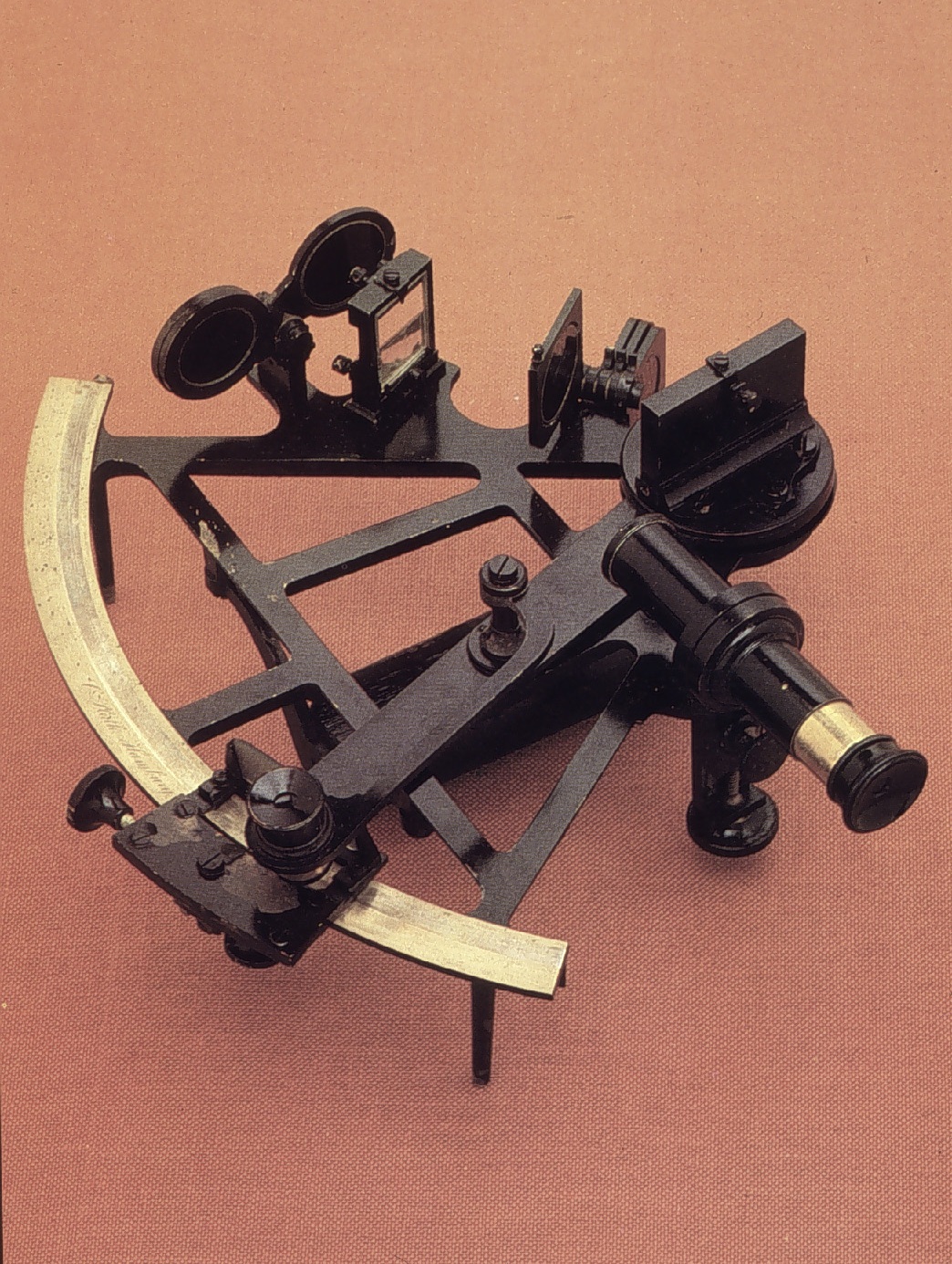


How it works
The sextant uses the principle of double reflection: two mirrors allow the observer to bring the reflected image of a celestial object down to the horizon line seen directly. By rotating the index arm and reading the graduated arc, the user measures the altitude angle of the object above the horizon. That angle, corrected for atmospheric refraction and the object’s apparent diameter, becomes the basis for a sighting.
Main parts and reading procedure
- Frame and graduated arc — usually marked in degrees and minutes.
- Index arm — moves across the arc and carries the index mirror.
- Index mirror and horizon glass — create the reflected and direct images.
- Telescope or sighting tube — helps align the two images precisely.
- Vernier or micrometer drum — fine adjustment and accurate reading.
Typical use follows a sequence: level the instrument, sight the horizon, bring the celestial body to coincide with the horizon image, and record the angle. Using nautical almanacs and an accurate clock, that angle is converted into a position. This process is fundamental to establish latitude and, with timekeeping, longitude.
History and development
Prior to the sextant, mariners used instruments such as the astrolabe, quadrant and backstaff to measure altitudes. The reflecting sextant emerged in the early 18th century when inventors in different regions developed practical double-reflecting designs, which became faster and more accurate than earlier tools. Its robust mechanical design and relatively small size made it ideal for shipboard use.
Uses, accuracy and modern role
Historically the sextant was essential to ocean navigation and exploration. In skilled hands it can provide very accurate angular measurements, often to a fraction of a minute of arc. Since the late 20th century satellite systems have supplanted routine celestial navigation, but sextants remain important as a reliable backup, a teaching tool, and in situations where electronic systems are unavailable or untrusted.
Notable distinctions
Related instruments include the octant, which covers a smaller arc, and various specialized sextants adapted for surveying, aviation, and astronomical use. The reflecting principle and familiar arc shape are the distinguishing features that set the sextant apart from older, direct-view devices.
Related articles
Author
AlegsaOnline.com Sextant (navigational instrument) Leandro Alegsa
URL: https://en.alegsaonline.com/art/89281
Sources
- credoreference.com : "Sextant from"