
Seven Islands of Bombay: origin, reclamation and legacy
The seven islands were the original landmass that became Bombay (now Mumbai). This article explains their names, early history, land reclamation, and how they shaped modern Mumbai.
Overview
The "Seven Islands of Bombay" refers to a cluster of small islands off the west coast of India that, through centuries of human intervention, were joined to form the core of the modern city of Bombay (officially Mumbai). Once separated by creeks, tidal flats and marshes, the islands were progressively connected by causeways and reclamation works during the colonial and post‑colonial periods, producing the contiguous land that hosts the historic south Mumbai peninsula.
Image gallery
3 Images

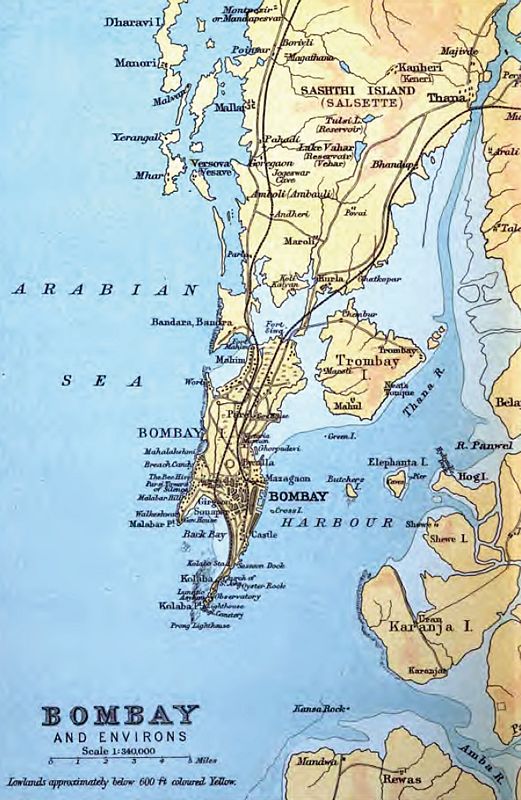
The islands and their characteristics
The group commonly cited as the seven original islands includes:
- Bombay Island (the central island around the Fort area)
- Colaba
- Old Woman's Island (also called Little Colaba)
- Mazagaon (Mazgaon)
- Parel
- Worli
- Mahim
Each island had its own shoreline, tidal channels and small fishing settlements, and together they sat within a broad natural harbour that encouraged trade and settlement.
History and land reclamation
The islands were inhabited long before European arrival by local fishing communities, commonly known as the Kolis, and later became a point of interest for Portuguese and British powers. The Portuguese called the place by a name that evolved into "Bombaim" and English usage later became "Bombay." Ownership and administration passed to the British East India Company in the 17th century, and the colonial administration began systematic efforts to link the islands.
From the 18th century onward a series of engineering projects — causeways, embankments and planned reclamations — progressively filled channels and converted marshes into buildable land. Notable early works blocked tidal inlets to prevent flooding; later large‑scale reclamations created broad stretches of urban ground used for docks, roads and residential areas. Over time the seven islands ceased to be visibly separate and became the contiguous southern part of present‑day Mumbai.
Urban development and importance
Joining the islands created a strategic deep‑water harbour that fostered maritime trade, finance and industry. The reclaimed peninsula became the site of administrative buildings, ports and later mills and commercial districts. This concentration of commerce and infrastructure helped Bombay emerge as one of India’s principal urban and economic centres. The city's later growth spread north and east onto further reclaimed and natural land.
Notable facts and legacy
Although the physical islands are no longer distinct, their names persist in neighbourhoods and historic districts. The process of reclamation shaped the city’s geography and ecology, replacing mangroves and tidal flats with urban fabric. The official name change from Bombay to Mumbai in the 1990s reflected local language and identity while the layered colonial and indigenous history of the seven islands remains central to the city’s origin story. For further background and maps, see Seven Islands of Bombay.
Distinction: The phrase "Seven Islands" refers to a historical configuration rather than a present geographic boundary; what once were separate islands are now integral parts of the continuous landmass called Mumbai.
Related articles
Author
AlegsaOnline.com Seven Islands of Bombay: origin, reclamation and legacy Leandro Alegsa
URL: https://en.alegsaonline.com/art/89197