
Seward County, Kansas: Overview, History, and Community
Seward County is a rural county in southwestern Kansas with Liberal as its county seat. It was established in 1873 and named for William H. Seward; agriculture and manufacturing shaped its growth.
Overview
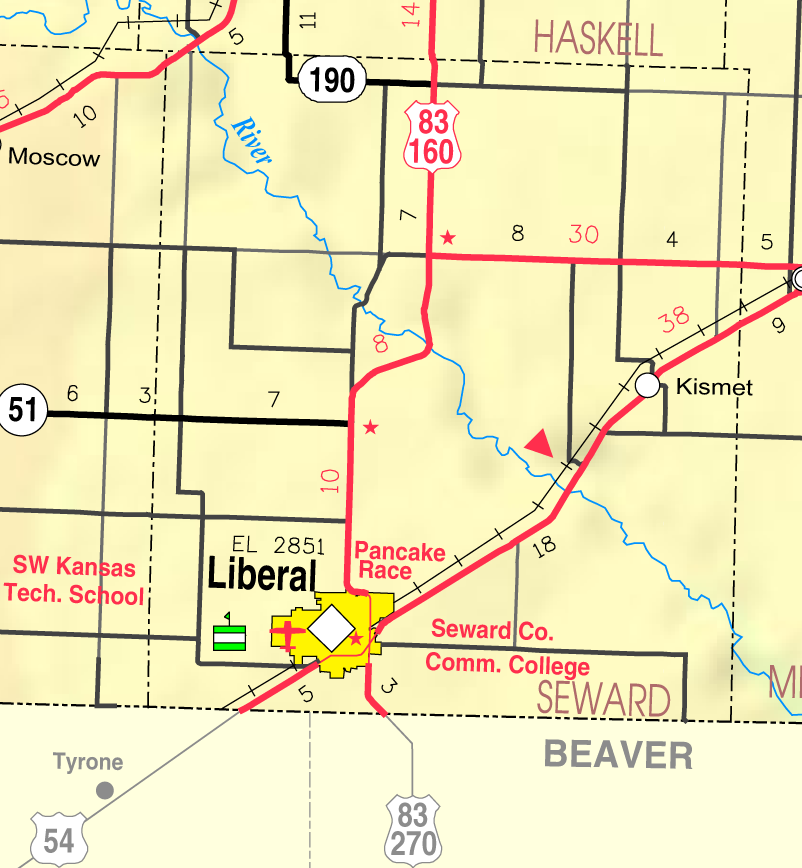
Seward County lies in the southwestern quadrant of the state commonly called Kansas. The county seat and largest city is Liberal, which serves as the economic and cultural hub of the area. According to the 2010 census, the county had 22,952 residents; population trends since then have reflected the same regional patterns of migration, employment shifts, and demographic change seen across the High Plains.
Image gallery
3 Images

Geography and environment
Seward County occupies a landscape typical of the High Plains: broad, level to gently rolling prairies used mainly for dryland and irrigated agriculture, cattle ranching, and related industries. The county sits near the Oklahoma border and its climate is semi-arid, with hot summers, cold winters, and most precipitation occurring in late spring and early summer. Natural drainage and shallow aquifers influence land use and farming practices.
History and name
The county was created by the Kansas legislature on March 20, 1873, and was named for William Henry Seward, who served as Secretary of State under Presidents Abraham Lincoln and Andrew Johnson and is remembered for negotiating the purchase of Alaska. Early settlement in Seward County followed patterns of railroad expansion, homesteading, and ranching in the late 19th century; towns grew where rail lines, water, and markets for grain and livestock converged.
Economy and community life
The economy of Seward County blends agriculture, food processing, manufacturing, and services centered in Liberal. The city hosts retail, health care, and education institutions that serve the surrounding rural area. A diverse workforce — including a significant Hispanic and immigrant population tied to foodpacking and agricultural jobs — contributes to the county's social and cultural fabric.
Government, transport, and places of interest
Local government provides typical county services such as roads, law enforcement, and public records. Major highways and a regional airport connect Seward County to larger markets and neighboring states. Visitors to the area often pass through Liberal for museums, community events, and regional recreation; points of interest reflect frontier history, aviation collections, and local heritage.
Communities and distinctions
- Liberal — county seat and largest city, focal point for commerce and services (county seat, Liberal).
- Smaller towns and unincorporated areas support agricultural operations and rural lifestyles.
Seward County's story is one of frontier settlement, agricultural development, and ongoing adaptation to economic and demographic shifts typical of the American High Plains. For further reading and local resources, consult county archives and regional planning documents available through municipal and state portals.
Questions and answers
Q: What is the name of the county in Kansas that is being discussed in the text?
A: The county's name is Seward County.
Q: What is the standard abbreviation for Seward County?
A: The standard abbreviation for Seward County is SW.
Q: How many people were living in Seward County in 2010?
A: In 2010, there were 22,952 people living in Seward County.
Q: What is the name of the county seat of Seward County?
A: The county seat of Seward County is Liberal.
Q: Which is the biggest city in Seward County?
A: The biggest city in Seward County is also Liberal.
Q: When was Seward County created?
A: Seward County was created on March 20, 1873.
Q: After whom was Seward County named?
A: The county was named after William Henry Seward.
Related articles
Author
AlegsaOnline.com Seward County, Kansas: Overview, History, and Community Leandro Alegsa
URL: https://en.alegsaonline.com/art/89246
Sources
- quickfacts.census.gov : "State & County QuickFacts"
- naco.org : "Find a County"
- census.gov : "US Gazetteer files: 2010, 2000, and 1990"
- census.gov : "Population and Housing Unit Estimates"
- census.gov : "U.S. Decennial Census"
- mapserver.lib.virginia.edu : "Historical Census Browser"
- census.gov : "Population of Counties by Decennial Census: 1900 to 1990"
- census.gov : "Census 2000 PHC-T-4. Ranking Tables for Counties: 1990 and 2000"
- uselectionatlas.org : uselectionatlas.org/RESULTS/
- uselectionatlas.org : David Leip's Atlas of US Elections
- geoelections.free.fr : Geographie Electorale
- ipsr.ku.edu : Institute for Policy and Social Research