
Sèvre Nantaise
The Sèvre Nantaise is a river in western France that rises in the Deux-Sèvres area and flows north-west to join the Loire at Nantes. It is distinct from the Sèvre Niortaise.
The Sèvre Nantaise is a river in western France whose upper reaches lie in the Deux-Sèvres area and whose lower course reaches the city of Nantes. The river is a left-bank tributary of the Loire, joining that great river on the Atlantic side of the country. Coordinates for a representative point on the watercourse are available at these map coordinates.
Image gallery
6 Images


Overview and name
The name combines the historic river name Sèvre with an adjectival form referring to Nantes. The department of Deux-Sèvres takes its name from the presence of two rivers called Sèvre: the Sèvre Nantaise and the Sèvre Niortaise, the latter flowing through the town of Niort. To avoid confusion the two rivers are commonly distinguished by the towns they approach, hence "Nantaise" and "Niortaise."
Characteristics
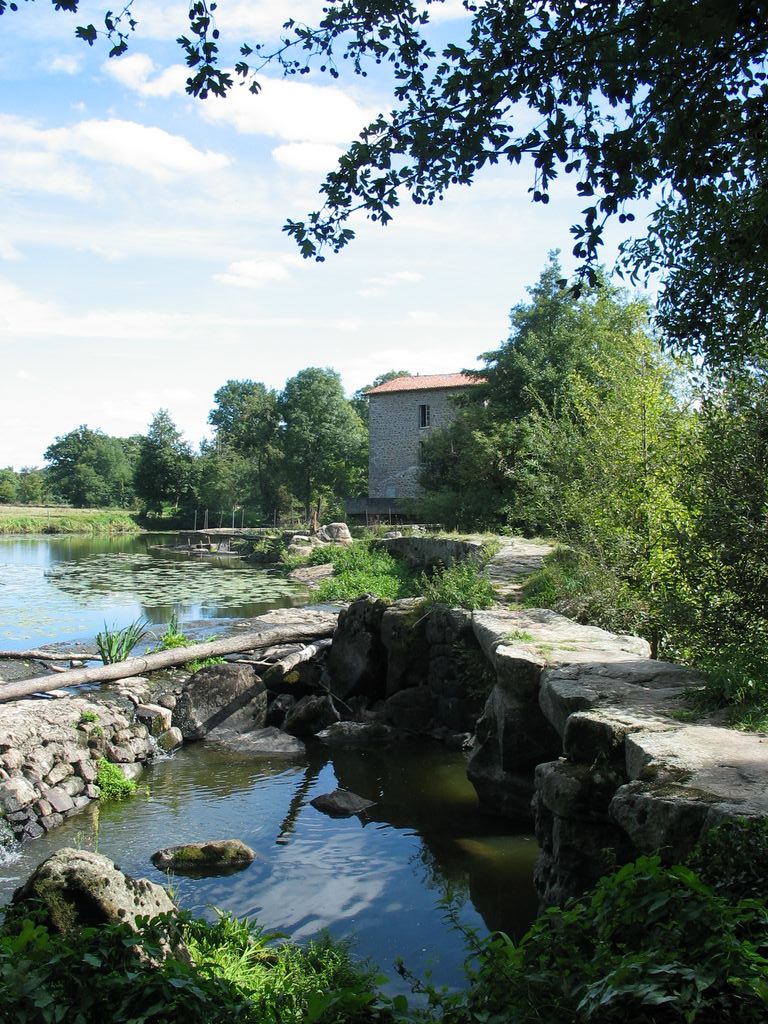
The Sèvre Nantaise runs from inland western France toward the Loire estuary. Along its length the river traverses agricultural plateaus, wooded valleys and low-lying floodplains before reaching the urban area of Nantes. It is a typical Atlantic watershed stream: seasonal levels vary with rainfall, and the channel supports a mixture of meanders, weirs and narrower gorges in places.
Human use and history
For centuries the Sèvre Nantaise provided power for mills and a local route for small boats and rafts carrying agricultural produce toward Nantes. Towns and villages developed along its banks; examples include historic riverside settlements such as Clisson and the suburbs of Nantes. In more recent times the river has been used for leisure boating, canoeing and angling, while weirs and small hydraulic structures remain reminders of its industrial past.
Ecology and conservation
The river and its riparian corridors support freshwater plants, fish and a range of birdlife typical of temperate lowland rivers. Water quality and habitat restoration have been focal points for regional conservation initiatives, aiming to improve fish passage, reduce diffuse pollution and maintain natural floodplain functions.
Notable distinctions
- The Sèvre Nantaise is a left tributary of the Loire and should not be confused with the Sèvre Niortaise, which flows through Niort.
- The river rises within the department referenced by Deux-Sèvres and its lower reaches meet the Loire at Nantes.
- Maps and coordinate references for the Sèvre Nantaise are available via geographic resources represented here: coordinates and regional overviews of France and watercourses as left tributaries (left tributary).
For further context on the river's role in local geography and heritage consult regional guides and hydrological summaries that treat the Sèvre Nantaise as part of the Loire basin and the wider network of western French waterways.
Questions and answers
Q: What are the geographical coordinates of the Sèvre Nantaise river?
A: The geographical coordinates of the Sèvre Nantaise river are 47°11′50″N 1°32′52″W.
Q: Where is the Sèvre Nantaise river located?
A: The Sèvre Nantaise river is located in western France.
Q: Is the Sèvre Nantaise river a right tributary of the Loire river?
A: No, the Sèvre Nantaise river is a left tributary of the Loire river.
Q: Where does the Sèvre Nantaise river originate?
A: The Sèvre Nantaise river originates in the Deux-Sèvres department.
Q: What is the Deux-Sèvres department named after?
A: The Deux-Sèvres department is named after the Sèvre Niortaise river that flows through Niort and the Sèvre Nantaise river.
Q: Where does the Sèvre Nantaise river end?
A: The Sèvre Nantaise river ends in the city of Nantes.
Q: What is the origin of the second part of the Sèvre Nantaise river's name?
A: The origin of the second part of the Sèvre Nantaise river's name is the city of Nantes.
Related articles
Author
AlegsaOnline.com Sèvre Nantaise Leandro Alegsa
URL: https://en.alegsaonline.com/art/89240
Sources
- services.sandre.eaufrance.fr : "La Sèvre Nantaise M7--0240)"
- hydro.eaufrance.fr : "La Sèvre Nantaise à Nantes (Pont-Rousseau)"
- geoportail.gouv.fr : "Source de la Sèvre Nantaise"
- geoportail.gouv.fr : "Confluence de la Sèvre Nantaise"