
Barbed wire: design, history, uses, and impacts
Barbed wire is a fencing wire with sharp points used for containment and security. This article explains its construction, origins, common uses, military role, variations, and environmental and legal considerations.
Barbed wire is a type of fencing wire constructed with sharp points or barbs attached at intervals along one or more strands. Its principal purpose is to deter passage by people or animals by producing pain or snagging clothing and hide. Because it is economical to manufacture and install, barbed wire became a dominant material for field fencing in many parts of the world.
Image gallery
10 Images


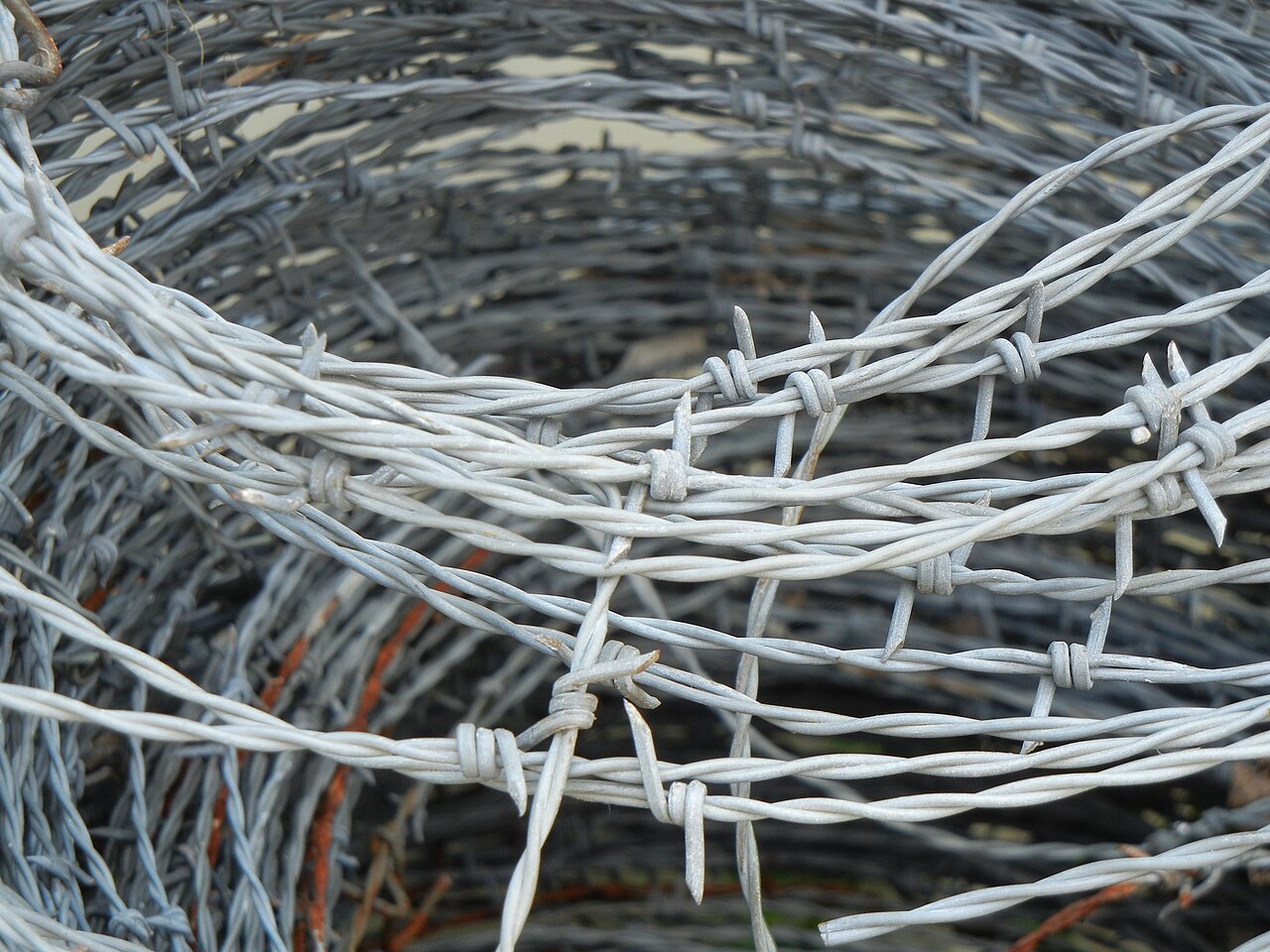

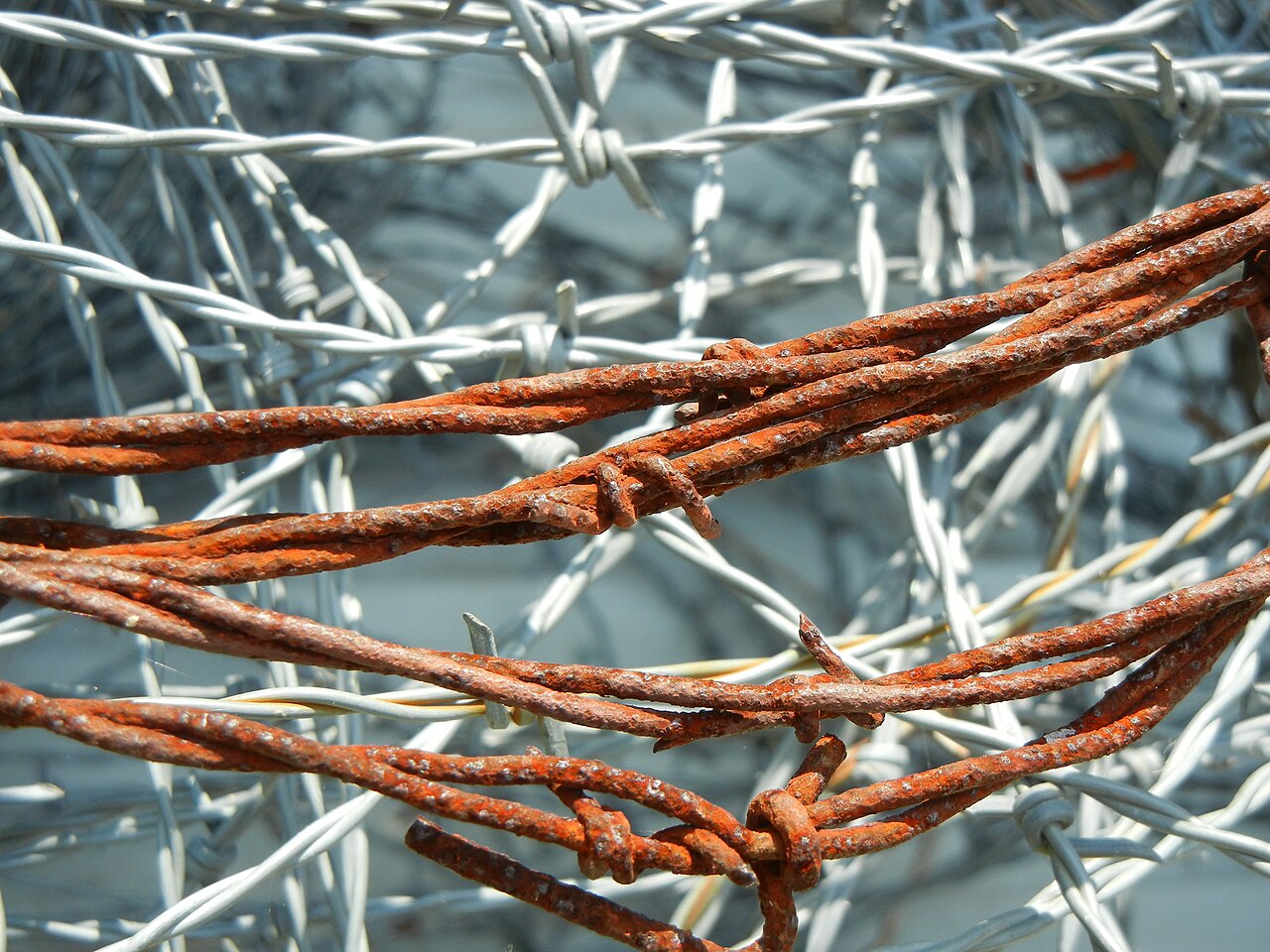


Construction and types
Typical barbed wire consists of one or two steel wires twisted together with short lengths of wire wrapped around at regular spacings to form barbs. Materials and finishes vary; galvanized steel is common to resist corrosion, and higher-grade alloys prolong life in harsh climates. Variations include:
- Standard barbed wire: simple twisted strands with pointed barbs.
- Razor or concertina wire: sharper, more cutting profiles used for security applications.
- Multi-strand and electric-assisted systems: combined with insulators or electrification for added deterrence.
Installation uses posts, staples or clips, tensioning tools, and sometimes plain top wires. For practical guidance see fencing guidelines.
History and development
Early experiments with pointed fencing elements preceded the first U.S. patent for barbed wire granted to Lucien B. Smith in 1867. Later improvements led Joseph Glidden to receive a patent in 1874 for a refined, more durable design that became widely manufactured. Those innovations helped transform land management, enabling relatively inexpensive, continuous lines that replaced some forms of labor-intensive wooden fencing and contributed to the enclosure of open ranges in the American West. For patent references see patent details and Glidden commentary.
Uses and importance
Barbed wire is most closely associated with agricultural fencing, especially containment of cattle and other livestock, but its uses extend to perimeter security for industrial sites, prisons, and temporary crowd control. In the 20th century it also saw extensive military use; lengths of barbed wire placed in front of trenches and defensive positions became a common obstacle in trench warfare. Military and security contexts are discussed at military use sources.
Beyond practical containment, barbed wire has cultural and symbolic significance in art, literature, and memorials. Its presence can mark property boundaries and influence patterns of land use and movement.
Impacts, safety and distinctions
While effective, barbed wire raises safety and environmental concerns: it can injure wildlife, cause grazier and visitor accidents, and complicate emergency access. Many jurisdictions regulate its use near public paths, roads, and in certain urban settings; installation recommendations and legal advice should be sought via installation and law resources. Alternatives such as smooth wire, hedgerows, or invisible electric fencing are chosen where safety or aesthetics are priorities.
Notable distinctions include the difference between barbed wire and razor wire (the latter being more dangerous and intended for high-security contexts), and between single-line and multi-line systems used for different species or threat levels. Regular inspection and maintenance—tensioning, replacing corroded strands, and repairing posts—are key to extending service life and reducing hazards.
Related articles
Author
AlegsaOnline.com Barbed wire: design, history, uses, and impacts Leandro Alegsa
URL: https://en.alegsaonline.com/art/8898
Sources
- digital.library.okstate.edu : BARBED WIRE
- pbs.org : "The American Experience Technology Timeline: 1752 - 1990" · web.archive.org
- ohiohistorycentral.org : "Lucien B. Smith" · web.archive.org