
Barcode: machine-readable symbols for identification and tracking
A barcode is a visual, machine-readable representation of data—traditionally vertical bars and spaces—used worldwide for product identification, inventory, logistics and many other applications.
Overview
A barcode is a printed pattern that encodes data in a form readable by optical scanners and cameras. The simplest and most familiar format uses parallel bars and gaps of varying widths to represent numbers and letters. Barcodes let computers capture identifiers quickly and with far fewer errors than manual entry, which is why they are widely used wherever items, documents or people must be tracked or identified.
Image gallery
5 Images

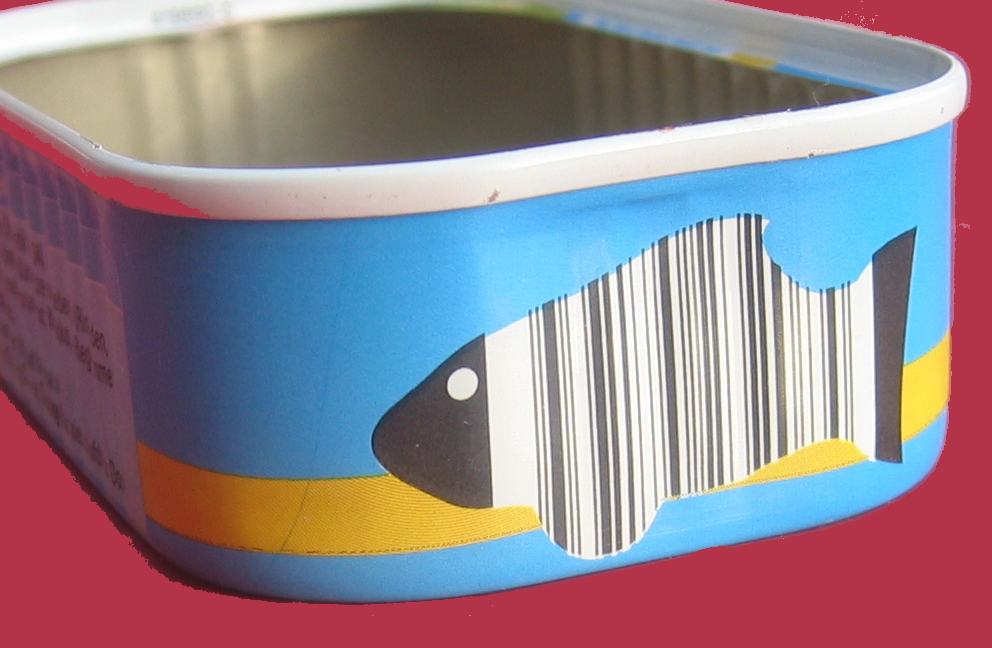


Characteristics and parts
Most linear (one-dimensional) barcodes consist of a quiet zone, a start pattern, encoded data, a check digit or checksum, and a stop pattern. The quiet zone is a margin of blank space required for reliable scanning. Guard or start/stop patterns tell a reader where the code begins and ends. Some symbologies add a computed check digit to detect common reading errors.
Types and technologies
- 1D (linear) barcodes: UPC, EAN, Code 39, Code 128—these are best for encoding short numeric or alphanumeric strings.
- 2D codes: QR codes, Data Matrix, PDF417—these store more data in two dimensions and can include URLs, contact details, or small documents.
- Scanning methods: laser scanners, image-based CCD/CMOS readers, and smartphone cameras; printing methods include thermal transfer, direct thermal and conventional printing.
History and development
Early experiments encoded identification marks on railroad rolling stock to speed handling and routing; these applications demonstrated the value of automatic reading. Barcodes reached mass consumer awareness after adoption in retail checkout systems. One widely cited milestone was the first commercial retail checkout of a product bearing a Universal Product Code symbol, a pack of Wrigley’s gum scanned in 1974. The widely used UPC system and several other symbologies were developed by engineers and standards bodies to provide interoperable, scalable identification schemes. For historical summaries see railroad barcode use and accounts of the UPC’s development by an IBM engineer related source.
Uses and importance
Barcodes are central to retail point-of-sale, inventory control, manufacturing, shipping and logistics, healthcare item identification, ticketing, and many asset-management systems. They reduce human error, speed processing, and enable automation such as automatic reordering, location tracking in warehouses, and quick verification of records.
Limitations and distinctions
Barcodes require line-of-sight for many scanners (though camera-based readers and 2D codes relax this constraint) and can fail if damaged, poorly printed, or obscured. Different symbologies suit different needs: 1D codes are compact for simple numeric IDs, while 2D codes store larger payloads or provide error correction. Choosing a barcode system involves balancing data capacity, physical space, printing quality, and the ecosystem of readers and standards needed for reliable operation.
Questions and answers
Q: What is a barcode?
A: A barcode is a way of storing numbers printed in a way that a computer can easily read.
Q: How were the first barcodes stored?
A: The first barcodes stored the numbers using lines (bars).
Q: What was the first use of barcodes?
A: The first use of barcodes was to label railroad rolling stock.
Q: When did barcodes become a big success?
A: Barcodes became a big success when they were used in supermarket checkout systems.
Q: What was the first product that used a barcode?
A: The first product that used a barcode was a pack of Wrigley's Juicy Fruit Gum sold on June 26, 1974.
Q: Who invented the barcode?
A: The barcode was invented by IBM engineer George J. Laurer.
Q: What are barcodes used for now?
A: Barcodes are now used for many purposes.
Related articles
Author
AlegsaOnline.com Barcode: machine-readable symbols for identification and tracking Leandro Alegsa
URL: https://en.alegsaonline.com/art/8942
Sources
- nytimes.com : "Alan Haberman"
- news.bbc.co.uk : "Bordeaux's digital drive to get citizens online"