
Senate of Canada
The Senate of Canada is the appointed upper chamber of the Parliament of Canada. It reviews legislation, represents regional interests, and performs committee work; it has 105 members and key appointment and eligibility rules.
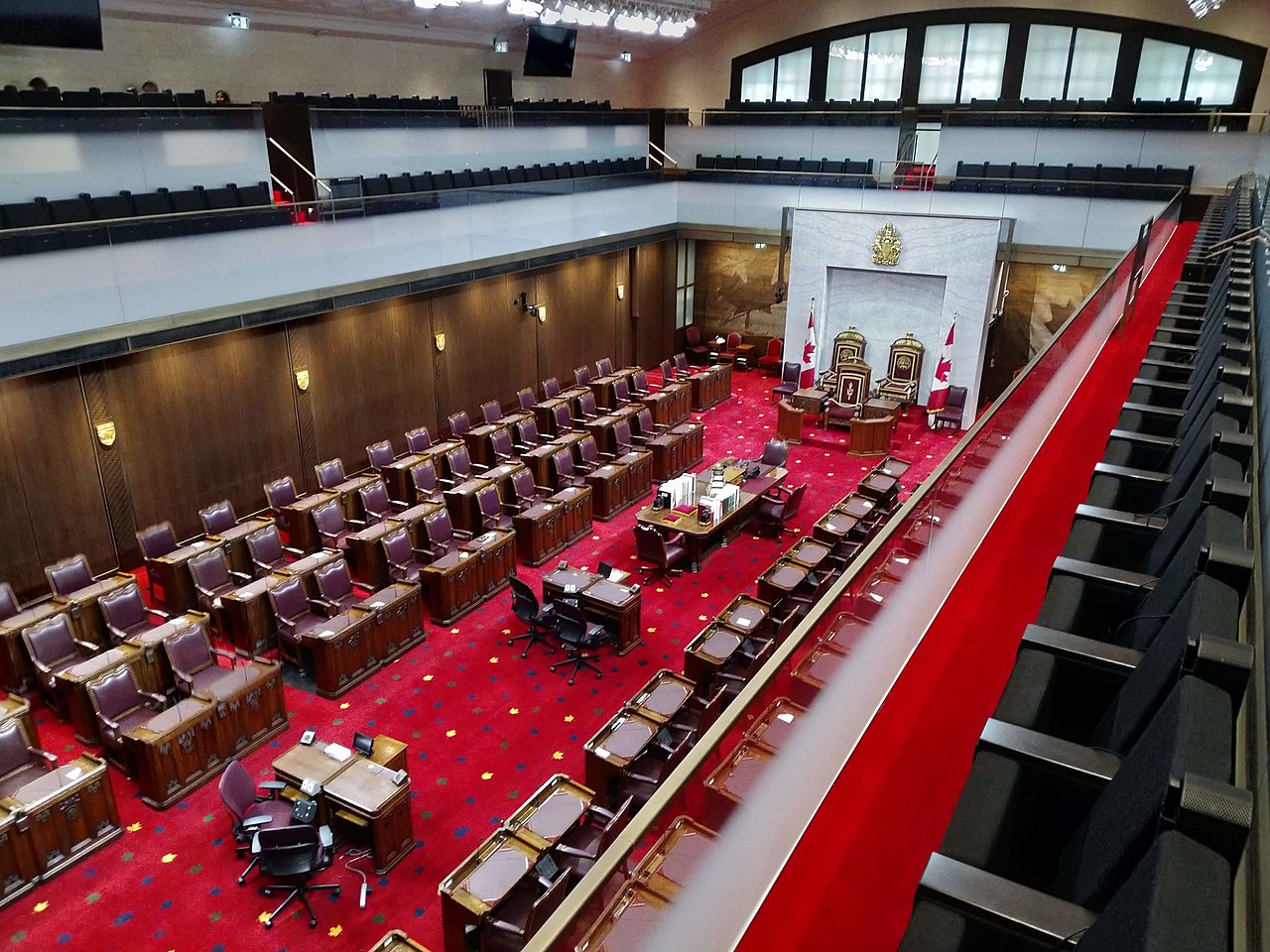
The Senate of Canada is the upper chamber of the federal Parliament and acts as a revising body for legislation passed by the elected House of Commons. Formally established by the Constitution Act of 1867, the Senate is intended to represent regional and provincial interests within the federal legislative process. The chamber currently comprises 105 seats and members are appointed rather than elected.
Image gallery
6 Images


Composition and eligibility
Senators are appointed by the Governor General of Canada on the advice of the Prime Minister of Canada. Appointees must meet age and residency qualifications, and by law they serve until the mandatory retirement age of 75. The chamber’s membership is distributed to balance regional representation: four regions have 24 seats each, with additional allocations for Newfoundland and Labrador and the three northern territories.
Regional distribution
- Four principal regions (Ontario, Quebec, the Atlantic provinces and the Western provinces) each have 24 senators.
- Newfoundland and Labrador has its own allocation, and the three territories each return one senator, bringing the total to 105.
- Quebec is unique in that its 24 seats correspond to specific Senate divisions established in the constitution.
Roles and powers
The Senate reviews, amends and can delay federal legislation; its stated purpose is to provide a ‘‘sober second look’’ at bills passed by the Commons. It initiates non-appropriation bills and conducts in-depth policy study through committees, where detailed examination of legislation and national issues takes place. By constitutional design the House of Commons controls confidence and supply, so the Senate’s power over money and confidence matters is constrained by convention.
Work, committees and public role
Much of the chamber’s practical influence lies in its committee system, which produces reports, expert testimony and recommendations on subjects ranging from national security to social policy. Senators frequently bring specialized professional or regional expertise to committee work and to parliamentary debates. Over time the Senate has also been a venue for representing minority and regional perspectives that may be underrepresented in the Commons.
History, reform and debate
Modeled in part on the British House of Lords and created at Confederation, the Senate’s appointed character has long prompted debate about democratic legitimacy and reform. In recent years, reforms have aimed to make appointments less overtly partisan through merit-based advisory processes and a growing number of independent senators. Discussion continues about options such as election, further appointment reform, or abolition, all of which involve complex constitutional and political considerations.
Further information
For a concise institutional overview see the Parliament of Canada resources on Parliament, or introductory explanations of the chamber as the nation’s upper house. These sources summarize the Senate’s mandate, membership rules and committee activities for members of the public and researchers.
Related articles
Author
AlegsaOnline.com Senate of Canada Leandro Alegsa
URL: https://en.alegsaonline.com/art/88794