
Governor General of Canada
The Governor General is the Canadian monarch's viceregal representative, exercising constitutional, ceremonial and community duties largely on the advice of the Prime Minister.
Overview
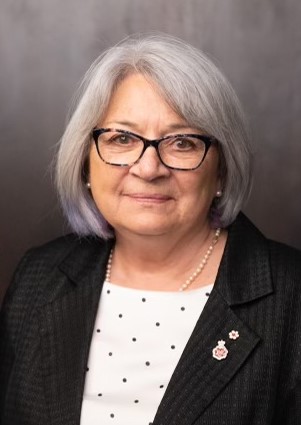
The Governor General is the federal viceregal representative of the Monarch of Canada, whether that monarch is styled as a Queen or a King. The office exists so a resident representative can carry out the Crown's duties in Canada when the sovereign does not reside in the country. The position combines constitutional authority with ceremonial, symbolic and community roles and is a core element of Canada's constitutional monarchy.
Image gallery
10 Images






Constitutional role and powers
Constitutionally the Governor General holds most of the Crown's formal powers at the federal level. In practice these powers are exercised almost always on the advice of the Prime Minister of Canada and the federal cabinet. Typical functions include:
- Summoning, proroguing and dissolving Parliament and calling elections;
- Giving royal assent to bills passed by Parliament so they become law;
- Appointing ministers, senators and federal judges on ministerial advice;
- Serving as Commander-in-Chief of the Canadian Armed Forces in a ceremonial capacity;
- Confering honours and appointments, such as membership in national orders and decorations.
Although most actions are guided by ministerial advice, the Governor General retains so‑called reserve or discretionary powers that can be used in exceptional constitutional circumstances, for example to refuse a dissolution request or to resolve a confidence crisis.
Appointment, term and viceregal office
The Governor General is formally appointed by the sovereign on the recommendation of the Prime Minister. By convention the Prime Minister selects a candidate and the sovereign gives the commission. Terms are not fixed by law; in recent practice they commonly last around five years, though extensions or early departures occur. The holder is styled as "His/Her Excellency" and is sometimes referred to as the viceroy or viceregal representative.
Ceremonial and public responsibilities
Beyond constitutionally required acts, the Governor General undertakes a wide range of ceremonial and civic duties. These include hosting visiting heads of state, representing Canada at official events, promoting national unity and public service, travelling across the country to meet communities and recognizing contributions through honours and medals. The office maintains official residences, most notably Rideau Hall in Ottawa and the Citadelle of Quebec in Quebec City, which are venues for state ceremonies and public programming.
History and notable facts
The office developed from colonial governance to a modern Canadian institution as the country gained autonomy within the British Empire and later the Commonwealth. Its role has been shaped by constitutional conventions that emphasize ministerial advice and parliamentary confidence. On rare occasions the Governor General's reserve powers have been decisive in political crises; the 1926 King–Byng affair is a well‑known historical example that influenced Canada's constitutional practice. The office has evolved to reflect Canadian identity, with many recent governors general being Canadians drawn from diverse backgrounds.
Distinctions and related offices
The Governor General functions at the national level and should not be confused with provincial lieutenant governors, who represent the Crown in the provinces. While both perform similar viceregal and ceremonial duties, their responsibilities and jurisdictions differ according to federal and provincial constitutional arrangements. The Governor General also works with institutions and conventions that constrain and guide the exercise of power, ensuring the office supports democratic government and the rule of law.
For further context about the monarchy's role in Canada and the Prime Minister's advisory function see official and scholarly sources: Monarch of Canada, Queen, King, Prime Minister of Canada.
Questions and answers
Q: Who is the Governor General of Canada?
A: The Governor General of Canada is the person who represents Canada's Queen (or King).
Q: Does the Queen of Canada spend much time in Canada?
A: No, the Queen of Canada does not spend much time in Canada because she is also the Queen of several other countries.
Q: How is the Governor General chosen?
A: The Governor General is technically chosen by the Queen and is allowed to use almost all of the Queen's powers. However, most of the time neither the Queen nor the Governor General use their powers without advice from the Prime Minister of Canada. The Queen would normally always choose whoever the Prime Minister wants them to choose to become Governor General.
Q: What does a Prime Minister typically advise a Governor General to do?
A: A Prime Minister typically advises a Governor General to use his/her powers for what they have advised him/her to do.
Q: When must a Prime Minister go straight to the Queen?
A: A Prime Minister must go straight to the Queen when they want something done that a Governor General is not allowed to do on their own, such as appointing 4 or 8 extra Senators to Parliament.
Related articles
Author
AlegsaOnline.com Governor General of Canada Leandro Alegsa
URL: https://en.alegsaonline.com/art/39966