
Scimitar — Curved single-edged sword of the Middle East and beyond
A scimitar is a broad Western term for several types of curved, single-edged swords used historically across the Middle East, Central and South Asia and North Africa, chiefly for cutting from horseback.
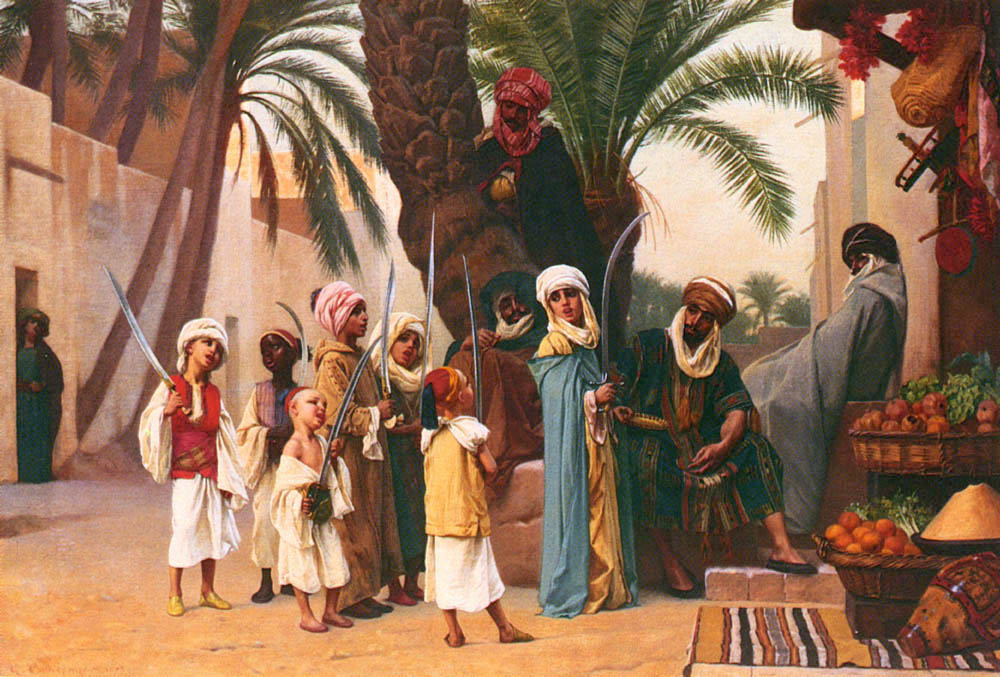
The word scimitar is used in English to describe a family of curved, single-edged swords rather than a single, narrowly defined weapon. These blades are best known for their pronounced curve and cutting-oriented geometry. While the term is familiar in literature and art, it covers a range of regional types such as the Persian shamshir, the Turkish kilij and the Indian talwar, each with distinctive proportions and fittings.
Image gallery
3 Images

Characteristics and design
Scimitar-type swords are typically single-edged, with the cutting edge on the convex side of the curve. Design elements that recur include a relatively thin, sharp edge for draw cuts, a fuller or groove in some blades to lighten the weapon, and hilts that vary from simple crossguards to complex cup or hook-shaped pommels. The balance and curvature favor slashing attacks and make the weapon effective for mounted combat.
- Single-edged, curved blade optimized for cutting.
- Varied blade length and curvature depending on region.
- Hilt styles range from straight grips to swept or cup guards.
- Manufacture often employed high-quality steels; some famous examples show patterned or crucible steel work.
History and use
Curved swords appeared where cavalry warfare and fast cutting strikes were decisive. Over centuries they spread and evolved across Central Asia, the Middle East, North Africa and the Indian subcontinent. Warriors used them on horseback and on foot; later they also acquired ceremonial and symbolic roles in courts and armies. The curved form is less suited to thrusting than straight swords but excels at slashing cuts.
Variants, distinctions and cultural role
Although often conflated with the European sabre, scimitar-type blades reflect different regional traditions in blade-making and hilt design. Many historic examples are prized as works of metallurgy and art and continue to appear in ceremonial uniforms, museum displays and popular culture, where they symbolize a broad set of Middle Eastern and Central Asian martial traditions.
Related articles
Author
AlegsaOnline.com Scimitar — Curved single-edged sword of the Middle East and beyond Leandro Alegsa
URL: https://en.alegsaonline.com/art/88048