
Sekihan — Japanese celebratory red rice
Sekihan is a traditional Japanese dish of glutinous rice colored with adzuki beans and served on auspicious occasions; regional variations and a modern revival mark its cultural role.
Sekihan (赤飯) is a Japanese dish made from glutinous (sticky) rice cooked together with or colored by small red beans, most commonly adzuki. Its distinctive reddish hue is associated with celebration and good fortune in Japan, so sekihan is traditionally served at life milestones and public festivals. Though the idea of "red rice" appears in broader East Asian custom, the form, ingredients and rituals around sekihan developed in Japan over many centuries and now form a familiar part of Japanese ceremonial cuisine.
Image gallery
4 Images


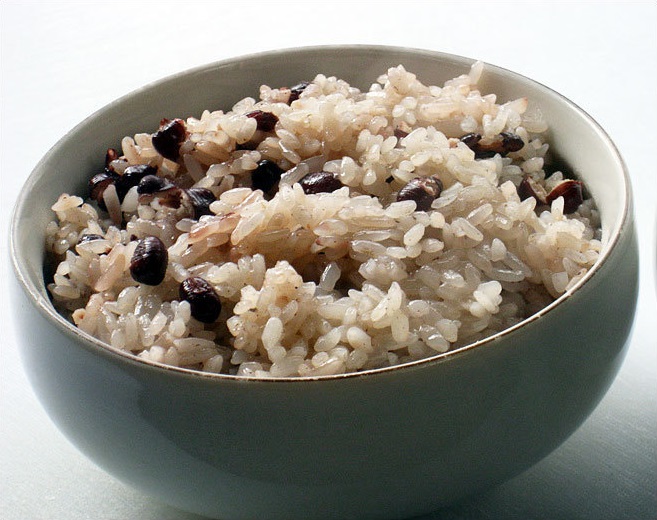
Composition and preparation
Sekihan is usually prepared with mochigome (glutinous short-grain rice) and adzuki beans. The beans are simmered separately and their cooking liquid or a portion of the beans themselves impart a pink to red tint to the rice when mixed and steamed together. Salt is commonly added, and a finishing garnish of toasted sesame seeds mixed with coarse salt (goma-shio) is typical. Commercial and homemade recipes vary in bean proportion, firmness of the rice and degree of sweetness, producing a spectrum from pale pink to deep red.
Regional variations and common additions
Local tastes have produced many variations: in some areas roasted peanuts are mixed in, a practice noted in Chiba Prefecture; other regions add fermented beans such as nattō or sweetened beans for extra flavor. Variants appear in Yamanashi Prefecture, Hiroshima Prefecture and Nagano Prefecture, among others. Sekihan is commonly packed into a bento box for outings and festivals, and contemporary convenience stores and supermarket delis often sell ready-made portions.
History and cultural significance
Stories of red-colored rice or offerings appear in wider East Asian ritual practice, and influences from the Asian mainland helped shape early Japanese foodways. Rice cultivation and ceremonial rice dishes developed in Japan over many centuries; sekihan became associated with auspicious occasions because red is traditionally seen as a protective, celebratory color. While precise origins are not firmly documented, sekihan’s role as a marker of celebrations — births, weddings, anniversaries, shrine festivals and certain public holidays — is well established in modern cultural practice.
When and how it is used
- Common occasions: weddings, birth announcements, coming-of-age observances and seasonal festivals.
- Public rituals: offered at shrines or served at community events to mark collective celebrations.
- Domestic practice: families may make sekihan at home for milestone days or buy it preprepared for convenience.
Modern recognition and notable facts
Organizations and local food promoters have worked to preserve and publicize sekihan. A group established in 2012 advocated for awareness of the dish and has designated November 23 each year as Sekihan Day to encourage people to prepare or share it. The dish remains a practical example of how food acts as cultural memory: simple ingredients and straightforward preparation link everyday meals to ritual meaning in contemporary Japan.
Sekihan exemplifies how a single food can carry symbolic weight. It balances texture (chewy glutinous rice) with subtle bean flavor, and its color alone signals celebration. For visitors to Japan or cooks exploring Japanese home cuisine, learning to make sekihan offers insight into seasonal practice, regional tastes and the continuing role of food in marking life’s milestones and communal life.
For comparative context or further reading, see references to mainland parallels and prehistoric timelines with care: some accounts mention early influences from China and ancient eras such as the Jōmon period, but the adoption of rice-based ceremonial dishes in Japan evolved over many historical stages and should be considered in that longer archaeological and cultural perspective.
Regional notes and recipe variations can be explored through local culinary guides and festival reports; a few online resources and community pages document contemporary practices and preparations for sekihan across Japan on a seasonal basis (see sekihan).
Questions and answers
Q: What does Sekihan mean?
A: Sekihan, which is a traditional Japanese food, means “red rice”.
Q: When was red rice brought to Japan from China?
A: Red rice was brought to Japan from China during the Jōmon period.
Q: How is Sekihan made in modern times?
A: In modern times, Sekihan is made by steaming sticky rice and red beans.
Q: In what type of container is Sekihan typically served?
A: Sekihan is typically served in a bowl or in bento.
Q: What are some local specialty ingredients that are often added to Sekihan to make it sweeter?
A: Local specialty ingredients that are often added to Sekihan to make it sweeter include peanuts in Chiba Prefecture, nattō in Yamanashi Prefecture and Hiroshima Prefecture, and sweet beans in Nagano Prefecture.
Q: When was an organization founded to promote sekihan in Japan?
A: An organization was founded to promote sekihan in Japan in 2012.
Q: When is Sekihan Day celebrated each year?
A: Sekihan Day is celebrated each year on November 23rd, according to the organization dedicated to promoting sekihan in Japan.
Related articles
Author
AlegsaOnline.com Sekihan — Japanese celebratory red rice Leandro Alegsa
URL: https://en.alegsaonline.com/art/88619
Sources
- japantimes.co.jp : "Sekihan: a recipe for magic beans and good luck"
- worldcat.org : 0447-5763
- jpninfo.com : "Bring Yourself Good Luck With Sekihan, a Traditional and Auspicious Japanese Dish! – Japan Info"
- osekihan.jp : "赤飯文化啓発協会|お赤飯はしあわせご飯"