
Saw (tool): types, history, uses and safety
A saw is a tool for cutting materials with a toothed edge or abrasive; this article describes common types, history, operation, uses and essential safety practices.
Overview
A saw is a cutting device that separates material by means of a toothed blade, wire, or abrasive edge. Often thought of as a woodworking implement, saws are used on wood, metal, stone and other materials. The basic concept—a blade moved relative to material to remove small chips or particles—applies across manual and powered designs, from a simple tool pushed by hand to machine-driven systems.
Image gallery
10 Images



Characteristics and main parts
Common elements include the blade, teeth or cutting edge, a handle or mounting frame, and guides or guards on powered models. Hand saws rely on human force and technique, while powered saws use motors or engines. Traditional hand-operated saws depend on muscle power, whereas modern bench and portable units employ electric, pneumatic or gasoline power.
Major types
- Hand saws: crosscut, rip, coping and backsaws used for joinery and rough cutting.
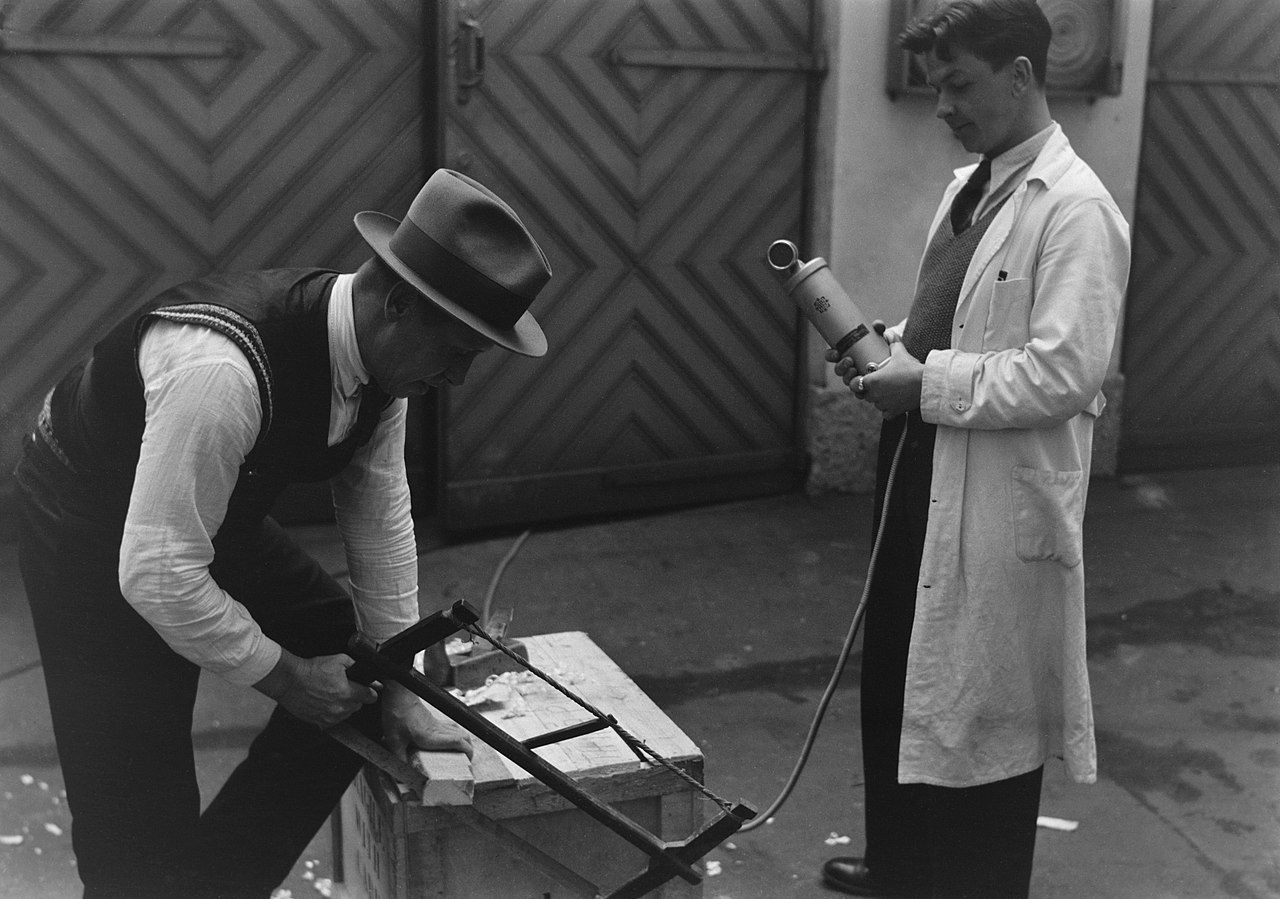
- Frame and bow saws: tensioned blades for curved or coarse cuts.
- Hacksaws: fine-toothed frames for cutting metal.
- Powersaws: circular saws, table saws, band saws, jigsaws and scroll saws designed for specific operations.
- High-power outdoor saws: for example the chainsaw, often used in forestry to fell or section trees.
History and development
Saws are ancient tools: archaeological finds show serrated cutting implements dating back millennia. Over time, metallurgy, tooth geometry and power sources evolved, producing specialized blades and mechanized saws that increased precision and throughput in woodworking, metalworking and construction.
Uses, examples and importance
Saws play a central role in construction, carpentry, metal fabrication and landscaping. A table saw or circular saw is common on building sites; band saws and scroll saws are used in workshops for curved or resawing work. Specialized abrasive saws cut masonry or tile. Because cutting methods determine surface finish and waste, choosing the correct saw and blade is essential for efficiency and quality.
Safety and maintenance
Cutting with a saw produces noise, sharp edges, chips and airborne particles. Operators should use guards, clamps and appropriate personal protective equipment. Respirators or dust extraction reduce respiratory hazards, and safety glasses, gloves and face protection guard against flying fragments; see guidance on eye and skin protection. Regular blade sharpening or replacement and correct tensioning extend tool life and reduce the risk of kickback or binding.
Related articles
Author
AlegsaOnline.com Saw (tool): types, history, uses and safety Leandro Alegsa
URL: https://en.alegsaonline.com/art/87670
Sources
- aisf.or.jp : Nokogiri
- dougukan.jp : Nokogiri