
Bank of China Tower (Hong Kong)
Iconic triangular skyscraper in Central, Hong Kong, designed by I. M. Pei. Noted for its angular glass façade, it serves as Bank of China offices and ranks among the city's most recognizable towers.
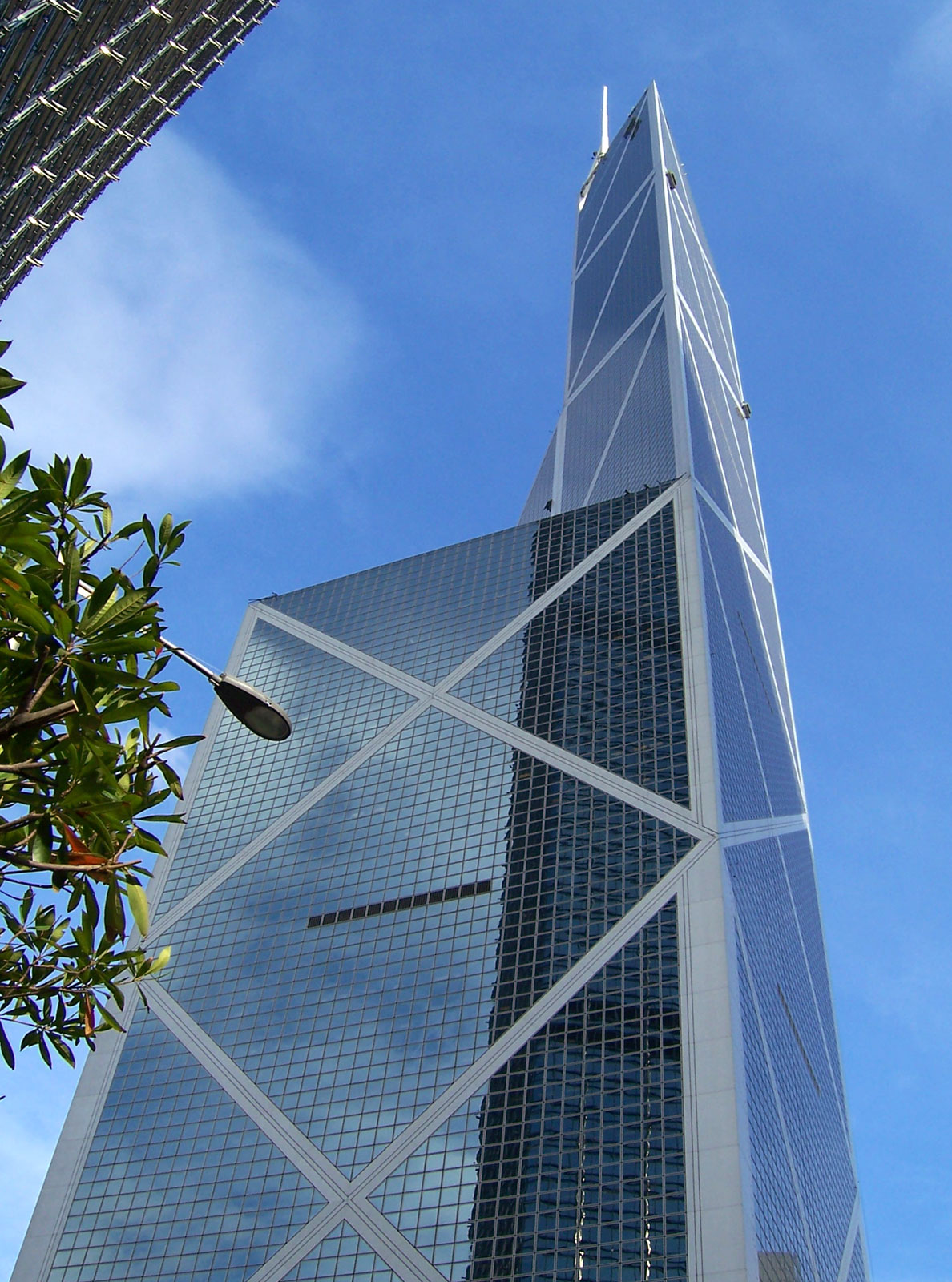
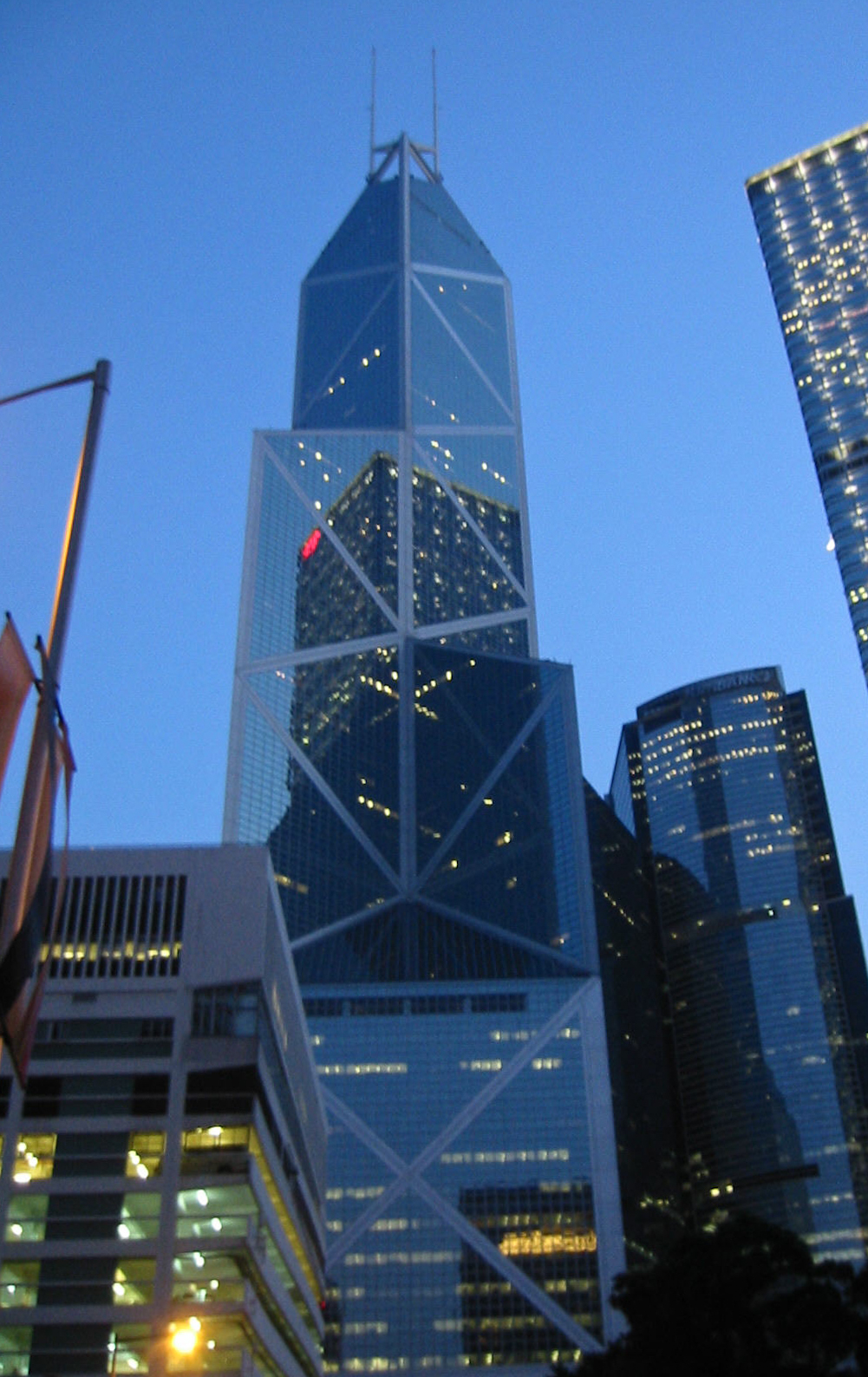
The Bank of China Tower is one of Hong Kong's most distinctive high-rise buildings, located in the Central district. Its sharply faceted silhouette and reflective glass surface make it a familiar element of the city's skyline and a frequent subject in discussions of modern skyscrapers. The building primarily houses offices for the Bank of China and other commercial tenants.
Image gallery
7 Images




Design and physical characteristics
Designed by architect I. M. Pei, the tower is built around a sequence of triangular forms that step upward into a crystalline composition. The geometry is expressed on the exterior through diagonal bracing and glass curtain walls, producing a prismatic appearance that changes with light and weather. The main roof is commonly cited at about 315 metres above ground, while spires or masts rise further, often reported at roughly 369 metres in total height.
History and construction
Conceived in the 1980s and completed near the end of that decade, the project was commissioned as a new headquarters for the Bank of China in Hong Kong. The commission brought together international engineering and local contractors to realize I. M. Pei's concept for a high-performance office tower that would stand out among neighbouring developments in Central.
Uses, significance and reception
As a corporate headquarters and commercial office building it functions as a busy center of finance and administration. Beyond its practical role, the tower became a visual landmark and symbol of Hong Kong's late‑20th‑century urban growth. Its modernist silhouette and night-time illumination have been widely photographed and reproduced in media about the city.
Notable facts and context
The Bank of China Tower attracted public attention for both its bold design and cultural reception. Some observers noted controversies such as critiques relating to feng shui because of the building's sharp angles; others praised its structural clarity and architectural daring. The project is frequently cited in surveys of I. M. Pei's work and of Hong Kong's rapid skyscraper development.
- Architect: I. M. Pei (see architect)
- Location: Central, Hong Kong (city overview)
- Primary use: Bank of China offices and commercial space
- Approximate heights: main roof ~315 m; spires/masts reported ~369 m
- Completed: late 1980s–1990 (widely cited completion year)
For readers seeking further information, the building appears regularly in reference lists of notable skyscrapers and in architectural surveys of late 20th‑century corporate towers. The Bank of China Tower remains an instructive example of how geometric form, structural expression and urban context combine to produce a high-profile civic landmark.
Related articles
Author
AlegsaOnline.com Bank of China Tower (Hong Kong) Leandro Alegsa
URL: https://en.alegsaonline.com/art/8761