
Barrel vault (tunnel or wagon vault)
A barrel vault is a continuous semicylindrical ceiling formed by extending an arch. It appears in ancient Roman and medieval architecture and persists in modern construction with concrete and masonry.
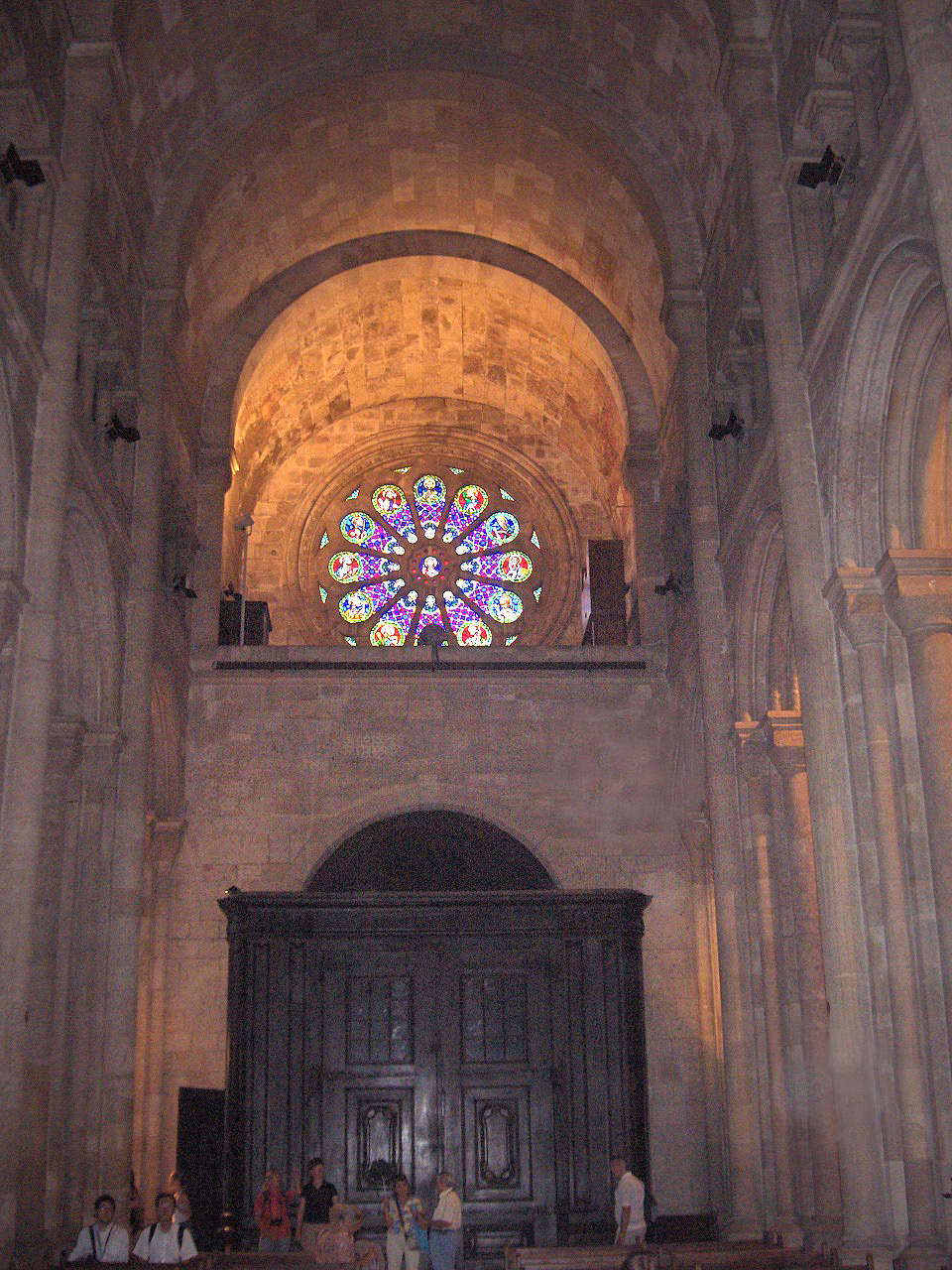
A barrel vault, also called a tunnel vault or wagon vault, is a roof or ceiling formed by the linear extrusion of a single arch. The resulting space has the geometry of a half-cylinder spanning between two parallel walls. Barrel vaults are among the simplest vault forms and are widely used where a continuous, covered corridor or hall is required.
Image gallery
8 Images


Characteristics and construction
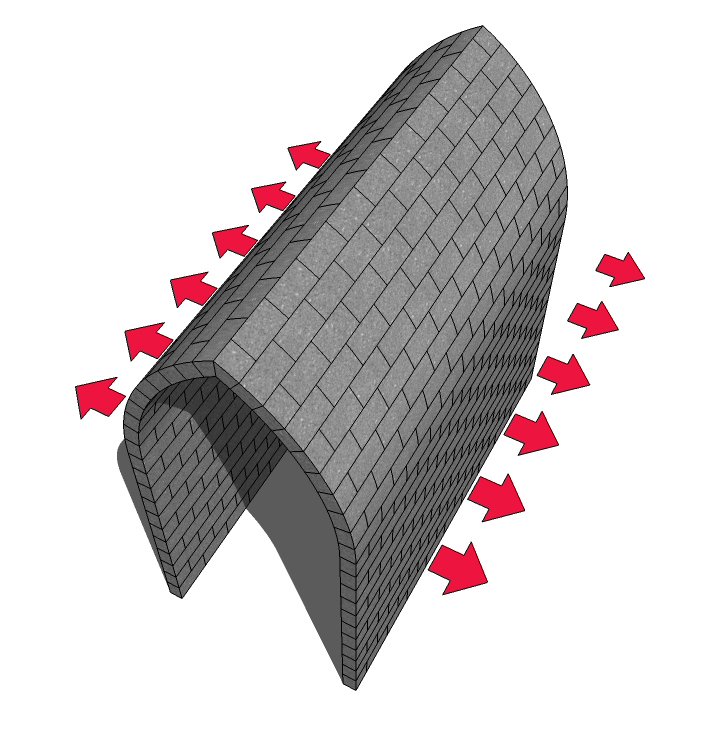
Structurally a barrel vault acts like a series of adjacent arches, producing vertical load downward and horizontal thrust outward on the supporting walls. Traditional masonry barrel vaults were built on temporary wooden centering, with stone, brick or concrete laid in courses to follow the curve. Because of the lateral forces they generate, barrel-vaulted spaces often need thick walls, buttresses, or abutments to resist spreading.
History and development
Barrel vaulting appears in ancient building traditions and was widely exploited by Roman engineers for baths, basilicas, tunnels and aqueducts. During the medieval period it remained common in Romanesque churches and monastic buildings. Later developments in rib and groin vaulting offered greater flexibility for roofing larger or more complex plans, but the barrel vault persisted in many regional and functional contexts. In the modern era reinforced concrete and improved structural analysis have allowed longer, lighter barrel-vaulted roofs.
Variants include the semicircular (classical) barrel, the segmental barrel with a shallower curve, and the pointed barrel used to reduce lateral thrust. A barrel vault differs from a groin or ribbed vault in that it is continuous along its length rather than produced by the intersection of two vaults. Builders sometimes combine barrel vaults with transverse arches or buttresses to control forces and define bays.
- Typical uses: naves, aisles, crypts, passageways, storage rooms and industrial sheds.
- Advantages: simple geometry, ease of construction for regular spans, good acoustics for elongated spaces.
- Limitations: strong lateral thrust, difficulty inserting large openings in side walls without reinforcement.
For further reading on vault types and construction techniques see general architectural references and examples that discuss barrel vaulting in ancient and medieval buildings and its adaptations in modern concrete construction. Additional technical detail and comparisons with related vault forms are available through specialist sources and conservation studies.
Key terms: arch, buttress, centering, masonry, semicylindrical.
Related articles
Author
AlegsaOnline.com Barrel vault (tunnel or wagon vault) Leandro Alegsa
URL: https://en.alegsaonline.com/art/9093