
Santiago, Chile: capital, geography, history and urban life
Santiago de Chile is Chile's capital and largest city. Situated in a valley between the Andes and coastal ranges, it is the nation's political, cultural and economic center, with varied neighbourhoods and environmental challenges.
Santiago de Chile is the capital and largest city of Chile and serves as the country's principal political, cultural and economic hub. The wider metropolitan area is home to several million people and concentrates government institutions, major universities, national museums and corporate headquarters. Visitors encounter historic plazas, modern business districts and frequent mountain vistas within a single urban region. For official and civic information see official resources.
Image gallery
10 Images
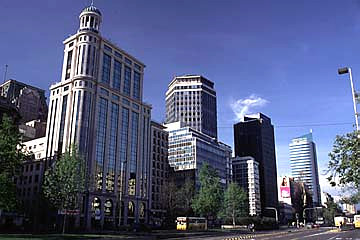


Geography and climate
Santiago lies in a broad valley framed to the east by the High Andes and to the west by lower coastal ranges. This topography influences local weather: the city has a Mediterranean-type climate with warm, dry summers and cooler, wetter winters. The basin setting also contributes to temperature inversions that can trap pollutants and cause recurring episodes of poor air quality, a concern monitored by environmental agencies and researchers; see more on the city's physical setting at geography resources.
History and development
The city was founded in the 16th century (commonly dated to 1541) during the Spanish colonial period and grew as an administrative and commercial centre. Over subsequent centuries Santiago expanded outward from a colonial core around the Plaza de Armas into residential neighbourhoods, industrial zones and modern high-rise districts. Political events, economic cycles and frequent earthquakes have influenced its architecture, planning and rebuilding efforts.
Administration and neighbourhoods
Santiago's urban area is organised into many comunas (municipalities) that administer local services, planning and community programs. Neighbourhoods vary from historic downtown quarters and bohemian districts to affluent residential zones and densely populated working-class areas. The municipal structure and the role of local government are described in more detail by municipal sources at local government resources.
Economy, transport and culture
The city functions as Chile's economic engine, with banking, commerce, industry and services concentrated in its metropolitan area. An extensive public transport network—including a multi-line metro system, extensive bus services and an international airport—moves commuters and visitors across the region. Cultural life is varied: theatres, galleries, music festivals, culinary scenes and academic institutions reflect indigenous, European and immigrant influences. Nearby valleys and vineyards also support tourism and wine industries popular with both residents and international visitors.
Challenges and public policy
- Air quality: topography and emissions combine to produce periodic smog; monitoring and mitigation remain important policy areas. See environmental monitoring and advisories at environmental reports.
- Seismic risk: the region is earthquake-prone, which affects building codes, emergency planning and infrastructure investments.
- Urban growth and equity: managing sprawl, transport capacity, housing affordability and green space are central planning concerns as the metropolitan area continues to grow.
Recreation and tourism
Residents and visitors enjoy hilltop parks, urban greenways and easy access to outdoor recreation in the nearby mountains, including skiing and trekking in the Andes and visits to coastal areas and vineyard valleys. Popular local sites and regional travel information are summarised in many travel and mountain guides; consult regional and travel overviews for practical details.
Today Santiago remains a dynamic Latin American capital balancing economic growth with cultural preservation and environmental management. For an overview of civic services, statistics and travel planning consult official portals and recognised guide resources such as those linked above (official resources).
Related articles
Author
AlegsaOnline.com Santiago, Chile: capital, geography, history and urban life Leandro Alegsa
URL: https://en.alegsaonline.com/art/87184