
Santalales: the order of parasitic flowering plants
Santalales is an order of flowering plants whose members are partially or wholly parasitic. It contains about eight families, 151 genera and roughly 1,000 species, including mistletoes and sandalwoods.
Santalales is an order of angiosperms notable for a high degree of parasitism. The group includes roughly eight families, about 151 genera and close to 1,000 species. Members range from woody shrubs and trees to herbaceous plants, and many are familiar by their common names, such as mistletoes and sandalwoods. For a general introduction see Santalales overview.
Image gallery
9 Images



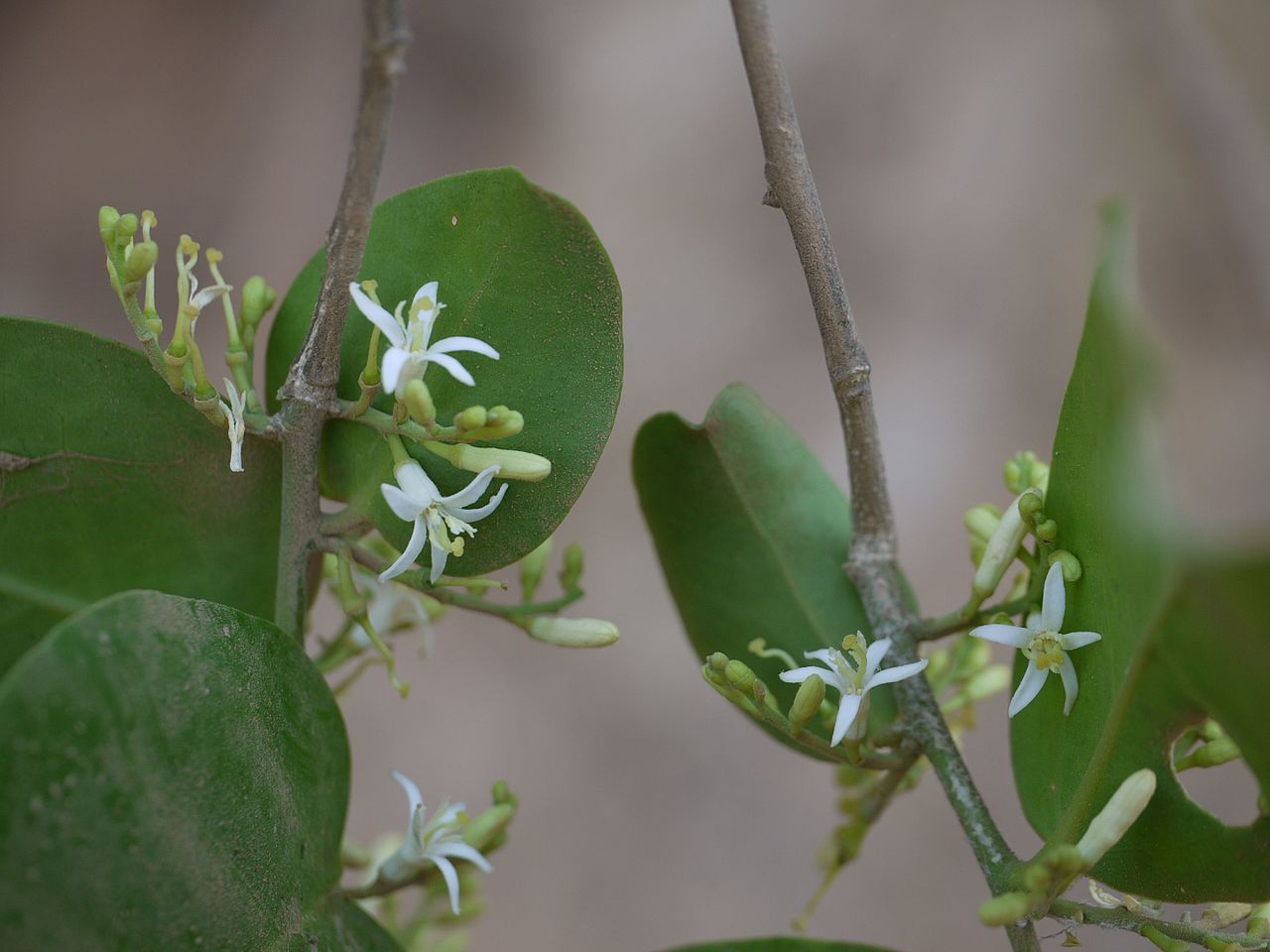


Characteristics and parasitic habit
All families in Santalales are parasitic to some extent. Many species are hemiparasites: they photosynthesize yet obtain water and dissolved nutrients from other plants. Others are holoparasites that lack chlorophyll and depend entirely on hosts. Parasitic attachment is accomplished through a specialized structure called a haustorium which penetrates host tissues.
Parasitism in this order occurs on roots or on aerial parts such as branches. Root parasites connect to host roots and withdraw resources belowground; stem or branch parasites — commonly called mistletoes — form haustoria on twigs and branches. See examples of attachment strategies at root or branch parasitism and read about host relationships at host interactions.
History and classification
Santalales has been reshaped by molecular phylogenetics in recent decades: relationships among families and genera have been revised as DNA evidence clarified evolutionary lines. While taxonomic boundaries have shifted, the shared parasitic lifestyle unites the order. Familiar families include Santalaceae (sandalwoods and relatives) and Loranthaceae (many mistletoes).
Ecology, uses and notable facts
Members play important ecological roles. Mistletoes provide food for birds and mammals and influence nutrient cycling; sandalwoods are valued for fragrant wood and essential oils used in perfumery and traditional medicine. Some species are harvested commercially and face pressure from overcollection and habitat loss.
- Santalaceae – includes sandalwood and other root parasites.
- Loranthaceae – mostly aerial mistletoes that parasitize branches.
- Ecological importance – fruit and nectar of many species support wildlife and seed dispersal.
Because their lifestyles range from facultative to obligate parasitism, Santalales species are studied in ecology, evolution and conservation biology. Their distinctive haustorial connections and interactions with hosts make them an instructive example of plant parasitism across ecosystems.
Related articles
Author
AlegsaOnline.com Santalales: the order of parasitic flowering plants Leandro Alegsa
URL: https://en.alegsaonline.com/art/87162