
Sapote: varieties, origins, cultivation and culinary uses
Sapote denotes several soft, edible tropical fruits from different botanical families native to Mexico, Central America and northern South America, used fresh, in desserts, and in local culture.
Sapote is a common name applied to a number of soft, edible fruits native to Mexico, Central America and parts of northern South America. The English term derives from the Nahuatl word tzapotl, and over time it has been attached to species in several botanical families rather than to a single genus. The category is therefore cultural and culinary: a sapote typically denotes a tender, sweet or custard-like fruit used fresh, in desserts, or in traditional preparations. For a general concept of fruit types and uses see fruit.
Image gallery
7 Images


Definition and taxonomy
The name “sapote” occurs in the common names of plants across unrelated families. Several important sapotes belong to the family Sapotaceae (a family of tropical trees), while others are members of Ebenaceae, Rutaceae and Malvaceae. Because the label is vernacular, identification relies on botanical names and family placement rather than on the common name alone. For treatment of the Sapotaceae family see specialist sources on tropical fruit trees and Sapotaceae accounts.
Principal sapote types and native ranges
- Sapotaceae sapotes — Sapodilla (Manilkara zapota) is native to parts of Mexico, Guatemala, Nicaragua, Belize and possibly El Salvador. Yellow sapote (Pouteria campechiana) originates in Mexico and wider Central America. Mamey sapote (Pouteria sapota) ranges from southern Mexico into northern South America, and green sapote (Pouteria viridis) is native to lowland southern Mexico.
- Ebenaceae sapotes — Black sapote (Diospyros digyna) occurs from eastern Mexico south into Colombia and is often associated with the Aztec tzapotl. Chapote (Diospyros texana) grows in the lower Rio Grande valley of Texas and adjacent areas of Mexico.
- Other families — White sapote (Casimiroa edulis, Rutaceae) is native to northern and central Mexico and parts of Central America. South American sapote (Quararibea cordata, Malvaceae) is found in the Amazon basin, including parts of Brazil, Ecuador, Peru and Colombia.

Physical description and distinguishing features
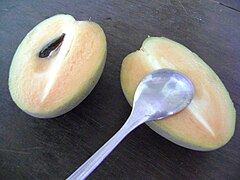
Sapote fruits vary widely in size, shape, skin texture and flesh color. Black sapote is notable for its dark brown to nearly black, pudding-like pulp and mild, sweet flavor that invites the nickname “chocolate pudding fruit.” Sapodilla bears grainy brown flesh with a caramel-like sweetness; mamey has vivid orange-red, creamy flesh with an aromatic, musky taste; yellow sapote tends to have bright yellow flesh that varies from firm to soft; and white sapote has pale, custardy flesh sometimes compared texturally to an apple custard. Seeds are commonly large and not eaten, and the skin may be thin or thick depending on the species.

History and cultural significance
Sapotes have been used for food by indigenous peoples of Mesoamerica and South America for centuries. The Nahuatl term entered Spanish colonial records and later other European languages as botanists described local trees and fruits. Several species were spread by human movement and cultivation and are now grown in tropical and subtropical gardens beyond their original ranges. Certain sapotes have cultural roles in local cuisines and folk medicine; for example, parts of trees or fruits have been used in traditional remedies, though uses vary by community.

Cultivation and propagation
Most sapote species prefer frost-free climates and are cultivated in well-drained soils with regular moisture. Propagation can be by seed (often producing variable offspring) or by grafting to preserve desirable cultivar traits. Nursery techniques and orchard management differ among species: some are pruned to manageable sizes for home gardens, while commercial orchards focus on selected cultivars for fruit quality. Sapodilla historically provided chicle, a latex once harvested as a chewing-gum base. For regional cultivation advice consult local horticultural publications and extension services focused on Mexico and Central America.
Culinary uses and storage
Sapotes are mainly eaten fresh, scooped or sliced, and are common ingredients in desserts, milkshakes, ice creams and custards. They may also be blended into beverages, made into preserves or included in savory recipes in small amounts. Ripeness is important: many sapotes are best when fully soft and aromatic, while underripe fruit may be astringent or unpalatable. Postharvest life varies by species; some sapotes tolerate refrigeration for short periods, while others are sensitive to cold and require careful handling to avoid chilling injury.

Nutrition, health and safety
Like many tropical fruits, sapotes are sources of carbohydrates, dietary fiber, vitamins (notably vitamin C and provitamin A in orange-fleshed types) and minerals. Exact nutrient composition varies by species and ripeness. Seeds and some plant parts may be bitter or toxic and are generally not eaten. People with allergies to related tropical fruits should exercise caution. For medicinal claims or detailed nutrient tables consult validated nutritional databases and peer-reviewed sources.

Pests, diseases and conservation
Sapote trees can be affected by region-specific pests and diseases, including fungal leaf spots, fruit rot and insect pests. Integrated pest management, selection of resistant varieties and good orchard hygiene reduce losses. Some wild sapote populations face habitat loss from deforestation in the Amazon and other regions; conservation of genetic diversity can be important for future breeding and for cultural uses. For species-specific information see botanical treatments and conservation assessments.

Further reading and resources
This entry provides an overview of commonly encountered sapote species and their uses. For botanical details consult resources on the Sapotaceae, tropical fruit guides on Ebenaceae species, and regional floras of Mexico, Central America and the Amazon. Ethnobotanical studies and horticultural extension services provide practical cultivation advice; see sources on Central American fruits at Guatemala and Nicaragua, and Amazonian fruit resources from Brazil, Ecuador and Peru. For identification and cultivar information consult specialist manuals and plant databases that cover Belize, El Salvador and the lower Rio Grande region.
Questions and answers
Q: What is sapote?
A: Sapote is a soft, edible fruit that comes from several plants native to Mexico, Central America and northern parts of South America.
Q: What family do some sapotes come from?
A: Some sapotes come from the family Sapotaceae.
Q: What is the original Aztec tzapotl?
A: The original Aztec tzapotl is black sapote (Diospyros digyna), which is native to eastern Mexico south to Colombia.
Q: Where does white sapote originate from?
A: White sapote (Casimiroa edulis) originates from northern and central Mexico, Costa Rica, El Salvador and Guatemala.
Q: Where does mamey sapote come from?
A: Mamey sapote (Pouteria sapota) comes from southern Mexico to northern South America.
Q: Where does yellow sapote originate from?
A: Yellow sapote (Pouteria campechiana) originates from Mexico and Central America.
Q: What kind of Vietnamese fruit is similar to a type of sapoté?
A: Lòng mứt, a kind of Vietnamese fruit, is similar to a type of sapoté.
Related articles
Author
AlegsaOnline.com Sapote: varieties, origins, cultivation and culinary uses Leandro Alegsa
URL: https://en.alegsaonline.com/art/87271
Sources
- jstor.org : 451954
- ars-grin.gov : "Casimiroa edulis"