
Sarracenia — North American trumpet pitcher plants
Sarracenia is a genus of carnivorous, pitcher-forming plants native to eastern North America. This article covers their appearance, habitat, ecology, cultivation and conservation.
Sarracenia are perennial carnivorous plants commonly known as trumpet or pitcher plants. The genus contains roughly eight to eleven species native to eastern North America. Members are notable for leaves modified into tall, tubular traps that capture and digest insects to supplement nutrients missing from their acidic, nutrient-poor wetland soils. For a general overview see Sarracenia.
Image gallery
10 Images




Range and habitat
Sarracenia species occur mainly in the southeastern United States but also appear farther north and west, with natural populations concentrated along the Atlantic coastal plain and Gulf Coast, plus outlying occurrences in Texas and around the Great Lakes and into parts of southeastern Canada. Most species are restricted to the southeastern U.S., while S. purpurea tolerates colder climates. Typical habitats include open, sunny wetlands such as bogs, wet savannas, seepage slopes and other acidic, peaty soils where low nutrient availability has favoured carnivory. Regional notes: East Coast, Texas, Great Lakes, southeast Canada, southeast U.S..
Form and trapping mechanism
The most distinctive feature is the pitcher: a rolled leaf forming a vertical tube or trumpet. Pitcher parts include a hood or operculum, a nectar-secreting peristome that attracts prey, a slippery or waxy inner zone, downward-pointing hairs and a pool of liquid at the base. Insects drawn by nectar or visual cues fall into the tube and cannot escape; they drown or are immobilized and subsequently decomposed. Leaf modification and trap evolution are subjects of botanical study; for general discussion see leaf evolution and insect capture summaries at trap insects.
Digestion, interactions and reproduction
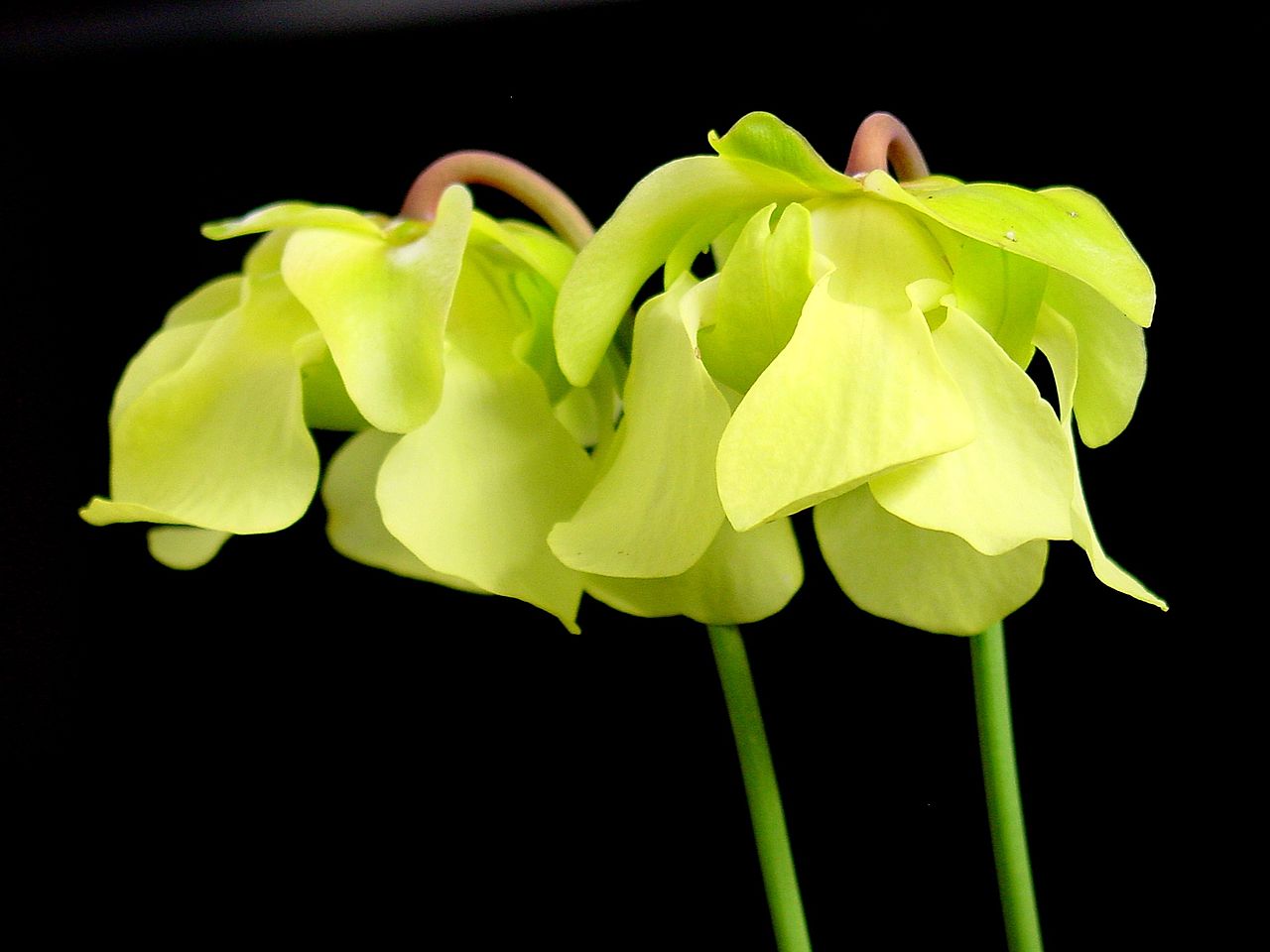
Sarracenia secrete plant-produced proteases and other digestive enzymes and often rely on a community of bacteria, protozoa and invertebrate commensals within the pitcher fluid to break down prey and release nitrogen and other nutrients. Flowers are typically showy and open in spring; they are usually borne well away from the pitchers or on tall stalks to reduce accidental trapping of pollinators. Pollinators and pitcher infauna form part of complex wetland food webs.
Cultivation and propagation
Sarracenia are popular with carnivorous-plant enthusiasts. Successful cultivation requires abundant light, an acidic, low-nutrient growing medium (commonly sphagnum peat mixed with sand or perlite) and pure water such as rainwater or distilled water. Avoid fertilizing the growing medium; plants obtain nutrients from prey. Many temperate species require a winter dormancy to remain healthy. Propagation is done by seed (often benefiting from cold stratification), division of rhizomes or by vegetative cuttings; many hybrids and named cultivars exist. Practical resources on cultivation and digestive biology are available: digestive enzymes.
Conservation and threats
Wild Sarracenia populations face threats from habitat loss, wetland drainage, fire suppression that allows woody encroachment, peat extraction and illegal collection. Some species and regional populations are considered of conservation concern and benefit from habitat protection, restoration, controlled burns and legal safeguards. Conservation organizations and botanical gardens often work on seed banking and reintroduction projects; further regional information can be found at general resources and local conservation pages such as coastal or southeast sites.
Taxonomy and notable facts
Sarracenia is placed in the family Sarraceniaceae, which also contains the genera Darlingtonia and Heliamphora. The genus name commemorates an early naturalist and has been studied for its evolutionary adaptations to nutrient-poor habitats. Botanical research continues to refine species limits and relationships; authoritative treatments and field guides are useful for identification and conservation planning. Additional reading and species notes: Texas, Great Lakes, Canada, and species-specific pages on S. purpurea.
For introductory material and further links see overview pages at Sarracenia overview, and specialist topics on leaf evolution, trapping and digestion.
Questions and answers
Q: What is Sarracenia?
A: Sarracenia is a genus of 8 to 11 species of carnivorous plants, also known as trumpet pitchers.
Q: What family does the genus belong to?
A: The genus belongs to the family Sarraceniaceae.
Q: Where can Sarracenia be found in the wild?
A: In the wild, Sarracenia grows around the East Coast of the United States, Texas, the Great Lakes area and southeast Canada. Most species grow only in the southeast United States. Only S. purpurea can live in cold places.
Q: How does it trap insects?
A: The plant's leaves have evolved into a funnel shape in order to trap insects.
Q: How does it digest its food?
A: The plant digests its food with proteases and other enzymes.
Related articles
Author
AlegsaOnline.com Sarracenia — North American trumpet pitcher plants Leandro Alegsa
URL: https://en.alegsaonline.com/art/87384