
Santa Maria, Bulacan
Santa Maria is a municipality in Bulacan province, Philippines, about 32 km northeast of Manila. It comprises 24 barangays and is a rapidly urbanizing town with agricultural roots and growing commercial development.
Overview
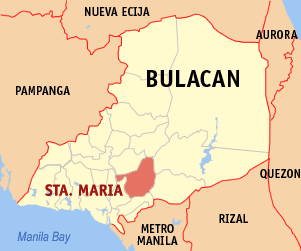
Santa Maria is a municipality in the eastern part of the province of Bulacan in the Philippines. It lies roughly 32 kilometers northeast of Manila, making it part of the broader peri-urban corridor that surrounds the national capital. Historically rooted in agriculture, Santa Maria has experienced substantial residential and commercial growth in recent decades while retaining many local traditions and community institutions.
Image gallery
10 Images



Geography and administration
The municipal territory sits inland and is bordered by several neighboring localities. It is surrounded by:
- Angat and Pandi to the north,
- San Jose del Monte City to the south,
- Norzagaray to the east, and
- Marilao and Bocaue to the west.
Santa Maria is politically subdivided into 24 barangays, the smallest administrative units in the Philippines. Local government is headed by an elected mayor and municipal council that manage services such as basic infrastructure, local markets, and community programs.
History and name
The town’s name—Spanish for “Holy Mary”—reflects the influence of Spanish colonial administration and Catholic missionization in the Philippines. Like many settlements in Bulacan, Santa Maria grew from a rural parish and farming community into a more complex municipality as roads, trade, and migration connected it to larger urban centers. Over the 20th and early 21st centuries, suburban expansion and infrastructure improvements accelerated population and land-use change.
Economy and development
Traditionally, agriculture and small-scale trade supported the local economy. In recent years Santa Maria has seen diversification: residential subdivisions, retail establishments, light industry, and service businesses have expanded to meet demand from commuters and new residents. Its proximity to Metro Manila encourages commuting and investment, while municipal authorities balance development with the need for local services and flood control in low-lying areas.
Culture, services and notable facts
Cultural life centers on barangay-level festivals, parish observances, and communal events typical of Bulacan towns. The municipality maintains its own schools, health centers, and municipal facilities, and hosts markets and public gatherings that serve residents and visitors. According to the 2007 Philippine census, the population was 205,258, though more recent local counts indicate continuing growth. Santa Maria is considered one of the more populous and rapidly urbanizing municipalities in Bulacan, noted for its mix of rural heritage and suburban development.
Practical information
Visitors typically reach Santa Maria by road from Metro Manila and nearby Bulacan municipalities. For more detailed administrative, demographic, or planning information consult provincial and national sources or local government publications and websites. Municipal offices provide information on permits, local services, and community programs for residents and businesses.
Related articles
Author
AlegsaOnline.com Santa Maria, Bulacan Leandro Alegsa
URL: https://en.alegsaonline.com/art/87140
Sources
- comelec.gov.ph : "Official City/Municipal 2013 Election Results"
- nscb.gov.ph : "Province: BULACAN"
- census.gov.ph : "Total Population by Province, City, Municipality and Barangay: as of May 1, 2010"