
Baneins: a rural commune in Ain, eastern France
Baneins is a small agricultural commune in the Ain department of Auvergne‑Rhône‑Alpes. Noted for its medieval church, a 1912 lavoir and a rural Bresse landscape, its inhabitants are called Baninois.
Overview
Baneins is a small French commune located in the Auvergne‑Rhône‑Alpes region, within the Ain department in the east of France (eastern France). The settlement has a rural character typical of the area: cultivated fields, scattered farmsteads and a central village core. In 2009 the population was recorded at about 583 inhabitants. Residents are known locally as the Baninois.
Image gallery
7 Images


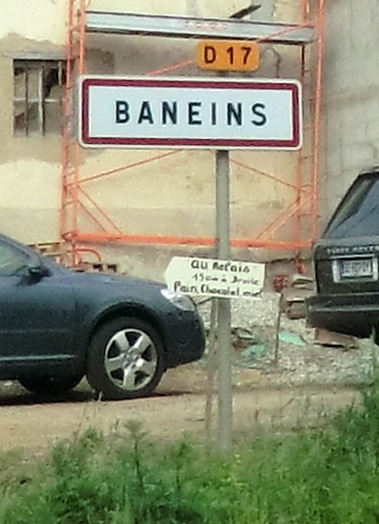
Geography and administration
Baneins sits in an agricultural plain that forms part of the broader rural landscape of the region. As a French commune it is governed by a municipal council and a mayor; local responsibilities include land planning, primary services and preservation of communal heritage. The commune is one of many small municipalities that together form the administrative fabric of the Ain department and the wider region.
Heritage and notable sites
The built heritage of Baneins reflects its long history. The most prominent monument is the Saint‑Martin church, whose origins date to the 12th century and which retains medieval stonework and later alterations. Another distinctive feature is the communal washhouse, or lavoir, constructed in 1912; these structures were once essential to daily life and are now valued as social and historic markers.
- Saint‑Martin church (12th century)
- Lavoir (built 1912)
Economy and local life
The local economy is largely based on agriculture, reflecting fertile soils and longstanding farming traditions. Farms in and around the commune produce a mix of crops and animal products characteristic of the region. Rural life in Baneins includes seasonal rhythms tied to sowing and harvest, occasional village markets and community events centered on the church and municipal facilities.
People and historical notes
Baneins has produced a few figures of local and regional note. One well‑known native is Donat Bollet, a physician who was also active in politics around the turn of the 20th century; his career illustrates how medical professionals often played civic roles in rural France. The communal archives and memorials record other local families and traditions that have shaped Baneins across generations.
Distinguishing features
What distinguishes Baneins is its continuity as a small, agriculture‑oriented community with visible traces of medieval and early 20th‑century public works. Visitors or researchers interested in rural French history will find the Saint‑Martin church and the 1912 lavoir useful starting points for understanding everyday life in this part of the Auvergne‑Rhône‑Alpes region. For more general information see regional resources and local municipal publications (biography and notices, regional guides, departmental records).
Related articles
Author
AlegsaOnline.com Baneins: a rural commune in Ain, eastern France Leandro Alegsa
URL: https://en.alegsaonline.com/art/8710