
Salzburg-Umgebung District (Flachgau) — region, administration and features
Overview of Salzburg-Umgebung (Flachgau): geography, administration, landscape, economy, history and notable facts about the district surrounding the city of Salzburg.
Salzburg-Umgebung is an administrative district in the Austrian federal state of Salzburg that largely corresponds to the historic and geographic region known as the Flachgau. The district encloses the area surrounding the city of Salzburg and is therefore often referred to in English as the Salzburg Surroundings. While the city of Salzburg functions as a separate statutory city, it serves as the administrative center for Salzburg-Umgebung.
Image gallery
2 Images
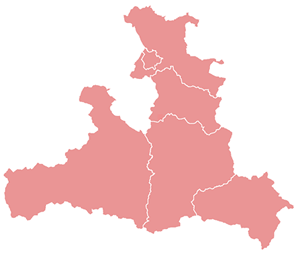
Geography and character
The Flachgau name highlights the district's relatively low-lying terrain compared with the alpine south of the state. Salzburg-Umgebung comprises a mix of suburban areas, agricultural land and smaller towns. Its landscape includes rolling plains, river valleys and access to upland scenery toward the Alps, making it transitional between urban Salzburg and the more mountainous regions.
Administration and links
Administratively the district belongs to the federal state of Salzburg and performs typical district functions such as local planning, certain social services and coordination among municipalities. The city of Salzburg acts as the administrative seat despite being an independent district in its own right. For broader state-level context see Salzburg (state).
Economy, transport and land use
Salzburg-Umgebung has a diversified local economy. Many residents commute to the city of Salzburg for work, while local economic activity includes agriculture, small and medium-sized enterprises, tourism services and light industry. Major transport corridors and rail links connect the district to Salzburg city and to neighboring regions, supporting commuting and visitor access.
History and cultural importance
The area shares in the long history of the Archbishopric and later the modern state of Salzburg. Its towns and rural settlements reflect traditional architecture, local festivals and crafts. Cultural heritage sites, parish churches and historic estates contribute to the district's local identity and attract regional visitors.
Notable facts and distinctions
- Salzburg-Umgebung is coterminous with the Flachgau region, emphasizing its role as the northern, flatter portion of the state.
- The district provides a mix of suburban living and rural landscapes that buffer the city of Salzburg from more mountainous districts.
- Its administrative arrangement—where the city of Salzburg is the seat yet remains administratively separate—is a common structure in Austria for larger cities.
For those interested in regional planning, cultural tourism or commuting patterns in the greater Salzburg area, Salzburg-Umgebung exemplifies the interaction between a central city and its surrounding district, balancing local traditions with the influences of a nearby urban center.
Related articles
Author
AlegsaOnline.com Salzburg-Umgebung District (Flachgau) — region, administration and features Leandro Alegsa
URL: https://en.alegsaonline.com/art/86601