
Sakha (Yakutia) — Republic in northeastern Russia
Sakha (Yakutia) is a vast republic in northeastern Russia, the world's largest subnational unit. Noted for extreme cold, continuous permafrost, a prominent indigenous Sakha culture, and major mineral resources including diamonds.

Overview
The Republic of Sakha (Yakutia) is a federal subject of the Russian Federation in northeastern Asia. By area it is the largest subnational unit in the world, encompassing a wide range of landscapes from Arctic coasts and tundra to boreal forests and mountain ranges. The republic's official names are Republic of Sakha (Yakutia) in Russian and Sakha in the local Turkic language. Its capital and largest city is Yakutsk, an urban center known for its Arctic climate and regional administrative, cultural and scientific institutions.
Image gallery
10 Images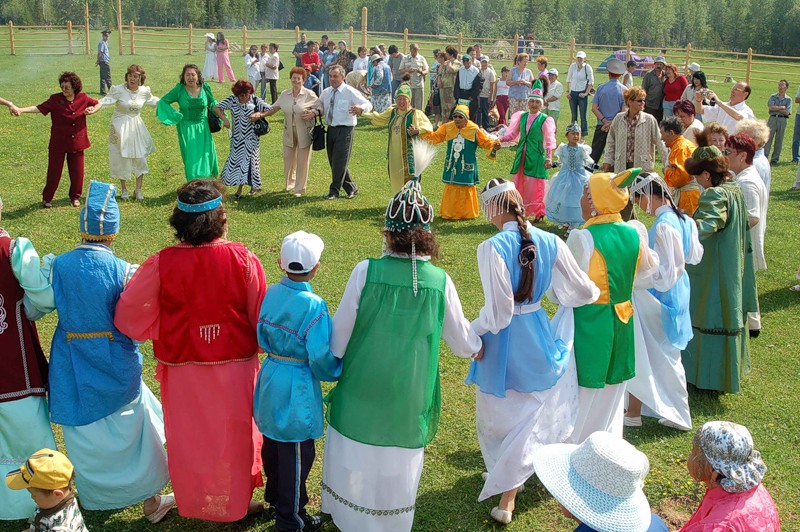


Geography
Sakha covers vast river basins and stretches of largely undeveloped terrain. The Lena River is the most important waterway, flowing north to the Laptev Sea and providing seasonal transport routes and fertile floodplains. Northern sections include Arctic coastline, islands and polar deserts, while the interior and southern areas are dominated by taiga and mountain systems. Much of the territory lies on continuous permafrost, shaping soils, vegetation and the design of buildings and roads.
Climate
The republic experiences one of the most continental climates on Earth. Winters are long and extremely cold across much of the region; summers are short and can be warm, especially in southern valleys. Yakutsk is widely cited as among the coldest major cities, where low winter temperatures are a defining feature of daily life and infrastructure planning. Seasonal extremes and permafrost conditions present ongoing challenges for housing, transport and industry.
People, language and culture
The name Sakha denotes both the republic and the Sakha (Yakut) people, a Turkic-speaking indigenous group who maintain a prominent cultural presence alongside ethnic Russians and other minorities. Sakha (Yakut) and Russian are official languages of the republic. Traditional livelihoods—reindeer herding in northern areas, horse breeding, hunting, fishing and fur trapping—continue in many communities, alongside urban professions and modern industries. Cultural expression includes epic oral poetry, throat singing, shamanic practices, handicrafts and seasonal festivals linked to the natural calendar.
History
Human populations have occupied parts of the region for millennia, adapting to cold environments through diverse subsistence strategies. Contacts with expanding Russian state authorities began in the 17th century, and the area became more integrated into imperial structures over subsequent centuries. Soviet-era administration brought reorganized governance, development of towns, and large-scale resource extraction. Since the Soviet period Sakha has retained republican status within the Russian Federation, with local institutions managing many internal affairs.

Economy and resources
The regional economy is strongly tied to natural resources. Diamond mining is a major industry and contributor to regional income, accompanied by extraction of gold and other minerals. Forestry, commercial fishing, and limited agriculture in milder southern pockets provide additional livelihoods. Resource development has produced both economic opportunities and environmental and social challenges, including impacts on permafrost, waterways and traditional land uses.
Transport and infrastructure
Transport across Sakha is influenced by remoteness, climatic extremes and sparse settlement. Rivers serve as principal transport arteries in summer, while winter roads and ice crossings enable movement over frozen terrain. Many smaller communities rely on air connections year-round. Permafrost requires specialized engineering for buildings, pipelines and roads, and climate-driven thaw poses increasing maintenance and adaptation needs.
Administration and contemporary issues
The republic is divided into administrative districts with local centers overseeing regional services. Population density is very low overall, with most residents concentrated in a handful of towns and settlements. Contemporary priorities include sustaining indigenous cultures and languages, balancing economic development with environmental protection, and adapting infrastructure to permafrost degradation and changing climatic conditions.
- Capital: Yakutsk
- Official languages: Sakha (Yakut) and Russian
- Notable features: extensive permafrost, Arctic coastline, major diamond deposits, rich indigenous cultural traditions

Geography
The area of the Republic of Sakha, 3,083,523 km², is about the same as that of the European Union without Sweden and Finland, but has less than one four-hundredth of the population of that rump of Europe. In the north, the republic is bounded by the Arctic Ocean, where it reaches its northernmost mainland point at Cape Paksa between Northwik Bay and Anabargolf at 73° 59′ 31″ N, about 400 km south of Cape Chelyuskin, the northernmost mainland point of the Old World belonging to Krasnoyarsk Krai. The northernmost land area of Sakha is formed by Henrietta Island, part of the New Siberian Archipelago, at 77° 6′ 0″ N. To the south, Sakha extends to the latitude of Copenhagen in the Aldan Highlands. The territory extends from the Central Siberian Highlands in the west through the Lena Valley (Central Yakutian Lowlands), the Verkhoyansk Mountains, the Chersky Mountains through the Yana-Indigirka Lowlands to the Kolyma Lowlands (western and eastern parts of the East Siberian Lowlands) in the northeast.
Most of the republic belongs to the basin of the Lena River. The main rivers besides the Lena are its tributaries Vilyui and Aldan, as well as the streams Indigirka and the Kolyma.
The entire territory is covered by permafrost. When this thaws in summer and snow and ice melt, floods regularly occur in the floodplains and especially in the lowlands.
Administrative divisions and cities
→ Main article: Administrative divisions of the Republic of Sakha and List of cities in the Republic of Sakha.
The Republic of Sakha is divided into 34 rajons and the urban districts of Yakutsk and Shatai.
The capital and only major city is Yakutsk. Nerjungri, Mirny, Lensk and Aldan still have more than 20,000 inhabitants. The "cold poles" Verkhoyansk and Oimyakon have achieved national fame.
| Largest cities | |||
| City | Russian | Yakutian | Residents |
| Yakutsk | Якутск | Дьокуускай | 269.601 |
| Nerjungri | Нерюнгри | Нүөрүҥгүрү | 61.747 |
| Mirny | Мирный | Мирнэй | 37.188 |
| Lensk | Ленск | Ленскэй | 24.966 |
| Aldan | Алдан | Алдан | 21.275 |
| Aichal* | Айхал | Айхал | 13.727 |
| Udachny | Удачный | Удачнай | 12.613 |
| Wiljuisk | Вилюйск | Бүлүү | 10.234 |
| Njurba | Нюрба | Ньурба | 10.157 |
* urban settlement
Questions and answers
Q: What is Sakha?
A: Sakha is a federal subject of Russia also known as Yakutia.
Q: What is the location of Sakha?
A: Sakha is located in the Siberian area of Russia.
Q: How is Sakha governed?
A: Sakha is governed as part of the Far Eastern District which contains ten other federal subjects.
Q: What is the size of Sakha in comparison to other federal subjects of Russia?
A: Sakha is the largest federal subject of Russia.
Q: In how many time zones does Sakha stretch across?
A: Sakha stretches across three time zones between UTC+9 and UTC+11.
Q: What other name is used to refer to the same area as Sakha?
A: The name Yakutia is also used to refer to the same area as Sakha.
Q: What language do the Yakut people speak?
A: The Yakut people speak a Turkic language.
Author
AlegsaOnline.com Sakha (Yakutia) — Republic in northeastern Russia Leandro Alegsa
URL: https://en.alegsaonline.com/art/86365
Sources
- perepis2002.ru : "Территория, число районов, населённых пунктов и сельских администраций по субъектам Российской Федерации (Territory, Number of Districts, Inhabited Localities, and Rural Administration by Federal Subjects of the Russian Federation)"
- britannica.com : "Sakha people"
- cambridge.org : "Exile as Imperial Practice: Western Siberia and the Russian Empire, 1879–1900"
- council.gov.ru : "Federation Council Republic of Sakha"
- whc.unesco.org : "Lena Pillars Nature Park"
- independent.co.uk : "Yakutsk: Journey To The Coldest City On Earth"
- sakha.gks.ru : "Численность мужчин и женщин"
- themoscowtimes.com : "Ancient Faith, Modern Market: Siberian Shamanism Takes On the 21st Century"
- siberian-studies.org : "Language situation in the Sakha republic"
- ich.unesco.org : "Olonkho, Yakut heroic epos-Russian Federation-Inscribed in 2008 (3.COM) on the Representative List of the Intangible Cultural Heritage of Humanity"
- nytimes.com : "Poor Region in Russia Lays Claim to Its Diamonds"
- siberiantimes.com : "The last great Siberian bridge: is it about to happen?"
- tass.com : "Northern Sea Route's navigation extends by one month in warming climate"
- wikidata.org : wikidata.org/wiki/Q6605
- catalogue.bnf.fr : cb119404223