
Lena River
Major Siberian river flowing northeast from the Baikal Mountains into the Laptev Sea. Noted for its length, large basin, seasonal ice, extensive delta and role in regional ecology and transport.
The Lena River is one of Siberia's principal waterways, running roughly northeast across eastern Russia to the Arctic. It has an overall length commonly given as about 4,472 km and drains a vast basin of roughly 2,500,000 km2. The river courses from high ground near the Baikal region toward the Laptev Sea, a marginal sea of the Arctic Ocean. For maps and general orientation see Lena River (map) and regional references to Siberia.
Image gallery
8 Images
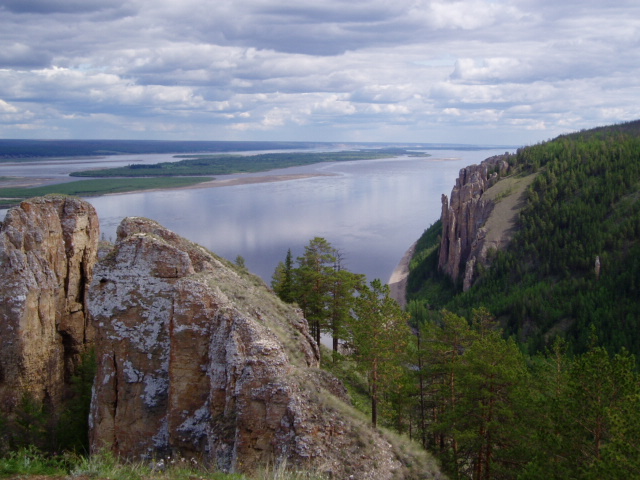


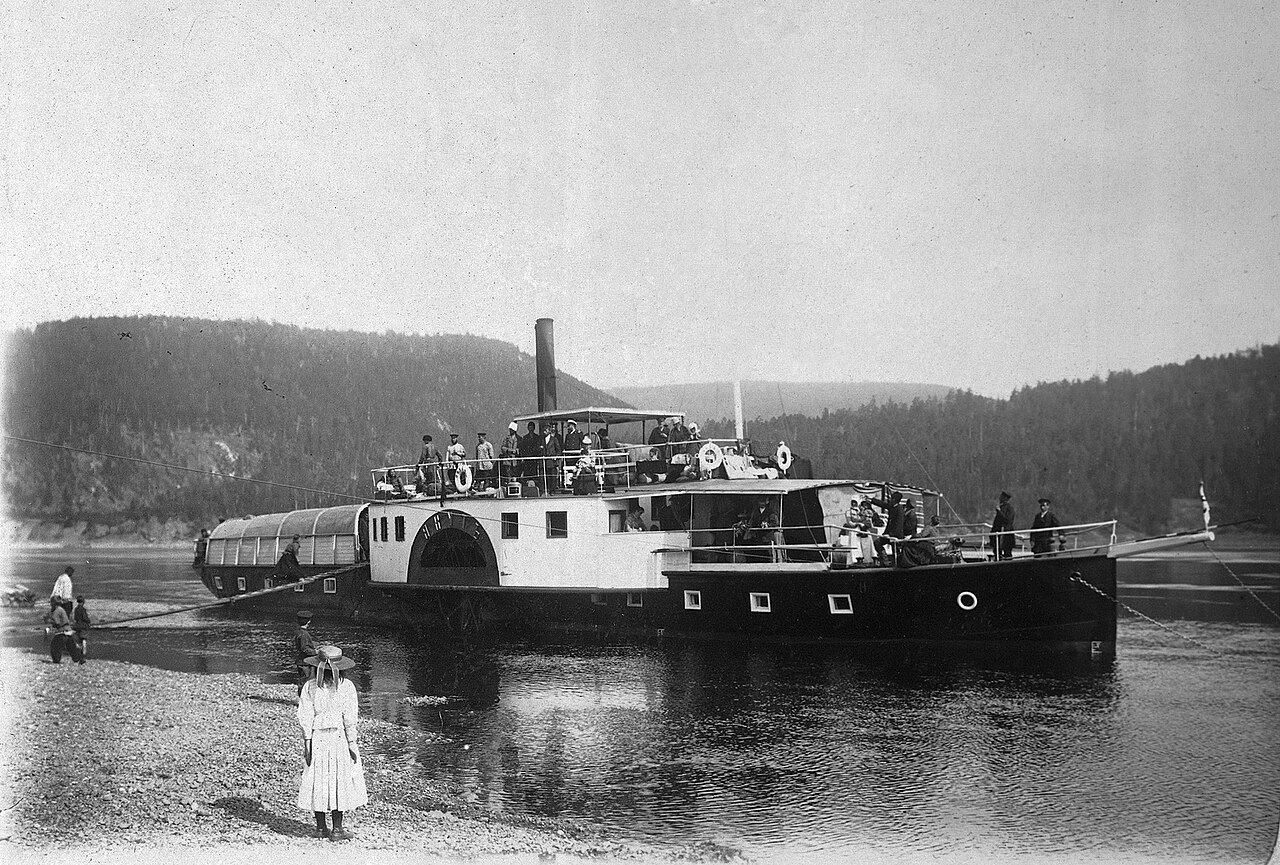


Characteristics
The Lena follows a long, generally northeastward route through a landscape dominated by taiga and tundra, crossing areas of continuous and discontinuous permafrost. Its flow regime is strongly seasonal: winter ice cover lasts many months and a dramatic spring thaw produces large floods that carry ice and sediment into the lower river and delta. Near its mouth the river spreads into one of the world's largest deltas before emptying into the Laptev Sea.
Major tributaries help form the Lena's extensive network. Among the principal tributaries are:
- Kirenga
- Vitim
- Olyokma
- Aldan
- Vilyuy
History and name
The river has long been known to indigenous peoples of the region. Its commonly used name in Russian derives from an Evenki expression often rendered as Elyu-Ene or "large river," reflecting its local importance. The area was reached and explored by Russian travelers and fur traders from the 17th century onward; the Lena later served as a vital axis for inland travel and resource exploitation in eastern Siberia. For background on peoples of the region see Evenks.
Ecology, economy and human settlement
The Lena basin supports boreal forests and tundra ecosystems that provide habitat for migratory birds, fish and mammals adapted to cold climates. The river and its tributaries are important for freshwater fisheries and for seasonal transport. Towns and cities such as Yakutsk lie on its banks and rely on the Lena for riverine transport, local trade and access to remote communities. Permafrost, seasonal flooding and ice conditions shape both natural processes and human activity along the river.
Notable facts
- The Lena ranks among the world’s longest rivers and has one of the largest drainage basins on the planet.
- Its delta is an ecologically significant wetland complex supporting large colonies of birds and other Arctic wildlife.
- Seasonal ice and spring breakup cause dramatic changes in river conditions that have shaped settlement patterns and navigation schedules for centuries.
Scientific study of the Lena continues to be important for understanding Arctic hydrology, permafrost dynamics and the effects of climate variations on high-latitude river systems.
Related articles
Author
AlegsaOnline.com Lena River Leandro Alegsa
URL: https://en.alegsaonline.com/art/57123
Sources
- abratsev.narod.ru : abratsev.narod.ru/biblio/sokolov/p1ch23b.html
- commons.wikimedia.org : Lena River
- wikidata.org : wikidata.org/wiki/Q46841
- catalogue.bnf.fr : cb15117348r
- data.bnf.fr : (data)
- d-nb.info : 4313828-7
- idref.fr : 191625175
- viaf.org : 78144647641263022601
- worldcat.org : 78144647641263022601